

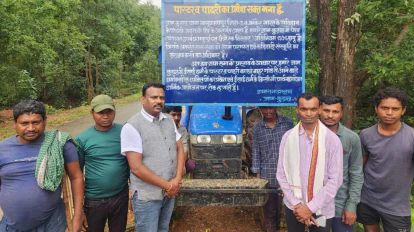
Tension has flared in Chhattisgarh after several villages reportedly put up hoardings banning Christian pastors and missionaries from entering their areas, drawing strong criticism from religious groups and civil society. A prominent Kerala-based church organization condemned the move, calling it “the most divisive boundary since Partition.”
The hoardings, seen in parts of Bastar and Kondagaon districts, allegedly carry warnings that pastors or individuals involved in religious conversions would not be allowed to enter or conduct prayer meetings. Local media reports suggest that these signboards were installed following community meetings held under the banner of local village councils, citing concerns about “conversion activities.”
Church leaders, however, have denounced the development, describing it as an open threat to India’s secular fabric and constitutional freedoms. The Church of South India (CSI) in Kerala issued a sharp statement on Sunday, saying such restrictions not only violate Article 25 of the Constitution, which guarantees freedom of religion, but also sow deep social division.
“Erecting boundaries based on faith is a dangerous precedent. It reminds us of times of communal segregation and exclusion. This is the most divisive boundary since Partition,” said a senior CSI spokesperson.
Human rights groups have also raised alarms, urging the state government to intervene. They argue that such messages could lead to social polarization and violence, especially in regions already marked by religious and tribal sensitivities.
Meanwhile, Chhattisgarh police said they were aware of the hoardings and were “verifying their origins.” Officials added that no official permission had been granted for such displays and that appropriate action would be taken if any law was violated.
Local tribal groups defending the move claim that their intent is to protect indigenous traditions from external influence. “We are not against any religion. We only want to stop forced conversions,” said one local leader quoted by regional outlets.
Political analysts say the incident reflects the growing tensions over faith-based conversions in parts of central India, where several states have introduced or strengthened anti-conversion laws in recent years.
As the controversy widens, religious leaders across India have called for calm and dialogue, warning that drawing lines of exclusion in the name of faith could damage the country’s pluralistic identity beyond repair.