

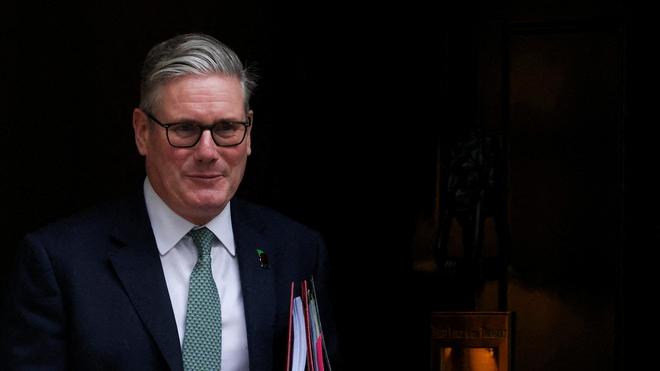
British Prime Minister Keir Starmer has described China as a national security threat, sharpening London’s stance toward Beijing and signalling a tougher approach to foreign interference, cyber activity, and strategic vulnerabilities. The remarks, delivered during a foreign-policy briefing in London, drew a swift and angry response from China, which accused the U.K. of “distorting facts” and undermining bilateral relations.
Starmer said the U.K. could not ignore “clear and persistent risks” linked to cyber intrusions, intellectual-property theft, covert influence campaigns, and China’s growing control over essential supply chains. He argued that safeguarding national infrastructure — from telecommunications to energy grids — required “realistic assessments, not wishful thinking.” The Prime Minister also stressed that Britain would strengthen security partnerships with allies while continuing to engage China on trade and global challenges.
Beijing’s Foreign Ministry condemned the comments, calling them “irresponsible” and “based on Cold War-era thinking.” Chinese officials said the U.K. was sending “negative signals” that would damage cooperation in areas such as investment, climate initiatives, and education exchanges. The ministry repeated its long-held position that China does not interfere in the internal affairs of other countries and urged London to “avoid politicizing normal exchanges.”
Analysts say the episode highlights a broader shift in Britain’s China strategy, which has moved from economic engagement to caution and risk-management. Starmer’s government is under pressure from security agencies and Parliament to tighten controls on technology transfers, academic partnerships, and foreign ownership of sensitive sectors.
Diplomats warn that relations between the two countries may face further strain as both sides harden their messaging. However, officials in London insist the goal is not confrontation but a more balanced and secure framework for dealing with the world’s second-largest economy.
For now, Starmer’s remarks mark one of the clearest signals yet that Britain’s China policy is entering a new phase — one shaped by security concerns as much as economic interests, and by a geopolitical climate where great-power competition is increasingly difficult to ignore.