

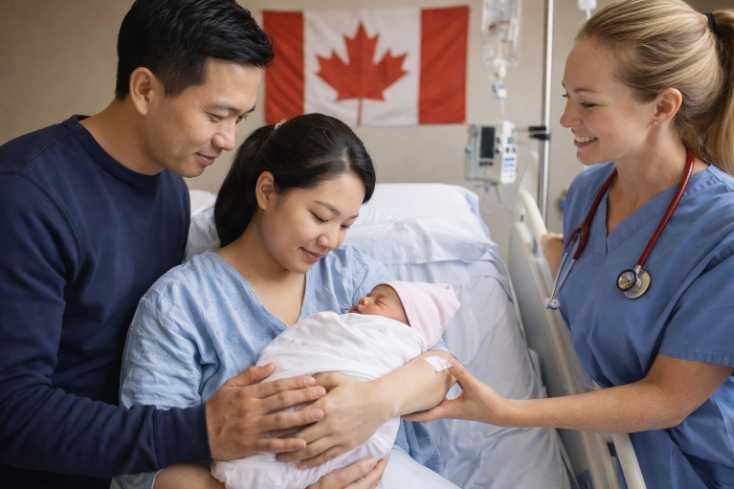
Canada is seeing a notable increase in birth tourism, according to newly released data, reviving debate over immigration rules, healthcare costs, and the automatic citizenship granted to children born on Canadian soil. The trend, while still representing a small fraction of total births nationwide, has drawn renewed attention from policymakers and provincial governments.
Birth tourism refers to the practice of foreign nationals travelling to Canada on temporary visas with the primary intent of giving birth, allowing their child to obtain Canadian citizenship by birth. Recent figures indicate a gradual uptick in such cases, particularly in major urban centres and regions with easy access to maternity services.
Health officials say hospitals in parts of British Columbia and Ontario have reported a rise in non-resident births, with some facilities noting pressure on maternity wards and neonatal care units. In several cases, unpaid medical bills linked to non-resident births have also been flagged, raising concerns about financial strain on publicly funded healthcare systems.
Federal officials have acknowledged the data but caution against overstating the scale of the issue. They note that birth tourism does not currently violate Canadian law, as citizenship by birth is enshrined in legislation, regardless of parents’ immigration status. However, the government has said it is reviewing visa screening processes to ensure that temporary entry rules are not being misused.
The issue has sparked political debate, with some calling for tighter visa checks and clearer disclosure requirements for expectant visitors. Others warn against policy changes that could undermine Canada’s longstanding principles of inclusivity and citizenship rights.
Immigration experts say the rise reflects global uncertainty, with families seeking stable futures, stronger passports, and access to education and healthcare for their children. They argue that any response should be carefully balanced to avoid unintended consequences.
As Canada continues to manage population growth, healthcare capacity, and immigration reform, the increase in birth tourism is likely to remain under scrutiny. Officials say further analysis and consultation with provinces will guide any future policy decisions.