

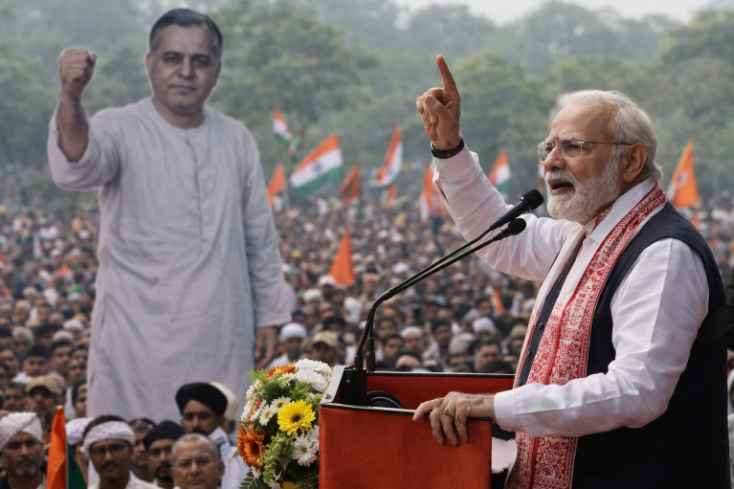
Prime Minister Narendra Modi, during a public address in Assam, invoked the legacy of Gopinath Bordoloi, the state’s first Chief Minister, highlighting a lesser-known chapter of Indian political history in which Bordoloi stood firm against the central leadership of the Congress on issues critical to Assam’s identity and future.
Referring to Bordoloi as a visionary leader who put regional interests above party politics, the Prime Minister said Assam’s history offers powerful lessons about courage, foresight, and standing up for one’s people. Modi recalled how Bordoloi resisted pressure during the tumultuous period around Independence, particularly on matters related to Assam’s territorial integrity and demographic balance.
Historians note that Bordoloi played a decisive role in ensuring that Assam remained part of India and was not merged into what later became East Pakistan. Despite being a Congress leader himself, Bordoloi reportedly disagreed with sections of the party’s central leadership, warning that ignoring Assam’s concerns would have long-term consequences. His stance, Modi said, demonstrated that true leadership sometimes requires challenging one’s own political establishment.
The Prime Minister’s remarks were widely seen as an attempt to spotlight regional leaders whose contributions, he argued, were overshadowed in mainstream national narratives. He said Bordoloi’s commitment to Assam’s cultural and social fabric remains relevant today, especially as debates continue around identity, migration, and development in the Northeast.
Modi also linked Bordoloi’s legacy to the present government’s focus on the Northeast, citing increased infrastructure spending, connectivity projects, and policy attention aimed at integrating the region more closely with the national growth story. He argued that recognising leaders like Bordoloi helps restore pride in local histories and reinforces the idea that India’s strength lies in its diversity.
Political observers say the reference carries both historical and contemporary significance, as Assam continues to play a key role in national political discourse. By revisiting Bordoloi’s resistance within the Congress, Modi sought to frame today’s debates through the lens of historical resolve and regional self-respect.
As Assam marks its evolving place in India’s political landscape, the Prime Minister’s remarks have reignited interest in Bordoloi’s contributions, prompting renewed discussion about how regional voices shaped the nation’s early years and continue to influence its future.