

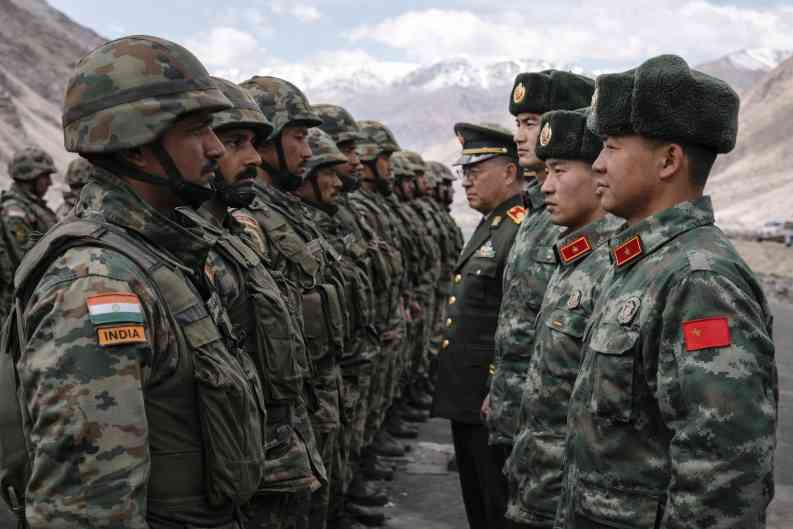
China is seeking to use its recent disengagement along the Line of Actual Control (LAC) as a strategic opening to reset relations with India and reduce New Delhi’s growing alignment with the United States, according to a new analytical report on regional geopolitics. The assessment suggests Beijing views easing border tensions not just as a military necessity, but as a broader diplomatic tool.
The report argues that China’s gradual pullback from friction points along the India–China border is aimed at lowering hostility after years of standoff, while simultaneously creating space for renewed political and economic engagement with India. Analysts say Beijing believes prolonged confrontation has pushed New Delhi closer to Washington, particularly through defence cooperation, intelligence sharing, and participation in Indo-Pacific groupings.
By signalling restraint on the LAC, China hopes to project itself as a stabilising neighbour and encourage India to adopt a more “balanced” foreign policy posture. The report notes that Beijing is especially concerned about India’s deepening defence ties with the U.S., including joint military exercises, technology transfers, and strategic coordination in the Indo-Pacific.
However, Indian officials remain cautious. New Delhi has consistently maintained that normalisation of ties with China depends on full restoration of peace and status quo at the border, not partial disengagements. Indian policymakers are wary that tactical withdrawals could be reversed and that diplomatic outreach may be aimed at buying time rather than resolving core disputes.
The report also highlights that economic considerations are part of Beijing’s calculus. With China facing slowing growth and supply-chain pressures, improving ties with India — one of the world’s fastest-growing major economies — could help stabilise regional trade and investment flows.
Experts say India is unlikely to dilute its U.S. partnership solely due to border easing, but may pursue parallel engagement with China if security conditions genuinely improve. The evolving dynamic underscores how border tensions, diplomacy, and great-power competition are deeply intertwined in Asia’s shifting strategic landscape.