

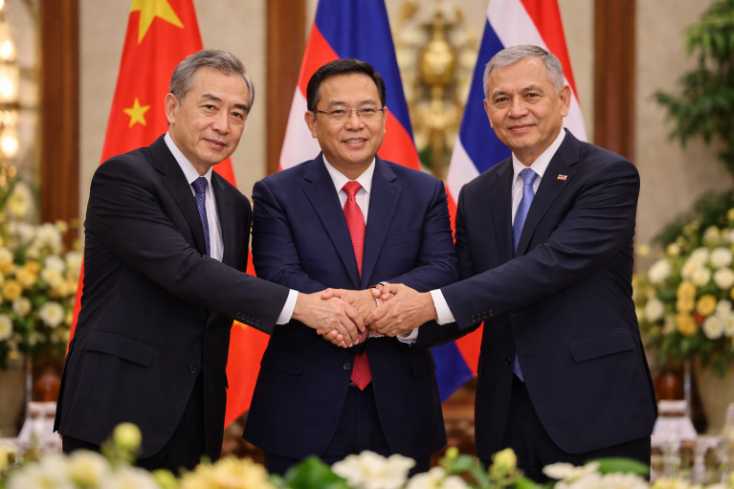
Senior diplomats from China, Cambodia, and Thailand have held high-level talks, signalling Beijing’s growing ambition to play a more influential role in managing regional disputes and shaping stability in Southeast Asia. The meeting, described by officials as “constructive and forward-looking,” comes amid renewed tensions along the Thailand–Cambodia border and broader geopolitical competition in the region.
According to official statements, the discussions focused on de-escalation, dialogue mechanisms, and regional cooperation, with China positioning itself as a mediator capable of facilitating calm between its neighbours. Beijing has increasingly presented itself as a stabilising force in Asia, offering diplomatic platforms and economic incentives as alternatives to Western-led mediation efforts.
Chinese officials stressed the importance of resolving disputes through peaceful consultation and mutual respect, urging both Cambodia and Thailand to avoid actions that could further inflame tensions. They also highlighted the need to safeguard regional supply chains, cross-border trade, and infrastructure projects that are critical to economic growth across mainland Southeast Asia.
Cambodian and Thai representatives acknowledged China’s role as a key regional partner and welcomed continued engagement, though neither side publicly committed to specific concessions. Diplomats from both countries reiterated their preference for dialogue while maintaining their respective national positions on the underlying disputes.
Analysts say the meeting reflects China’s strategic push to deepen its diplomatic footprint in Southeast Asia at a time when the region is navigating overlapping pressures — from territorial disagreements to great-power rivalry. By convening talks, Beijing is not only seeking to prevent instability near its borders but also to reinforce its image as an indispensable regional power broker.
The talks also touched on broader cooperation, including infrastructure development under the Belt and Road Initiative, tourism recovery, and security coordination. Observers note that economic interdependence gives China significant leverage in encouraging restraint among its partners.
While no immediate breakthrough was announced, officials described the meeting as an important step toward sustained engagement. Further consultations are expected in the coming weeks, as China continues to position itself at the centre of regional diplomacy and conflict management in Southeast Asia.