

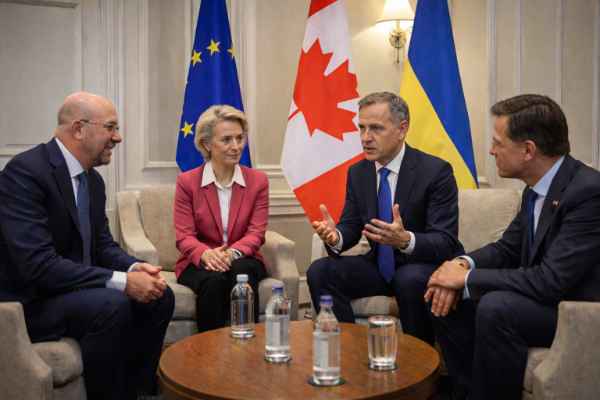
European and Canadian leaders have held fresh consultations to assess U.S.-led efforts aimed at advancing a peace process in the Russia–Ukraine war, as diplomatic activity around the conflict intensifies. The discussions reflect growing coordination among Western allies amid shifting signals from Washington and mounting pressure to explore pathways that could halt more than two years of fighting.
According to officials familiar with the talks, leaders from key European countries and Canada exchanged views on the substance and direction of the U.S. initiative, as well as the risks of pushing negotiations before conditions are aligned on the ground. While there is broad support for diplomacy, several participants reportedly stressed that any peace framework must be anchored in Ukraine’s sovereignty, security guarantees, and international law.
Canada is said to have underlined its continued backing for Ukraine, both militarily and politically, while also recognising the importance of staying closely aligned with allies as Washington explores diplomatic options. European leaders, meanwhile, expressed caution, noting past experiences where premature talks allowed Russia to regroup militarily.
The consultations come amid signs of war fatigue across parts of Europe, rising defence costs, and political pressure in several capitals to show progress toward ending the conflict. At the same time, officials warned against allowing urgency to override strategic caution, arguing that a flawed or rushed settlement could destabilise Europe’s security architecture for years.
Participants also discussed humanitarian access, reconstruction planning, and accountability mechanisms,’ ensuring that any future peace process addresses war crimes and civilian protection. Some leaders reportedly raised concerns about mixed messaging, urging clearer communication from Washington to avoid misinterpretation by Moscow.
Analysts say the discussions highlight a delicate balancing act: supporting U.S. diplomatic leadership while maintaining unity around core principles that have guided Western policy since the invasion. With the battlefield situation still fluid and political dynamics evolving in the U.S. and Europe, allied coordination is seen as critical.
Further high-level engagements are expected in the coming weeks as allies continue to evaluate whether conditions are emerging for meaningful talks — or whether sustained pressure on Russia remains the preferred course for now.