

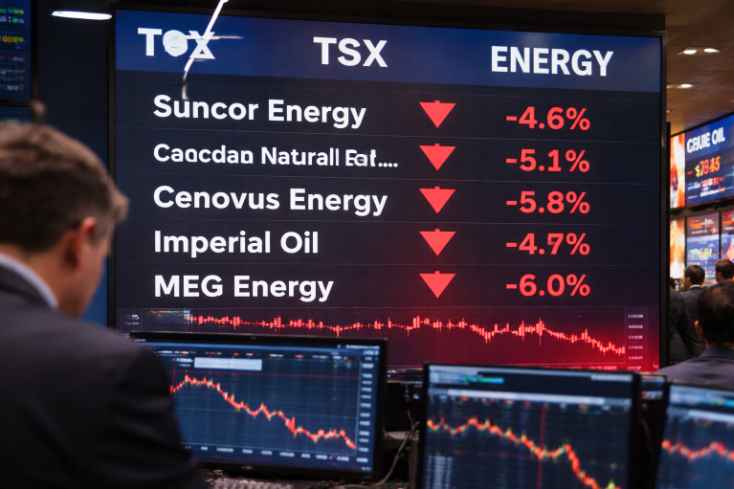
Shares of Canadian oil and gas companies fell after news that U.S. forces captured Venezuelan President Nicolás Maduro, a dramatic geopolitical development that unsettled energy markets and triggered investor caution across the sector. The pullback came despite oil prices initially spiking on fears of supply disruption, highlighting uncertainty over how the crisis will reshape global energy flows.
Energy stocks on the Toronto Stock Exchange moved lower as traders weighed the implications of Washington’s action on sanctions, production stability, and long-term demand. Analysts said the decline reflected a mix of profit-taking, risk aversion, and concerns that heightened volatility could dampen investment sentiment in the short term.
Venezuela holds some of the world’s largest proven oil reserves, and any instability there typically sends shockwaves through energy markets. While crude prices jumped briefly following the announcement of Maduro’s capture, they later eased as markets reassessed the likelihood of immediate supply interruptions. That pullback in oil prices added pressure to Canadian producers, many of whom are highly sensitive to crude price swings.
Market participants also pointed to uncertainty over U.S. policy direction. Investors are watching closely to see whether Washington tightens or relaxes sanctions on Venezuelan oil exports in the aftermath of Maduro’s arrest. Any change could alter global supply dynamics, affecting price forecasts and competitiveness for Canadian producers, particularly heavy crude exporters.
Some analysts said Canadian oil stocks may also be facing broader headwinds unrelated to Venezuela, including concerns about global demand, interest rates, and capital discipline. “Geopolitical shocks tend to amplify existing market nerves,” one energy strategist said, noting that the sector has already been under pressure from fluctuating prices and policy uncertainty.
Despite the short-term decline, several experts cautioned against reading too much into a single trading session. They argued that Canada’s energy sector remains supported by strong balance sheets, disciplined spending, and long-term demand fundamentals, even as near-term volatility persists.
As investors await clearer signals from Washington, Caracas, and global oil producers, Canadian energy stocks are likely to remain sensitive to headlines. For now, the capture of Maduro has injected fresh uncertainty into markets, reminding investors how quickly geopolitical events can reshape sentiment across the global energy landscape.