

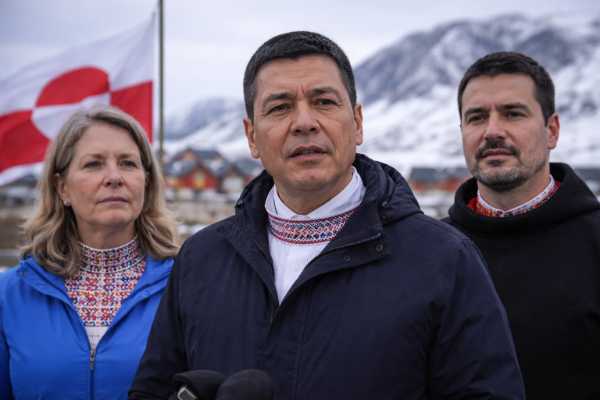
Greenland’s party leaders have firmly rejected renewed comments by former U.S. President Donald Trump suggesting American control over the Arctic island, responding with rare political unity and underscoring that Greenland’s future will be decided solely by its people.
Leaders across Greenland’s political spectrum said Trump’s remarks revive an idea that has already been decisively dismissed and reflect a misunderstanding of Greenland’s status, history, and democratic rights. “Greenland is not for sale,” senior politicians reiterated, stressing that the island is a self-governing territory within the Kingdom of Denmark with a clear path toward determining its own future.
Trump first floated the idea of acquiring Greenland during his presidency, prompting international backlash and diplomatic tension with Denmark. His latest comments have again sparked concern in Nuuk and Copenhagen, particularly as Arctic regions gain strategic importance due to climate change, emerging shipping routes, and competition among global powers.
Greenlandic leaders emphasized that geopolitical interest in the Arctic cannot override Indigenous rights, self-determination, and international law. The island’s Inuit-majority population has long sought greater autonomy and eventual independence, but politicians stressed that such decisions will be made through democratic processes, not external pressure.
Denmark’s government backed Greenland’s response, reaffirming that sovereignty over the territory is not open to negotiation. Danish officials said any suggestion of foreign control undermines established alliances and ignores the legal and constitutional framework governing Greenland’s relationship with Denmark.
Analysts say Trump’s comments resonate beyond Greenland, raising wider concerns in the Arctic about how major powers view the region. As melting ice opens access to resources and shipping lanes, countries including the United States, Russia, and China have increased their strategic focus on the High North. Indigenous leaders warn that this attention risks turning their homelands into bargaining chips in great-power competition.
Greenland’s party leaders used the moment to call for greater international respect and for stronger inclusion of Arctic communities in global security and climate discussions. “We are not an empty land or a strategic asset to be claimed,” one leader said. “We are a people with a voice.”
While Trump’s remarks carry no legal force, Greenland’s unified rejection sends a clear message: the island’s political future will remain in the hands of Greenlanders, guided by democratic choice rather than external ambition.