

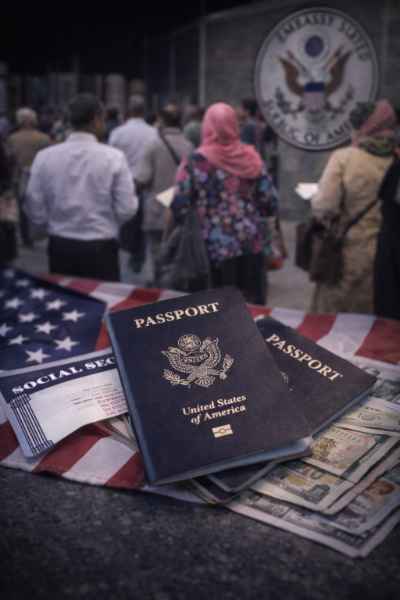
The United States is set to suspend immigrant visa processing for applicants from 75 countries, citing concerns linked to public assistance use and eligibility, according to officials familiar with the decision. The move marks a significant tightening of immigration policy and is expected to have wide-ranging impacts on families, workers, and migration flows.
U.S. authorities said the decision is aimed at enforcing stricter standards to ensure that incoming immigrants are financially self-sufficient and unlikely to rely on government welfare programs. While the administration has not released a full list publicly, officials indicated the affected countries span regions in Africa, Asia, Latin America, and parts of Eastern Europe.
The suspension would apply primarily to immigrant visas, including family-sponsored and employment-based categories, though details on exemptions and timelines remain under review. Temporary visas are not expected to be broadly affected at this stage, but officials acknowledged that processing delays could spill over into other categories.
The announcement has sparked concern among immigration advocates, who argue that the policy unfairly targets nationals of developing countries and risks separating families for prolonged periods. They also warn that the measure could undermine U.S. labor markets that rely on skilled and semi-skilled immigrants.
Supporters of the move say it reinforces long-standing immigration principles that prioritize economic self-reliance and reduce strain on public resources. Administration officials emphasized that the policy is not a blanket ban but a processing suspension that could be reviewed if countries meet updated criteria.
Foreign governments and diaspora communities are closely watching developments, with some expected to seek clarification through diplomatic channels. Legal experts say the policy may face challenges, particularly over how “public assistance risk” is defined and assessed.
If implemented, the suspension would represent one of the broadest immigration processing restrictions in recent years, adding another layer of uncertainty to an already complex U.S. immigration system.