

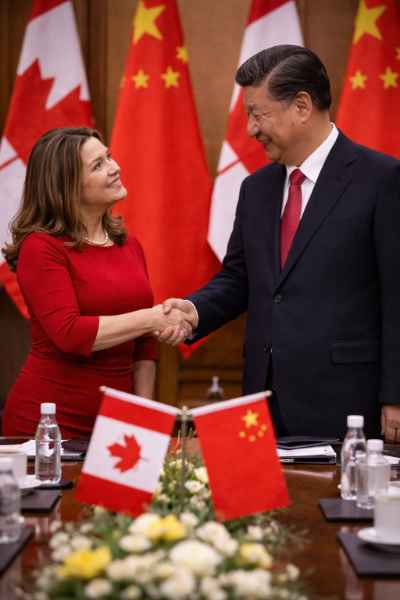
The agreement, which includes tariff relief and renewed economic engagement, comes after years of strained Canada–China relations and reflects a broader effort by the Carney government to diversify trade partnerships. With the U.S. remaining Canada’s largest trading partner, officials have increasingly acknowledged the risks of overreliance on a single market, especially as Washington adopts more unpredictable trade and industrial policies.
Government sources say the China deal is not about replacing the U.S., but about rebalancing Canada’s economic exposure and creating alternative pathways for exporters. Sectors that have faced higher costs or barriers in the U.S. market are expected to benefit from improved access to China, though details of the agreement are still being finalized.
Analysts note that the move carries both opportunity and risk. While China offers a vast consumer base and supply-chain advantages, engagement also raises concerns around national security, human rights, and alignment with Western allies. Critics argue that Ottawa must ensure economic pragmatism does not dilute Canada’s values or strategic commitments.
Supporters of the deal say it reflects economic realism. With global trade becoming more fragmented and geopolitical competition intensifying, countries like Canada are under pressure to hedge against shocks by expanding their network of trade partners.
The timing is significant, as Canada faces renewed trade friction with the U.S. over tariffs, industrial subsidies, and regulatory disputes. Diversifying trade, officials say, strengthens Canada’s bargaining position and economic resilience.
While the U.S. will remain central to Canada’s economy, the China deal suggests a more multi-directional foreign economic policy, one aimed at giving Ottawa greater flexibility in a rapidly shifting global order.