

Opening Summary
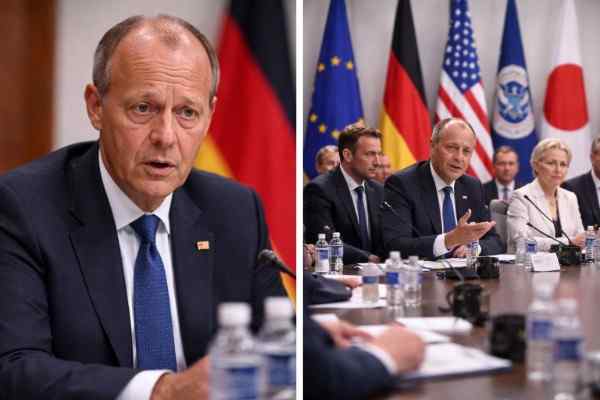
Germany’s opposition leader Friedrich Merz has warned that the world’s rules-based international order has effectively collapsed, citing rising geopolitical conflict, weakening multilateral institutions, and growing disregard for international law. Speaking in Germany, Merz said global stability can no longer be taken for granted, a message with significant implications for Europe, Canada, and the broader international system. His remarks come amid ongoing wars, trade disputes, and strained alliances.
Background and Context
The concept of a rules-based international order refers to a global system built after the Second World War, anchored in international law, multilateral institutions, and cooperation among states. Key pillars include the United Nations, international trade rules, arms control agreements, and collective security arrangements.
Germany has long been a strong supporter of this system, relying on diplomacy, trade, and multilateral cooperation as the foundation of its foreign policy. As Europe’s largest economy, Germany has benefited from predictable global rules governing trade, security, and conflict resolution.
In recent years, however, that system has come under increasing strain. Russia’s invasion of Ukraine, conflicts in the Middle East, rising tensions between China and Western countries, and challenges to global trade norms have all contributed to uncertainty. International institutions have struggled to enforce rules or resolve disputes effectively.
Within Germany, debates over foreign and security policy have intensified. The country has faced pressure to increase defence spending, reduce economic dependence on authoritarian states, and take a more assertive role in European and global security. These debates form the backdrop to Merz’s warning.https://newsbee.ca/2026/02/12/minnesota-immigration-enforcement-surge-is-ending-trump-border-official-says/
Latest Developments
Friedrich Merz, leader of Germany’s Christian Democratic Union (CDU), said the idea of a functioning rules-based global order can no longer be assumed. He argued that major powers are increasingly acting in their own interests, even when doing so violates international norms.
Merz pointed to ongoing military conflicts and the inability of international bodies to prevent or stop them as evidence of systemic failure. He said that rules are being ignored or selectively applied, weakening trust between states.
While Merz did not outline a detailed alternative framework, he stressed that Germany and its allies must adapt to a more unstable and unpredictable world. He called for stronger European cooperation, increased defence readiness, and clearer alignment among democratic countries.
German government officials have not directly contradicted Merz’s assessment, though they continue to emphasize the importance of multilateral institutions. Berlin has supported reforms to international organisations while also expanding its defence and security commitments.
Merz’s remarks have resonated beyond Germany, particularly among European policymakers who share concerns about declining global stability and the limits of diplomacy in resolving major conflicts.
Why This Matters
Merz’s warning matters because Germany plays a central role in European and transatlantic politics. When a senior German political figure questions the viability of the global order, it signals a shift in how European leaders view international risks.
For Canada, the issue is directly relevant. Canada has long positioned itself as a defender of the rules-based international system, supporting institutions such as the United Nations, NATO, and the World Trade Organization. Canadian foreign policy relies on predictable rules to protect trade, security, and sovereignty.
If global norms continue to erode, middle powers like Canada and Germany face greater challenges. Without enforceable rules, smaller and medium-sized countries have fewer tools to counter the actions of larger states.
Economically, the breakdown of global rules affects trade, supply chains, and investment. Protectionism, sanctions, and unilateral measures have already disrupted global markets. For export-dependent economies, including Canada and Germany, instability raises costs and uncertainty.
From a security perspective, weakening norms increase the risk of conflict. Arms control agreements have collapsed or expired, while diplomatic channels are under strain. Merz’s remarks reflect concern that deterrence and defence, rather than diplomacy alone, are becoming more central to national security.
The warning also underscores growing alignment among Western democracies on the need to strengthen cooperation. While the rules-based order may be weakened, leaders increasingly argue that democratic countries must work more closely together to uphold shared values.
What Happens Next
Germany is expected to continue increasing its defence spending and strengthening its role within NATO. Policymakers across party lines have acknowledged the need for greater military readiness and resilience.
At the European level, discussions are ongoing about strategic autonomy, defence coordination, and reducing dependence on external powers. Merz’s comments may add momentum to calls for faster decision-making and stronger security frameworks within the European Union.
Globally, efforts to reform international institutions are likely to continue, though progress is expected to be slow. Disagreements among major powers have made consensus difficult, particularly at the United Nations.
For Canada and other allies, the challenge will be balancing continued support for multilateralism with practical measures to protect national interests. This includes investing in defence, securing supply chains, and reinforcing alliances.
Future international summits and diplomatic engagements are expected to reflect a more cautious and security-focused tone, as leaders acknowledge the limits of existing global frameworks.
Conclusion
Friedrich Merz’s warning that the rules-based international order no longer exists reflects growing concern among Western leaders about global instability. His remarks highlight a shifting reality in which international norms are increasingly challenged and enforcement mechanisms are weakened.
For Germany, Canada, and other democracies, the message is clear: relying solely on established rules is no longer sufficient. How countries adapt to this changing environment will shape global security, economic stability, and international cooperation in the years ahead.
Suggested internal link anchor texts:
- What is the rules-based international order
- Germany’s changing role in global security
- How global instability affects Canada’s foreign policy