
Opening Summary
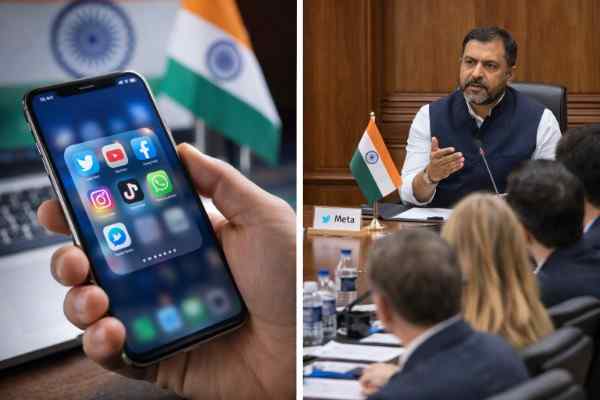
The Indian government has directed social media companies to remove unlawful content within three hours of receiving official orders, tightening enforcement under the country’s digital regulations. The directive applies nationwide across India and affects major global platforms operating in the country. The move matters internationally as India is one of the world’s largest digital markets, and its regulatory decisions often influence how technology firms manage content moderation globally.
Background and Context
India regulates online platforms through a framework designed to address unlawful content, misinformation, and threats to public order. Over the past several years, the government has expanded its oversight of digital intermediaries, including social media networks, messaging services, and video-sharing platforms.
These rules require platforms to act on government or court orders related to content that violates Indian law. Such content may include material linked to national security, public order, communal harmony, child safety, or other legally restricted categories. Platforms that fail to comply risk legal consequences, including loss of intermediary protections that shield them from liability for user-generated content.
India’s approach reflects a broader global trend in which governments are seeking faster and more direct control over online content. Similar debates are underway in the European Union, the United States, and other major jurisdictions, though timelines and enforcement mechanisms differ.
The Indian government has argued that rapid online dissemination of harmful material can trigger real-world consequences, making swift action essential. Technology companies, meanwhile, have raised concerns about operational feasibility, free expression, and the scope of government authority.https://newsbee.ca/2026/02/13/germanys-friedrich-merz-warns-rules-based-global-order-has-collapsed/
Latest Developments
The Government of India has now instructed social media firms to remove unlawful content within three hours of receiving an official notice. The order applies when content is flagged by authorised government agencies or through legally valid directives.
Officials said the shortened timeline is intended to ensure faster response in cases involving urgent risks, such as threats to public safety or national security. The requirement applies regardless of whether the platform’s headquarters are located inside or outside India, as long as the service operates in the country.
The directive reinforces existing obligations rather than introducing an entirely new law. However, by specifying a strict three-hour window, it raises expectations for how quickly companies must act once notified.
Social media firms have not publicly detailed how they will implement the requirement at scale. Platforms typically rely on a combination of automated systems and human reviewers, and rapid compliance may require expanded local teams and round-the-clock monitoring.
The government has not publicly clarified whether the three-hour deadline applies uniformly to all categories of unlawful content or only to cases deemed urgent by authorities. Officials said further operational guidance may follow.
Why This Matters
India is one of the largest markets for global social media companies, with hundreds of millions of users across platforms. Regulatory decisions in India can have significant commercial and operational consequences for technology firms.
For companies based outside India, including those with major operations in North America, the directive underscores the need to comply with local laws even when they differ from standards in their home countries. This has implications for Canada-based technology firms and international platforms that serve Indian users.
The order also raises broader questions about freedom of expression and due process. Critics argue that extremely short compliance timelines may limit platforms’ ability to review orders carefully or challenge them through legal channels. Supporters counter that speed is essential to prevent harm in a fast-moving digital environment.
From a policy perspective, the move reflects India’s increasing assertiveness in regulating the digital space. As countries seek greater control over online platforms, differing national rules risk creating a fragmented global internet, with companies adapting content policies country by country.
For Canada and other democracies, India’s approach will be closely watched as governments weigh how to balance public safety, platform accountability, and civil liberties.
What Happens Next
Social media companies operating in India are expected to update internal processes to meet the three-hour deadline. This may include expanding compliance teams, strengthening coordination with Indian authorities, and refining automated detection systems.
Legal challenges are possible if companies or civil society groups argue that the requirement is overly restrictive or impractical. Courts in India have previously reviewed aspects of digital regulation, and further litigation cannot be ruled out.
The government may issue additional clarifications outlining how the deadline will be enforced and what penalties may apply for non-compliance. Officials have indicated that enforcement will focus on cases involving clear violations of law.
Internationally, the decision may influence similar discussions in other countries considering stricter timelines for content removal. Technology firms may also adjust global policies to ensure consistency across high-regulation markets.
Conclusion
India’s order requiring social media platforms to remove unlawful content within three hours marks a significant tightening of digital enforcement. The directive reflects the government’s emphasis on rapid intervention in the online space and places new operational pressure on global technology companies.
As platforms adapt and legal questions emerge, the policy is likely to shape ongoing debates about digital governance, platform responsibility, and the future of online regulation in India and beyond.
Suggested internal link anchor texts:
- India’s digital and social media regulations explained
- How governments regulate online content worldwide
- What stricter tech laws mean for global platforms