

Opening Summary
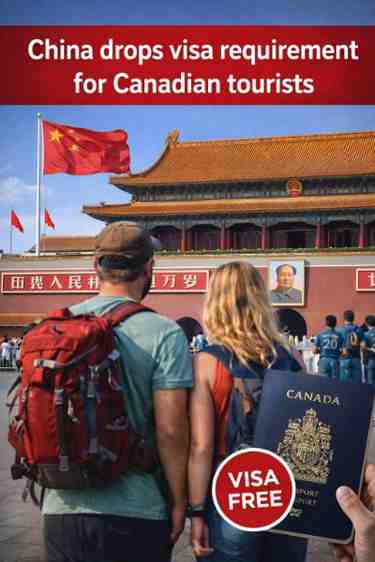
China has removed the visa requirement for Canadian tourists, allowing eligible travelers from Canada to enter the country without a visa for short stays. The policy applies nationwide across China and marks a significant change in bilateral travel arrangements. The move matters internationally as it is expected to boost tourism, people-to-people exchanges, and broader Canada–China engagement.
Background and Context
Travel between Canada and China has faced restrictions and reduced demand in recent years due to pandemic-related controls, diplomatic tensions, and complex visa procedures. Canadian travelers previously required visas for most short-term visits, a process that involved documentation, fees, and processing time.
China has been gradually adjusting its entry policies as it seeks to revive inbound tourism and international travel. In recent months, Beijing has eased entry rules for several countries as part of efforts to stimulate economic activity linked to tourism, aviation, and hospitality.
For Canada, China remains an important destination for tourism, education, and business travel. Prior to global travel disruptions, hundreds of thousands of Canadians visited China annually for leisure, family visits, and cultural exchange.
Visa-free access is often viewed as a signal of improved openness and confidence in cross-border mobility. It can also indicate an effort by governments to reset or stabilize people-to-people ties, even when broader political relationships remain complex.
Latest Developments
The China government has confirmed that Canadian passport holders will no longer need a visa for short-term tourist visits. The exemption allows Canadians to enter China for a limited duration, provided they meet standard entry conditions such as a valid passport and onward travel plans.
Chinese authorities said the policy is intended to make travel easier and encourage more visitors from Canada. The change applies to tourism purposes and does not extend to work, study, or long-term residence.
Airlines and travel agencies serving Canada–China routes have begun updating guidance for travelers. Industry representatives say visa-free access is expected to reduce barriers and increase bookings, particularly for leisure travel and organized tours.
The Canada government has not announced any reciprocal changes to its visa policies for Chinese nationals. Canadian officials continue to advise travelers to check entry requirements carefully and follow local laws while abroad.
Why This Matters
The removal of visa requirements lowers costs and administrative hurdles for Canadian travelers, making China a more accessible destination. This is likely to benefit tourism operators, airlines, and hospitality businesses in both countries.
For Canada–China relations, the move may help rebuild people-to-people connections that have weakened in recent years. Tourism and cultural exchange are often seen as stabilizing factors in bilateral relationships, even when political issues remain unresolved.
Economically, increased tourism can support recovery in sectors affected by reduced international travel. Canadian travelers contribute to local economies abroad, while improved connectivity can also encourage business and educational exchanges.
The policy change may also influence travel patterns more broadly. As global travelers compare destinations, visa-free access can be a decisive factor in choosing where to visit.
From a regional perspective, China’s decision reflects a wider trend among countries seeking to compete for international tourists by simplifying entry rules.
What Happens Next
Canadian travelers planning trips to China are expected to respond quickly to the policy change, particularly during peak travel seasons. Travel agencies anticipate increased interest in guided tours and independent travel.
Authorities may issue further clarifications on the length of permitted stays and any documentation required at entry. Travelers are advised to monitor official guidance before departure.
If the policy proves successful, analysts say China could consider expanding or extending visa-free access to additional categories of travelers or for longer durations.
Canada and China may also see renewed engagement in aviation and tourism promotion, depending on demand and capacity.
Conclusion
China’s decision to drop visa requirements for Canadian tourists marks a notable shift in travel policy and removes a key barrier to bilateral tourism. The change is expected to encourage more Canadians to visit China and support recovery in international travel.
As airlines, tour operators, and travelers adjust, the move highlights how visa policy can shape global mobility and influence international relationships beyond diplomacy alone.