
Opening Summary
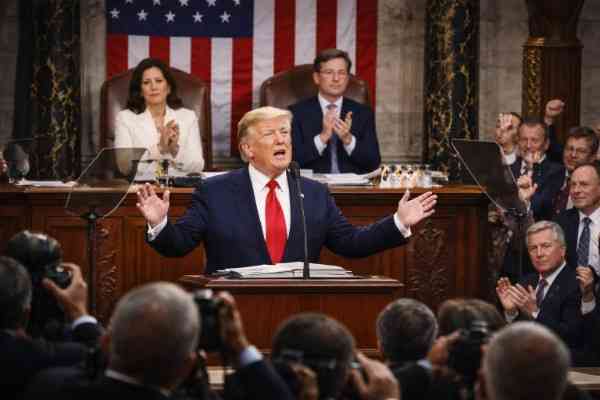
Former U.S. President Donald Trump delivered a theatrical State of the Union address that largely reaffirmed his existing political agenda, offering little indication of any change in course. The speech was delivered in Washington and focused on familiar themes around trade, immigration, and national strength. The address matters internationally as it signals continuity in Trump’s policy approach should he retain or regain political influence.
Background and Context
The State of the Union address is traditionally used by U.S. presidents to outline priorities, assess the state of the country, and signal shifts in policy direction. Past addresses have often been used to introduce new legislative goals or recalibrate political messaging.
Trump’s previous speeches, both during his presidency and after leaving office, have been marked by confrontational rhetoric, strong nationalist themes, and sharp criticism of political opponents. His approach has consistently emphasized economic protectionism, strict immigration enforcement, and skepticism toward multilateral institutions.
As global conflicts, economic uncertainty, and strained alliances continue to shape international politics, observers closely watch major U.S. political speeches for signals of policy evolution or moderation.
Latest Developments
In his latest State of the Union-style address, Trump reiterated long-standing positions on trade, border security, and America’s role in the world. He defended earlier tariff policies, repeated calls for tougher immigration controls, and criticized current and past political leadership.
The speech was notable for its tone and presentation, featuring strong language and dramatic framing, but it introduced few new policy proposals. Trump did not signal major revisions to his earlier approaches on foreign policy or domestic governance.
While supporters praised the address as forceful and clear, critics said it lacked substance and failed to address changing economic and geopolitical realities.
There was also little reference to compromise or bipartisan cooperation, reinforcing perceptions that Trump remains committed to a confrontational political style.
Why This Matters
The absence of a clear shift in tone or policy matters because the United States plays a central role in global security, trade, and diplomacy. Allies and partners, including Canada, closely track U.S. political signals when assessing future cooperation.
For Canada, continuity in Trump’s policy positions could mean renewed uncertainty around trade, tariffs, and cross-border economic integration. Past policies under Trump disrupted supply chains and required extensive diplomatic engagement.
Domestically, the speech reinforces Trump’s appeal to his political base while raising questions about how adaptable his platform is to evolving challenges such as inflation, global instability, and climate-related risks.
Internationally, the address suggests that a return to Trump-style governance would likely prioritize unilateral action over multilateral coordination.
What Happens Next
Trump is expected to continue using high-profile speeches to shape political narratives and mobilize supporters. Future addresses may clarify whether policy adjustments emerge as political conditions change.
Lawmakers and political analysts will assess how the speech influences public opinion and internal party dynamics. Any concrete policy proposals are likely to surface through campaign platforms rather than formal addresses.
International partners will continue monitoring U.S. political developments for indications of future trade, security, and diplomatic priorities.
Conclusion
Trump’s latest State of the Union address reinforced familiar themes and offered little evidence of a change in direction. While the speech energized supporters, it left open questions about adaptability and policy evolution.
For allies and global markets, the address signals continuity rather than change, underscoring the importance of preparing for a potentially unchanged U.S. policy approach in the years ahead.