

Opening Summary
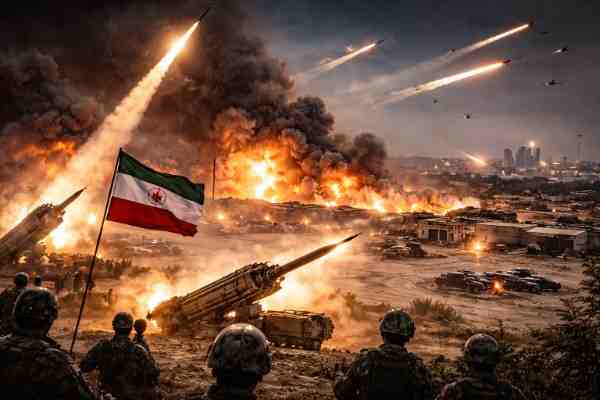
New strikes have been reported in the Middle East after Iran launched retaliatory attacks on U.S. military bases and allied partner facilities following coordinated airstrikes by the United States and Israel. The developments, centred in multiple Gulf states and beyond, have heightened fears of a wider conflict. The escalation matters globally because it carries significant security, diplomatic, and economic implications, especially for energy markets and regional stability.
Background and Context
Tensions between Iran, the United States, and Israel have been simmering for months, driven by disputes over Iran’s nuclear programme, ballistic missile capabilities, and broader regional influence. Diplomatic efforts in recent weeks aimed at addressing the nuclear issue had shown tentative progress, but recent military actions disrupted those talks.
In the latest episode, U.S. and Israeli forces launched strikes against targets inside Iran, significantly escalating the confrontation. Iran responded with what it described as retaliatory strikes aimed at U.S. military bases and allied facilities across the Middle East. These events follow a history of tit-for-tat military actions between the parties, including earlier conflicts and limited engagements involving proxy groups and regional partners.
Latest Developments
Iran’s armed forces have carried out a wave of strikes targeting U.S. military bases and allied infrastructure in several Middle Eastern countries. These include installations in Bahrain, Qatar, Kuwait, the United Arab Emirates (UAE), Saudi Arabia, and Jordan, where American and allied forces are stationed. Explosions were reported in capitals and near key bases, and some nations intercepted incoming missiles and drones.
Officials from Iran’s leadership characterised the assaults as a necessary response to what they described as acts of aggression by the United States and Israel against Iranian territory. Several Gulf Cooperation Council (GCC) states condemned the strikes as violations of their sovereignty, recalling that they did not permit their territories to be used for attacks against Iran.
The situation has triggered security alerts and defensive measures in host countries, with airspace closures and heightened readiness reported. Civilian casualties have been reported in some areas due to falling debris from intercepted missiles.
Why This Matters
The escalation is significant because it risks drawing multiple countries into an increasingly volatile conflict, expanding beyond direct U.S.–Iran or Israel–Iran confrontations. Military actions involving multiple nations’ territory undermine established norms of regional security and could trigger broader alliances or retaliatory moves.
For global energy markets, instability in the Middle East is particularly consequential. The region plays a central role in oil production and exports, and fears of disruptions could push prices higher, affecting inflation and economic conditions worldwide.
Governments including Canada’s have expressed concern about escalating violence and its implications for international security, trade, and civilian safety. The strikes have already prompted emergency briefings, diplomatic outreach, and calls for restraint from global bodies seeking to avoid a full-scale war.
What Happens Next
Diplomatic efforts are expected to intensify as world leaders, including through the United Nations, push for de-escalation. Emergency sessions of the U.N. Security Council and other international forums may be convened to address the crisis.
Military analysts say further clashes or miscalculations could lead to sustained conflict unless channels for negotiation or ceasefire are established. Western governments are monitoring the situation closely and may adjust force posture or embassy operations in the region.
Countries hosting U.S. bases may also reevaluate security arrangements and regional policy in light of the attacks and their own national interests.
Conclusion
The recent Iranian strikes on U.S. and allied bases across the Middle East mark a sharp escalation in regional tensions, following coordinated U.S.–Israeli military operations in Iran. The unfolding situation has raised alarm about wider conflict, with serious implications for global security, energy stability, and diplomatic relations.
As international efforts to manage the crisis continue, the coming days will be critical in determining whether diplomatic pressures can prevent further escalation or whether the situation will deteriorate into prolonged military confrontation.