

Opening Summary
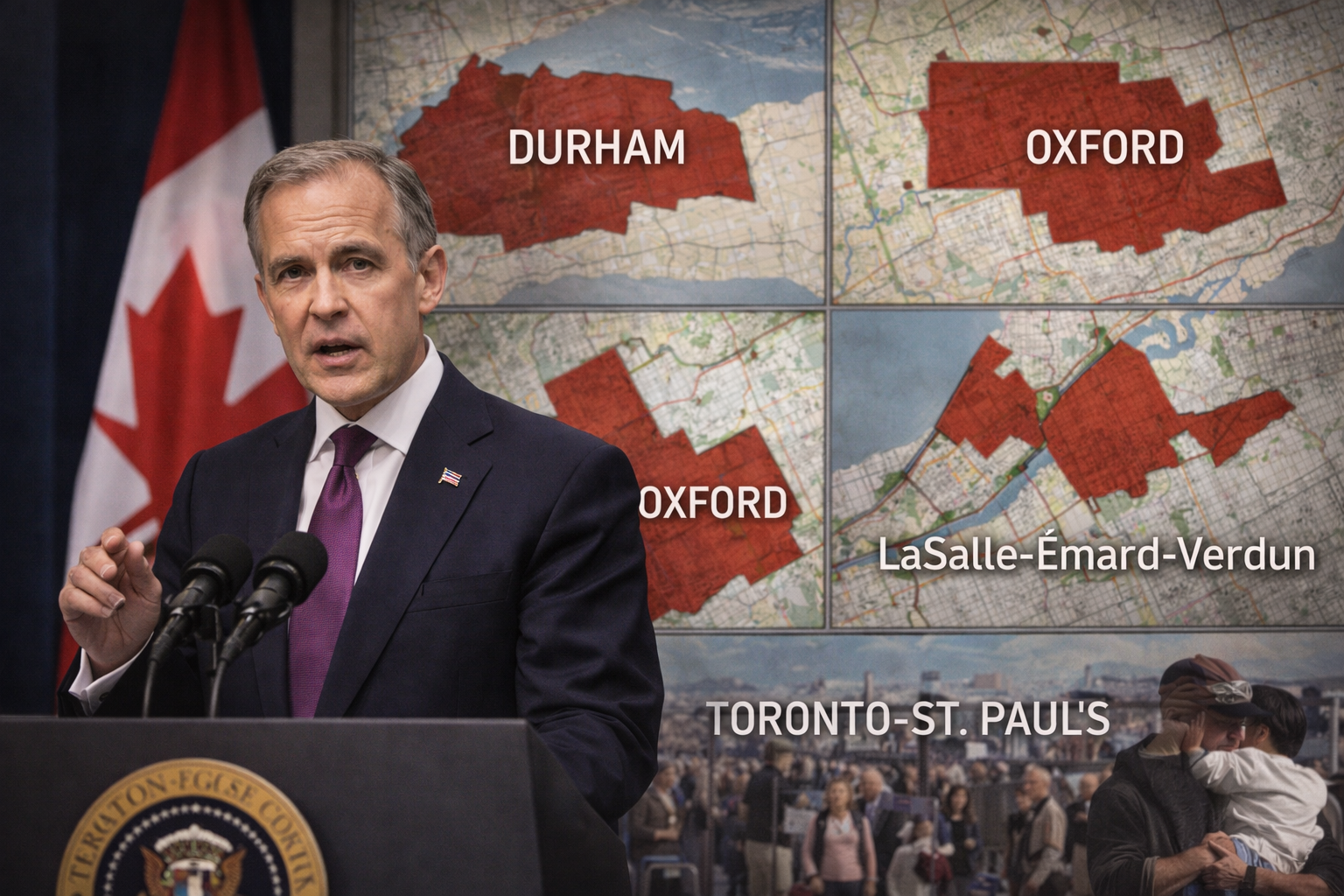
Canadian Prime Minister Mark Carney has announced federal byelections in several ridings across Canada to fill vacant seats in the House of Commons. The announcement was made in Ottawa as part of the constitutional process required when parliamentary seats become vacant. The byelections matter nationally because they will determine new representation for voters and could influence the political balance in Parliament.
Background and Context
In Canada’s parliamentary system, byelections are held when a seat in the House of Commons becomes vacant between general elections. Vacancies can occur due to the resignation, death, or disqualification of a sitting Member of Parliament.
Once a seat becomes vacant, the prime minister advises the Governor General to issue writs for a byelection. Elections Canada then administers the vote within the affected riding.
Byelections often draw national attention because they can serve as a test of political momentum between general elections. Political parties frequently use these contests to gauge public sentiment and strengthen their presence in key regions.
Depending on the riding, byelections may involve candidates from major federal parties as well as local or independent contenders.
Latest Developments
Prime Minister Mark Carney confirmed that byelections will be held in multiple federal ridings where parliamentary seats are currently vacant.
The announcement triggers the formal electoral process, with Elections Canada expected to set the campaign timeline and voting dates in accordance with federal election rules.
Political parties are now expected to begin selecting candidates for the affected ridings. Campaigns will likely focus on local issues while also reflecting broader national political debates.
Officials have indicated that voters in these ridings will soon receive information about polling locations, advance voting dates, and candidate nominations.
Why This Matters
Byelections are important because they allow citizens in affected ridings to regain representation in Parliament. Members of Parliament play a key role in representing local interests, participating in debates, and voting on legislation.
For political parties, byelections can serve as a measure of public opinion between general elections. Strong or weak results may influence party strategies and messaging in future national campaigns.
The outcomes can also affect parliamentary dynamics if a party gains or loses seats, particularly in situations where the governing party holds a narrow majority.
Beyond national politics, byelections often highlight regional concerns such as economic development, infrastructure, and public services.
What Happens Next
Elections Canada will formally issue writs for the byelections and establish key dates for candidate nominations, advance voting, and election day.
Political parties are expected to nominate candidates in the coming weeks, after which campaign activities will begin in the affected ridings.
Voters will then cast ballots to elect new representatives to the House of Commons. Once the results are confirmed, the newly elected Members of Parliament will take their seats in Parliament.
The outcomes will be closely watched by political observers as indicators of shifting public opinion.
Conclusion
Prime Minister Mark Carney’s announcement of byelections in several ridings sets the stage for new electoral contests across Canada. These votes will restore representation for voters in vacant constituencies and may offer insight into the country’s evolving political landscape.
As campaigns begin, attention will turn to the candidates, local issues, and broader national themes shaping the upcoming byelection races.