

Opening Summary
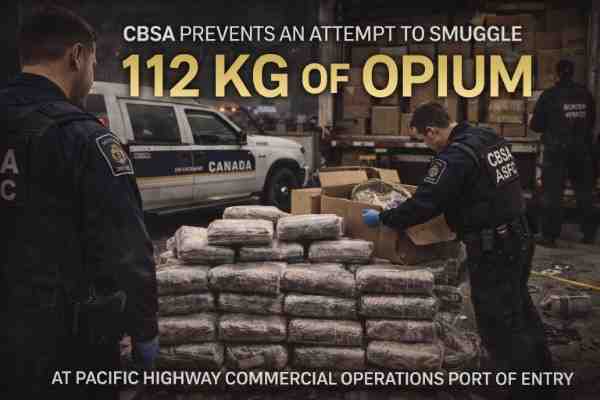
The Canada Border Services Agency (CBSA) has prevented an attempt to smuggle 112 kilograms of opium at the Pacific Highway Commercial Operations port of entry in British Columbia. Border officers intercepted the shipment during a routine inspection of a commercial vehicle entering Canada. The seizure matters nationally as authorities continue efforts to combat drug trafficking across Canada’s border crossings.
Background and Context
The Pacific Highway port of entry, located near Surrey, British Columbia, is one of Canada’s busiest commercial border crossings with the United States. Thousands of trucks carrying goods cross the border through the facility each day as part of the extensive trade network between the two countries.
Because of the high volume of traffic, border officers use a range of inspection techniques to identify illegal goods, including narcotics. These measures include intelligence analysis, physical inspections, scanning technology, and cooperation with law enforcement agencies.
Opium is a narcotic substance derived from the poppy plant and is often used as a raw material for producing illegal drugs such as heroin. Trafficking of such substances is a serious criminal offence under Canadian law.
Canadian authorities have increased efforts to intercept illegal drugs at ports of entry as part of broader strategies to address organized crime and drug trafficking networks.
Latest Developments
CBSA officers discovered approximately 112 kilograms of opium concealed within a commercial shipment at the Pacific Highway Commercial Operations port of entry.
The discovery was made during a detailed inspection of a truck entering Canada. Border officers identified suspicious indicators and conducted a secondary examination, leading to the discovery of the narcotics.
The seized drugs were turned over to law enforcement authorities for further investigation. Officials said the case has been referred to the appropriate police agencies for potential criminal charges.
CBSA officials emphasized that the seizure demonstrates the effectiveness of border screening and enforcement procedures at major ports of entry.
Why This Matters
Drug trafficking poses significant risks to public safety and national security. Large narcotics shipments are often linked to organized criminal networks operating across international borders.
The seizure of more than 100 kilograms of opium represents a substantial disruption to illegal drug supply chains. Such interceptions can prevent drugs from reaching Canadian communities and reduce the profits of criminal organizations.
Border security operations also play an important role in maintaining the integrity of Canada’s trade routes while ensuring that commercial transportation is not exploited for illegal activities.
The incident highlights the importance of continued vigilance and cooperation between border officers and law enforcement agencies.
What Happens Next
Law enforcement authorities are expected to continue investigating the smuggling attempt to determine who was responsible and whether the shipment was connected to a larger trafficking network.
Investigators may examine the origin of the shipment, the intended destination of the drugs, and any individuals involved in the transportation process.
If charges are laid, the case could proceed through Canada’s criminal justice system.
CBSA officials say they will continue strengthening inspection procedures and intelligence-based operations at border crossings across the country.
Conclusion
The interception of 112 kilograms of opium at the Pacific Highway Commercial Operations port of entry marks a significant seizure by Canadian border authorities. The operation prevented a large quantity of narcotics from entering Canada and underscores the role of CBSA officers in protecting the country’s borders.
As investigations continue, authorities will work to identify those responsible and ensure that individuals involved in drug trafficking are held accountable under Canadian law.