

Opening Summary
A powerful winter storm described as “extremely hazardous” has forced the closure of several highways across northeastern Ontario, Canada. Authorities issued travel warnings as heavy snow, strong winds, and poor visibility created dangerous road conditions. The situation matters regionally as highway closures have disrupted transportation and raised safety concerns for residents and travellers.
Background and Context
Northeastern Ontario regularly experiences severe winter weather during the colder months. Snowstorms combined with high winds can create whiteout conditions that make driving extremely dangerous.
Major highways in the region serve as critical transportation routes connecting communities and supporting commercial transportation, including the movement of goods and essential supplies.
When severe storms strike, provincial transportation authorities and local police may temporarily close highways to prevent accidents and protect drivers from hazardous conditions.
Weather warnings are typically issued by federal meteorological agencies when snowfall, wind speeds, and visibility reach levels that pose significant risks to travel and infrastructure.
Latest Developments
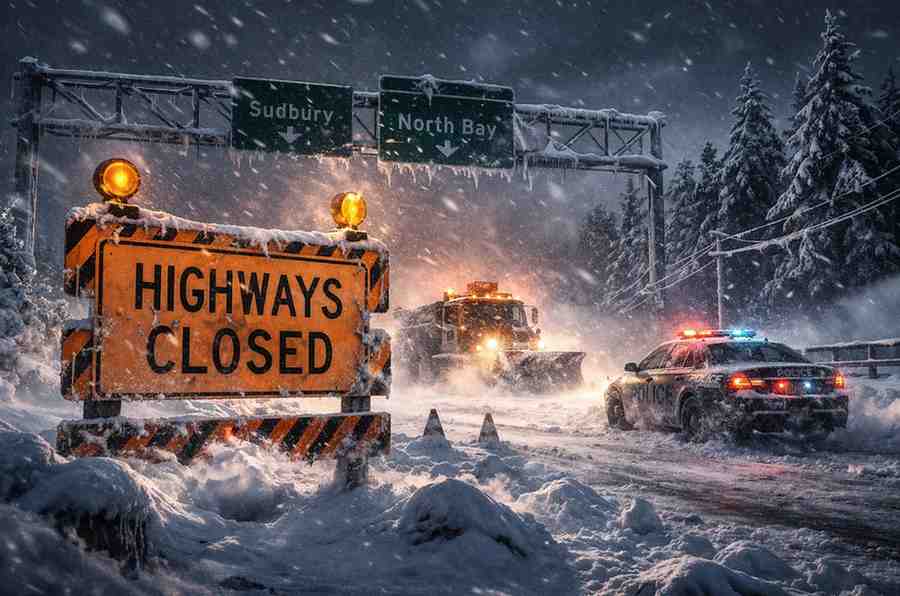
Authorities closed several highways in northeastern Ontario after the winter storm intensified and road conditions deteriorated rapidly.
Officials reported heavy snowfall and strong wind gusts that reduced visibility to near zero in some areas. Snow accumulation on roadways and blowing snow created dangerous driving conditions across the region.
Provincial transportation officials urged drivers to avoid travel unless absolutely necessary and to monitor official updates for information about road closures.
Emergency services and road maintenance crews have been working to manage the storm’s impact, including clearing snow and assisting motorists where possible.
Local authorities also warned residents to prepare for possible disruptions, including delays in transportation and services.
Why This Matters
Highway closures during severe winter storms can significantly affect transportation networks in northern regions where road travel is often the primary way to move people and goods.
Commercial trucking, supply deliveries, and emergency services can all be affected by prolonged closures.
For residents in smaller communities, severe weather events may also impact access to essential services and travel between towns.
The storm also highlights the ongoing challenges of winter weather in Canada, where extreme conditions require constant monitoring and response from transportation and emergency authorities.
What Happens Next
Weather conditions will determine how long the highway closures remain in place. Authorities are expected to reopen roads gradually once snow removal operations and safety checks are completed.
Meteorologists will continue monitoring the storm system and issuing updates if conditions worsen or additional snowfall is expected.
Drivers are being advised to follow official travel advisories and avoid unnecessary travel until road conditions improve.
Transportation officials will continue coordinating with emergency services and road crews to restore safe travel routes.
Conclusion
The winter storm in northeastern Ontario has created extremely hazardous conditions, forcing highway closures and disrupting travel across the region.
As crews work to clear roads and conditions gradually improve, officials are urging residents and travellers to prioritize safety and remain alert to weather and transportation updates.