

Opening Summary
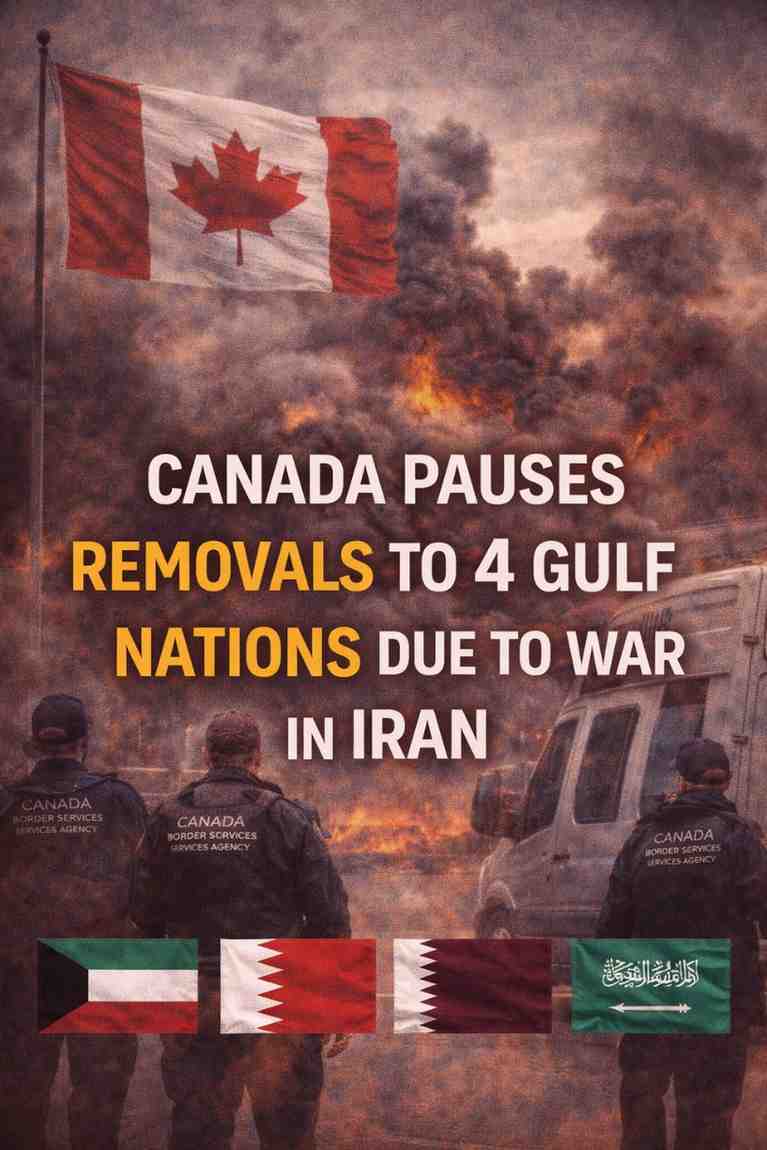
Canada has paused deportations to four Gulf nations due to the ongoing war involving Iran and escalating regional instability. The decision, taken by federal authorities, comes amid what officials describe as “volatile and unpredictable” conditions across parts of the Middle East. The move matters nationally as it reflects Canada’s immigration enforcement adjustments in response to international conflict and safety risks.
Background and Context
Canada’s immigration enforcement system allows for the removal of foreign nationals who are inadmissible due to criminality, immigration violations, or failed refugee claims. These removals are typically carried out by the Canada Border Services Agency (CBSA).
However, removals can be temporarily suspended when conditions in a destination country are considered unsafe. Such pauses are often implemented during armed conflict, natural disasters, or severe political instability.
The current situation in the Middle East has deteriorated following military exchanges between Iran, the United States, and Israel. The conflict has led to missile attacks, airspace disruptions, and heightened security risks across several Gulf countries.
Canada has also been assisting its citizens in leaving the region, highlighting the broader impact of the conflict on travel and safety.
Latest Developments
Canadian authorities have confirmed a temporary pause on deportations to four Gulf countries due to the ongoing conflict and deteriorating security conditions.
Officials cited safety concerns, including the risk of violence, disruptions to transportation, and instability in the region. The suspension affects individuals who were scheduled for removal but will now remain in Canada until conditions improve.
The decision aligns with Canada’s practice of halting removals when return destinations are considered unsafe.
Authorities have not specified how long the pause will remain in place, indicating that the situation will be reviewed based on developments in the region.
Why This Matters
The pause highlights how international conflicts can directly affect domestic immigration policies. Canada must balance enforcement of immigration laws with humanitarian considerations and safety risks.
For individuals facing removal, the decision provides temporary relief, as returning to conflict-affected regions could pose serious dangers.
The move also reflects Canada’s broader response to the Iran conflict, which has included evacuation efforts for citizens and increased diplomatic engagement.
From a policy perspective, the situation underscores the flexibility required in immigration enforcement during global crises.
What Happens Next
Canadian authorities are expected to continue monitoring the situation in the Middle East before deciding when to resume removals.
If conditions improve, deportations may restart. If instability persists or worsens, the pause could be extended.
Officials may also provide further guidance to affected individuals regarding their immigration status during the suspension period.
Conclusion
Canada’s decision to pause deportations to four Gulf nations reflects the impact of the Iran-related conflict on domestic policy and international safety considerations.
As the situation in the Middle East remains unstable, Canadian authorities are prioritizing safety while continuing to assess when normal immigration enforcement operations can resume.