

Opening Summary
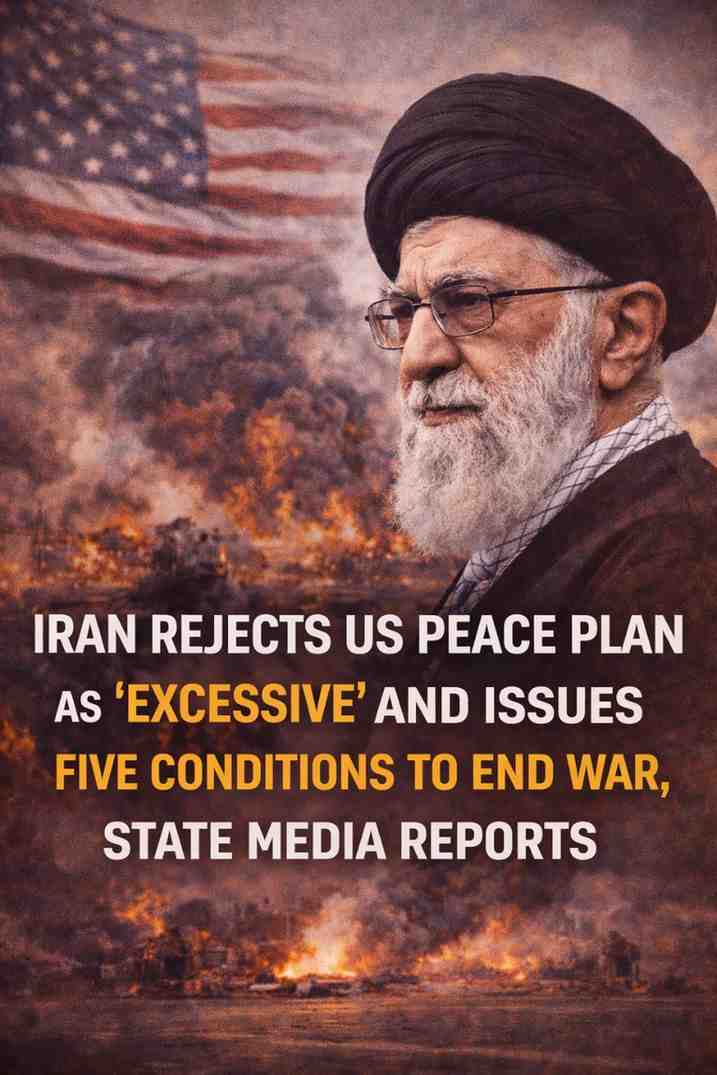
Iran has rejected a U.S.-proposed peace plan to end the ongoing war, calling the terms “excessive” and unacceptable. Iranian officials said any ceasefire would only occur on Tehran’s terms and outlined five conditions for ending the conflict. The development matters globally as diplomatic efforts to halt the war face major setbacks amid continued military escalation.
Background and Context
The conflict between Iran, the United States, and Israel intensified after coordinated strikes on Iranian military and nuclear-related sites earlier in 2026. Iran responded with missile and drone attacks on U.S. bases and allied infrastructure across the Middle East.
Since then, multiple international efforts have attempted to broker a ceasefire. The United States reportedly proposed a framework that included restrictions on Iran’s nuclear and missile programs, as well as reopening key shipping routes such as the Strait of Hormuz.
However, Iran has consistently expressed distrust toward U.S. proposals, citing previous breakdowns in agreements and ongoing military actions.
The war has also had global consequences, including rising oil prices and disruptions to shipping routes critical to international energy supply.
Latest Developments
Iranian officials said the U.S. proposal was “excessive” and rejected it outright, stating that Tehran would not allow Washington to dictate the terms or timing of ending the war.
In response, Iran outlined five key conditions for ending the conflict. These include:
- A complete halt to military attacks and targeted actions against Iran
- Guarantees that future aggression will not be repeated
- Compensation and reparations for damages caused during the war
- An end to hostilities across all fronts, including allied groups in the region
- Recognition of Iran’s sovereignty, including control over the Strait of Hormuz
Iranian officials said no negotiations would take place unless these conditions are met, emphasizing that the war would end only “on Iran’s own terms and timeline.”
The rejection comes despite reports that the U.S. proposal was delivered through intermediaries and included elements aimed at de-escalation.
Why This Matters
The rejection of the U.S. peace plan significantly reduces the chances of an immediate ceasefire. Diplomatic progress typically depends on both sides showing willingness to negotiate, and Iran’s position suggests a continued hardline approach.
The five conditions outlined by Tehran indicate that any agreement would require major concessions from the United States and its allies, making a quick resolution unlikely.
The situation also has global implications. Continued conflict in the Middle East affects energy markets, trade routes, and geopolitical stability. The Strait of Hormuz, in particular, remains a critical chokepoint for global oil supply.
For countries like Canada and others dependent on stable energy markets, prolonged conflict could lead to higher fuel costs and economic uncertainty.
What Happens Next
Diplomatic efforts are expected to continue through intermediaries, even as direct negotiations remain unlikely in the short term.
Military operations between Iran, the United States, and Israel are likely to persist as both sides maintain their positions.
International organizations and regional powers may attempt to push for de-escalation, though progress will depend on changes in military and political conditions.
Observers will be watching closely for any shift in tone or willingness to negotiate from either side.
Conclusion
Iran’s rejection of the U.S. peace plan and its demand for five conditions to end the war highlight the deep divisions between the two sides. With both parties maintaining firm positions, prospects for a near-term ceasefire remain uncertain.
As the conflict continues, the focus will remain on whether diplomatic efforts can bridge the gap or whether the situation escalates further with broader regional consequences.