

Opening Summary
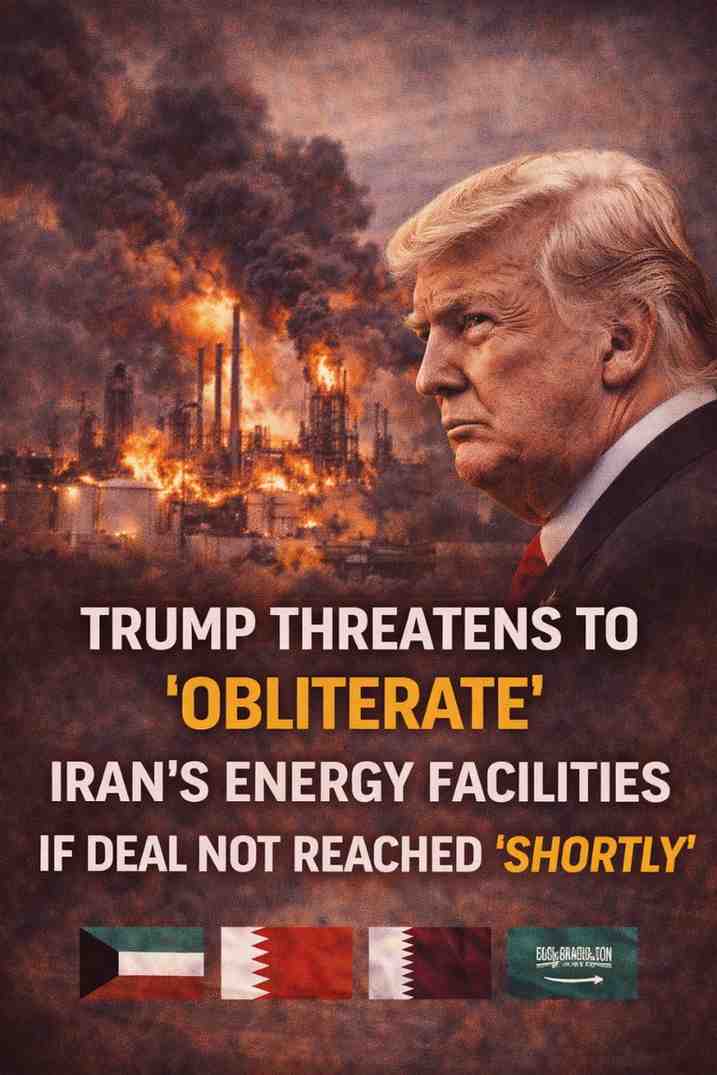
U.S. President Donald Trump has warned that the United States could “obliterate” Iran’s energy infrastructure if a deal to end the ongoing war is not reached “shortly.” The statement was made amid escalating tensions involving Iran, the United States, and Israel. The threat matters globally as it raises the risk of further military escalation and potential disruption to global energy supplies.
Background and Context
The conflict intensified after U.S. and Israeli strikes targeted Iranian military and nuclear-related facilities earlier in 2026. Iran responded with missile and drone attacks across the Middle East, including against U.S. bases and allied infrastructure.
A central issue in the conflict is the Strait of Hormuz, a key global energy corridor through which a significant portion of the world’s oil supply passes.
In recent weeks, the United States has increased military pressure on Iran while also pursuing diplomatic efforts to end the conflict. Washington has reportedly proposed terms aimed at reopening the Strait of Hormuz and reducing hostilities.
Iran, however, has repeatedly denied engaging in direct negotiations and has rejected several proposals put forward by the United States.
Latest Developments
President Donald Trump said that while progress is being made toward a potential agreement, failure to reach a deal soon would result in major military action targeting Iran’s critical infrastructure.
He specifically warned that U.S. forces could strike and “completely obliterate” Iran’s power plants, oil wells, and key export facilities such as Kharg Island.
Trump also suggested that additional infrastructure, including desalination plants essential for water supply, could be targeted if Iran does not agree to terms.
At the same time, U.S. officials have indicated that diplomatic channels remain open, with indirect talks reportedly ongoing through intermediaries.
Iranian authorities have denied that meaningful negotiations are taking place and have accused Washington of using threats alongside claims of diplomacy.
Why This Matters
The threat to target Iran’s energy infrastructure represents a major escalation in rhetoric and potentially in military strategy.
Energy facilities are critical not only to Iran’s economy but also to global oil markets. Any attack on such infrastructure could disrupt supply, increase oil prices, and affect economies worldwide.
The situation also raises humanitarian concerns, as strikes on infrastructure such as power and water systems could have significant impacts on civilian populations.
For countries like Canada and others dependent on stable energy markets, continued escalation could contribute to higher fuel costs and broader economic uncertainty.
What Happens Next
Diplomatic efforts are expected to continue, though progress remains uncertain given the sharp differences between U.S. and Iranian positions.
Military operations in the region are likely to persist, with both sides maintaining a high level of readiness.
International actors may intensify efforts to mediate and prevent further escalation, particularly given the risks to global energy supply and regional stability.
Energy markets and governments will continue monitoring developments closely as the situation evolves.
Conclusion
President Donald Trump’s threat to “obliterate” Iran’s energy infrastructure if a deal is not reached highlights the high stakes of the ongoing conflict. While diplomatic efforts continue, the combination of negotiations and military pressure underscores the fragile nature of the situation.
The coming days will be critical in determining whether tensions escalate further or whether a diplomatic breakthrough can prevent a broader crisis.