

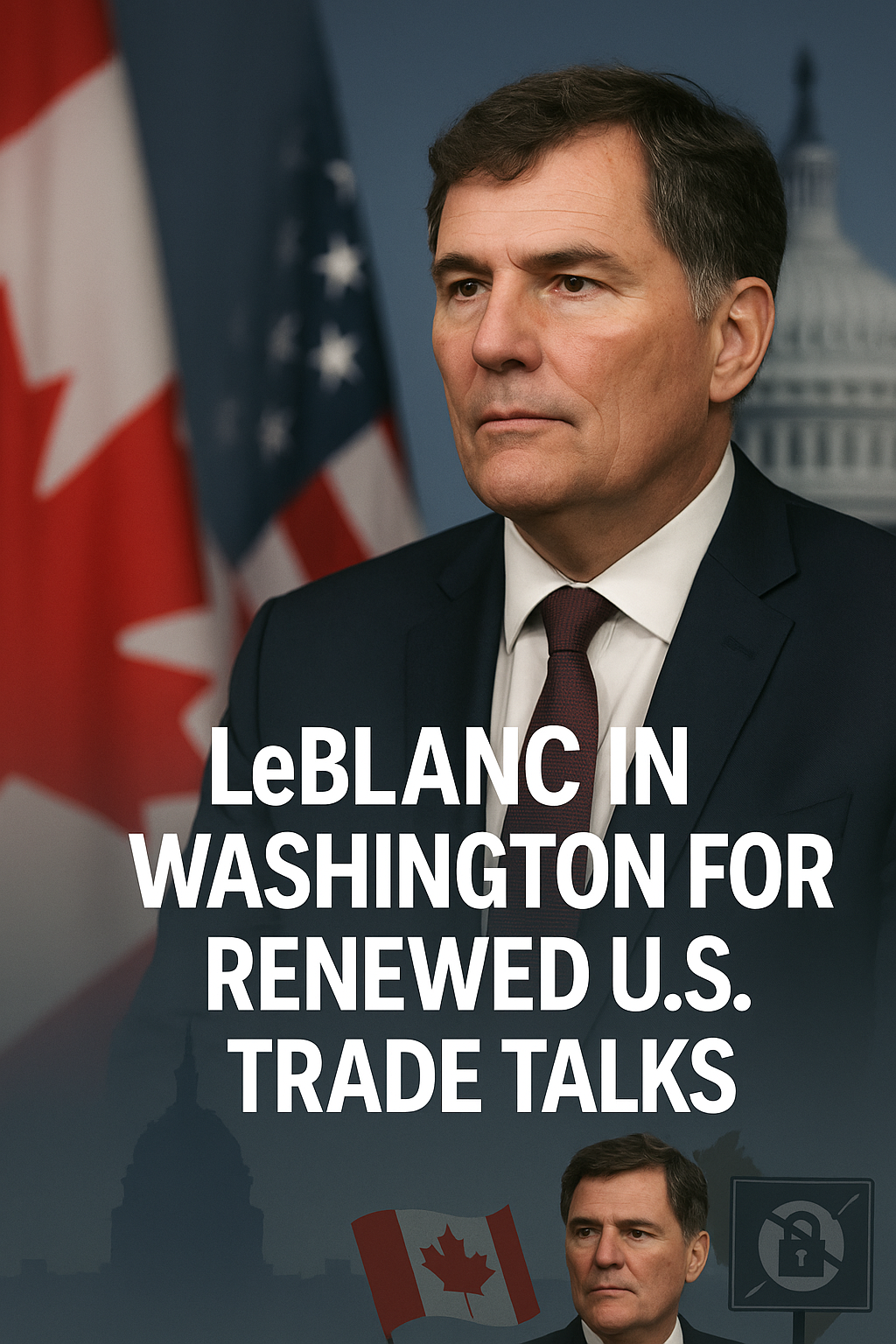
Washington/Ottawa – Canada’s Minister of Public Safety and Intergovernmental Affairs, Dominic LeBlanc, has returned to Washington, D.C. for a new round of trade negotiations with senior U.S. officials, as both countries work to resolve lingering disputes and modernize key aspects of their economic partnership.
According to government sources, LeBlanc’s visit marks the resumption of formal trade talks that had been paused earlier this year amid political disagreements over tariffs, energy policy, and cross-border environmental regulations. The renewed discussions come at a critical time, with businesses on both sides of the border urging progress ahead of the 2026 review of the Canada–United States–Mexico Agreement (CUSMA).
In a brief statement before his departure, LeBlanc said Canada remains “fully committed to advancing fair and balanced trade that benefits workers, industries, and consumers in both countries.” He added, “We have a long-standing and trusted relationship with our American partners, and this round of talks will focus on pragmatic solutions to shared challenges.”
Sources say the Canadian delegation’s agenda includes auto sector supply chains, softwood lumber tariffs, agricultural exports, and U.S. concerns about Canada’s digital taxation policy. The discussions are expected to involve top officials from the U.S. Trade Representative’s Office and the Department of Commerce, with a focus on establishing a framework to prevent future trade disruptions.
U.S. officials, while describing relations with Ottawa as “strong and constructive,” have expressed frustration over Canada’s digital services tax proposal and energy regulations, which Washington views as potential trade barriers. “We want to make sure both sides are playing by the same rules,” a U.S. trade official said.
Economists say LeBlanc’s return to Washington signals Ottawa’s determination to stabilize trade relations amid growing global economic uncertainty. “These talks are less about confrontation and more about coordination,” said trade policy analyst Michelle Grant. “Canada needs to ensure long-term access to U.S. markets, especially for its automotive and agricultural sectors, which are highly integrated with American supply chains.”
Observers also note that the meeting could serve as a litmus test for North American unity, particularly as both governments prepare for major domestic elections. With trade emerging as a politically sensitive topic in both countries, the outcome of these talks could shape economic policy discussions heading into 2026.
LeBlanc is expected to meet with U.S. Trade Representative Katherine Tai and Commerce Secretary Gina Raimondo before returning to Ottawa later this week. Both sides are said to be approaching the talks with cautious optimism, aiming for progress rather than a full resolution.
As negotiations resume, business leaders across North America are watching closely — hopeful that the return to dialogue will help preserve the deeply interconnected economic relationship that underpins one of the world’s largest bilateral trading partnerships.