

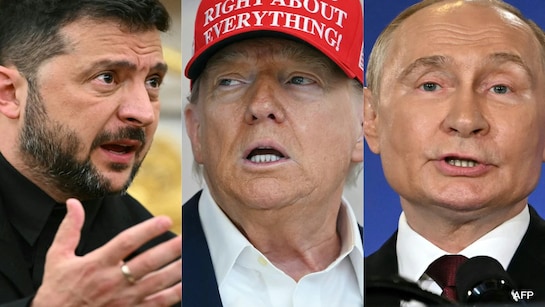
Former U.S. President Donald Trump said on Monday that he will hold a joint or separate meeting with Russian President Vladimir Putin and Ukrainian President Volodymyr Zelensky only after a final agreement on ending the Ukraine war is ready, signalling that he intends to step into the diplomatic process at the closing stage rather than during negotiations.
Speaking to reporters, Trump said he wants both leaders to “finish the work” on a peace arrangement before he sits down with them, adding that premature meetings could “complicate” discussions already underway. “When the Ukraine deal is final, that’s when I’ll meet them,” he said, framing his role as that of a closer rather than a mediator.
The remark comes at a delicate moment, with multiple channels of negotiation taking place across Europe, the U.S., and the Middle East. Trump has repeatedly claimed he could bring the war to an end swiftly, though details of his plan remain unclear. Analysts say his latest comments suggest an attempt to apply pressure on both Kyiv and Moscow to accelerate talks.
Ukrainian officials have maintained that any agreement must guarantee long-term security, territorial integrity, and a clear framework for Western support. Russia, meanwhile, has insisted that negotiations must reflect “new realities on the ground,” referencing territory under its control.
Diplomats following the talks say Trump’s announcement may complicate the process, as both sides now have to consider how U.S. political timing and Trump’s personal involvement could shape the final outcome. Some officials in Kyiv privately worry that Trump’s approach may increase pressure on Ukraine to concede on issues it considers non-negotiable.
The Kremlin declined to comment directly on Trump’s remarks but noted that Moscow remains open to discussions that ensure its “core interests” are recognised.
With winter approaching and military operations slowing, negotiators say the coming weeks will be critical. Whether Trump’s conditional offer to meet acts as a catalyst or an obstacle remains to be seen — but it adds yet another layer of complexity to an already fraught diplomatic landscape.