

Opening Summary
Senior immigration officials from former U.S. President Donald Trump’s administration are set to testify before Congress following the deaths of protesters during recent enforcement-related incidents. Lawmakers are seeking answers on the role of federal immigration agencies, use of force, and whether policy directives contributed to the violence. The hearings carry significance for U.S. domestic politics and international scrutiny of American immigration enforcement practices.
Background and Context
Immigration enforcement has long been one of the most divisive issues in U.S. politics, and it became especially contentious during Donald Trump’s presidency. His administration pursued an aggressive approach to border control and interior enforcement, expanding deportations, limiting asylum access, and granting broader authority to immigration officers. Agencies such as Immigration and Customs Enforcement (ICE) and Customs and Border Protection (CBP) were placed at the centre of these efforts.
While supporters argued the policies were necessary to restore law and order, critics warned that the approach increased the risk of confrontations with migrants, activists, and local communities. Over the years, civil rights groups have raised concerns about the use of force, detention conditions, and lack of transparency within immigration enforcement agencies.
The latest controversy follows a series of protests that erupted after enforcement operations in multiple locations. Demonstrators accused federal agencies of excessive force and poor coordination with local authorities. During these protests, several individuals were killed under circumstances that remain under investigation, prompting renewed calls for accountability and congressional oversight.
Congress has previously examined immigration enforcement practices, but the deaths of protesters have intensified pressure on lawmakers to scrutinize not just operational decisions, but also the policy direction set at the highest levels of government.
Latest Developments
Congressional committees have confirmed that Trump-era immigration chiefs will appear before lawmakers to answer questions related to the incidents. The hearings are expected to focus on command structures, rules of engagement, and whether directives from senior leadership influenced how officers responded to protests.
Lawmakers from both parties have called for clarity, though their approaches differ sharply. Democratic members have emphasized the need to determine whether enforcement tactics violated civil rights or escalated tensions unnecessarily. They are expected to question officials about training, crowd control protocols, and coordination with local law enforcement.
https://newsbee.ca/2026/02/08/ottawa-toronto-remain-under-cold-warning-as-deep-freeze-grips-ontario/
Republican lawmakers, while expressing concern over the deaths, have argued that federal officers were operating in a volatile environment and have pointed to the need to protect personnel enforcing the law. They are likely to focus on whether protesters acted unlawfully and whether agencies were adequately supported.
Former administration officials have so far defended their record, stating that enforcement agencies followed existing laws and procedures. They have argued that responsibility for violence cannot be assigned without a full investigation into the actions of all parties involved.
The Justice Department and independent investigators are continuing parallel probes into the incidents, meaning testimony before Congress could have legal as well as political implications.
Why This Matters
The hearings matter because they touch on fundamental questions about the balance between law enforcement authority and the right to protest. In the United States, federal agencies are granted significant powers, but those powers are constrained by constitutional protections. When deaths occur in the context of protests, public trust in institutions is put at risk.
For the Trump administration’s legacy, the testimony could reopen debates about whether its immigration policies prioritized enforcement at the expense of de-escalation and community relations. Critics argue that aggressive rhetoric and policy signals from the top can shape how officers behave on the ground, even if specific actions are not explicitly ordered.
Internationally, the issue is also being closely watched. The United States frequently positions itself as a defender of democratic norms and human rights. Allegations of excessive force by federal agencies, especially against protesters, can undermine that image and complicate diplomatic relationships.
For Canada and other U.S. allies, the developments are relevant because immigration and border enforcement often involve cross-border coordination. Instability or controversy within U.S. enforcement agencies can affect regional cooperation, information sharing, and joint border management.
The hearings also come at a time when immigration policy is once again a central issue in U.S. politics. Any findings or revelations could influence future legislation, election debates, and public attitudes toward enforcement agencies.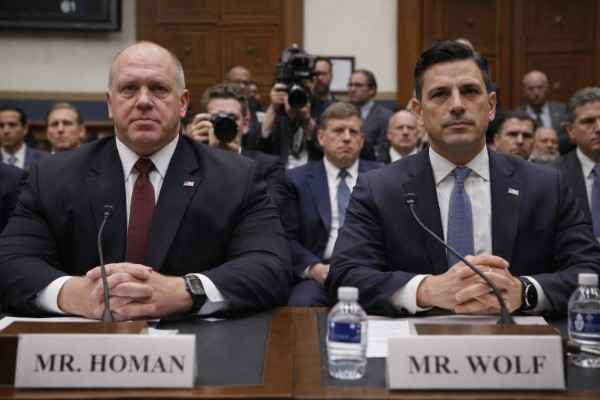
What Happens Next
The congressional testimony is expected to span several sessions, with lawmakers calling current and former officials, experts, and possibly witnesses connected to the protests. Transcripts and recordings of the hearings are likely to be closely analyzed by media, advocacy groups, and legal experts.
Depending on what emerges, Congress could pursue legislative changes aimed at increasing oversight of immigration agencies, tightening use-of-force guidelines, or enhancing transparency and reporting requirements. There is also the possibility of referrals to oversight bodies or recommendations for disciplinary action.
Ongoing investigations by the Justice Department and independent watchdogs will continue alongside the hearings. Their findings could result in criminal charges, civil lawsuits, or policy reforms, depending on the conclusions reached.
Public reaction will play a role as well. Sustained attention and pressure from civil society groups could keep the issue on the political agenda, while shifting priorities could reduce momentum for reform.
Conclusion
The decision to summon Trump-era immigration chiefs before Congress marks a critical moment in the ongoing debate over U.S. immigration enforcement and accountability. As lawmakers seek answers about the deaths of protesters, the hearings are likely to have implications that extend beyond individual incidents, shaping public trust, policy direction, and the broader understanding of how federal power is exercised in times of conflict.