

Opening Summary
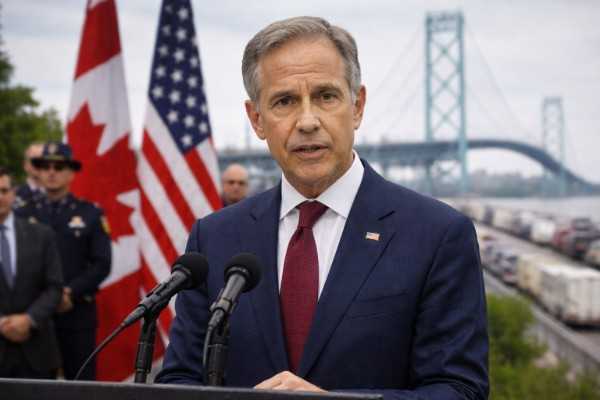
Canadian Prime Minister Mark Carney said the dispute surrounding a key U.S.–Canada bridge will be resolved after holding direct talks with U.S. President Donald Trump, following Trump’s earlier threat to block the bridge’s opening. Carney’s remarks aim to reassure businesses, border communities, and investors concerned about uncertainty affecting cross-border trade and infrastructure. The issue matters because the bridge is critical to Canada–U.S. economic integration and long-term supply chain stability.
Background and Context
Bridges linking Canada and the United States are among the most strategically important infrastructure assets in North America. They enable the daily movement of billions of dollars in goods, support tightly integrated manufacturing supply chains, and serve millions of commuters and travellers each year. Over time, these crossings have been governed through detailed bilateral agreements designed to insulate infrastructure planning from political disputes.
The bridge at the centre of the current controversy was conceived to address congestion, aging infrastructure, and the growing demands of cross-border trade. Planning for the project began years ago and involved extensive environmental assessments, regulatory approvals, and coordination between multiple levels of government. Canadian and U.S. authorities have repeatedly described the bridge as essential for economic resilience and long-term growth.
Tensions escalated after President Trump publicly threatened to block the opening of the bridge, framing the project within broader disagreements over trade and economic policy. His comments raised alarm in Canada, particularly among exporters, manufacturers, and provincial governments that depend heavily on predictable access to U.S. markets. The remarks also revived memories of past trade disputes, when infrastructure and tariffs were used as negotiating tools.
Prime Minister Carney has sought to position his government as focused on stability, predictability, and economic pragmatism. Since taking office, he has emphasized the importance of maintaining strong Canada–U.S. ties while defending Canadian interests. The bridge dispute quickly became a test of that approach.https://newsbee.ca/2026/02/10/trumps-immigration-chiefs-to-testify-in-congress-following-protester-deaths/
Latest Developments
Following Trump’s comments, Carney confirmed that he spoke directly with the U.S. president to address the issue. Speaking to reporters afterward, Carney said he was confident the situation would be resolved, signaling that the conversation had been constructive and aimed at de-escalation.
While Carney did not disclose details of the discussion, he stressed that both sides understand the economic importance of the bridge and the broader Canada–U.S. relationship. Canadian officials said the prime minister underscored that the project is governed by existing agreements and regulatory processes that reflect mutual interests.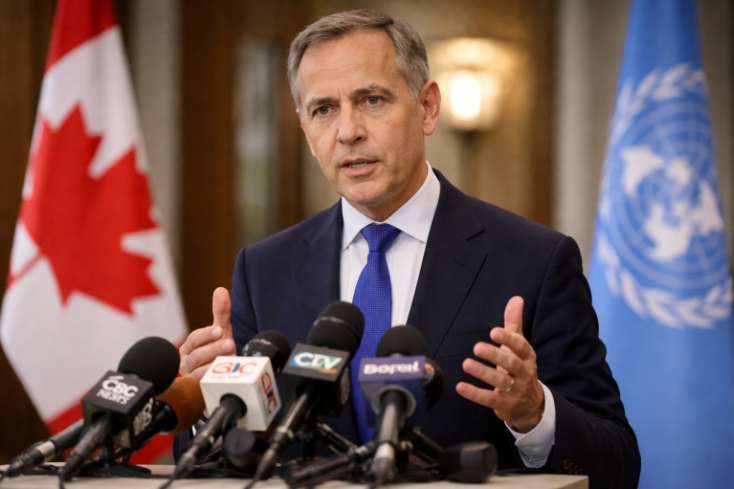
U.S. officials have not publicly contradicted Carney’s account, and there has been no formal announcement from Washington indicating that steps will be taken to block or delay the bridge. Construction and preparatory work continue, according to authorities involved in the project.
Business groups welcomed Carney’s remarks, viewing them as a sign that diplomatic engagement is working. Industry representatives said clear communication at the highest political level is essential to restoring confidence after days of uncertainty.
Opposition parties in Canada have urged the government to remain vigilant, warning that rhetoric alone can have economic consequences. They have called for contingency planning and transparency in dealings with Washington.
Why This Matters
The bridge dispute matters because of its potential impact on trade, jobs, and investor confidence. Canada and the United States are deeply interconnected economically, with supply chains that depend on efficient and reliable border crossings. Even short-term uncertainty can disrupt planning for manufacturers, logistics firms, and exporters.
For Canada, the bridge represents more than a transportation project. It is a symbol of economic sovereignty and the country’s ability to secure critical infrastructure that supports growth. Any suggestion that such projects could be blocked for political reasons raises concerns about long-term planning and resilience.
Politically, the episode highlights the delicate balance Canada must strike in managing relations with a powerful neighbour whose domestic politics can quickly affect bilateral ties. Carney’s decision to engage directly with Trump reflects a recognition that personal diplomacy can be crucial in defusing tensions before they escalate.
The issue also has implications for border communities. Cities and regions near major crossings rely on smooth trade flows for employment and economic activity. Prolonged uncertainty could affect local development plans, housing markets, and municipal revenues.
Internationally, the dispute is being watched as an example of how infrastructure and trade are increasingly intertwined with politics. Allies and partners are paying attention to how Canada navigates pressure while protecting long-term interests.
What Happens Next
In the coming days, officials on both sides are expected to continue technical and diplomatic discussions to ensure the bridge project stays on track. Canadian authorities will likely emphasize adherence to existing agreements and regulatory commitments, while monitoring any signals from Washington.
If Trump’s earlier threat remains rhetorical, attention may shift toward restoring confidence among businesses and investors. Carney’s government is expected to reinforce messaging that Canada remains a reliable trading partner with stable infrastructure policies.
However, analysts note that uncertainty could resurface if broader trade or political disputes intensify. In that scenario, Canada may need to rely on legal frameworks, diplomatic alliances, and domestic planning to protect key projects.
Parliamentary committees and provincial leaders may also seek briefings to assess risks and ensure preparedness. For now, the focus remains on de-escalation and continuity.
Conclusion
Prime Minister Mark Carney’s assurance that the bridge dispute will be resolved marks a calming note after days of heightened tension sparked by President Trump’s threat. While challenges remain, the direct engagement between the two leaders suggests a shared understanding of the bridge’s economic importance. The episode underscores both the fragility and resilience of Canada–U.S. relations, and the need for steady diplomacy to safeguard critical infrastructure in an increasingly unpredictable political environment.