

Opening Summary
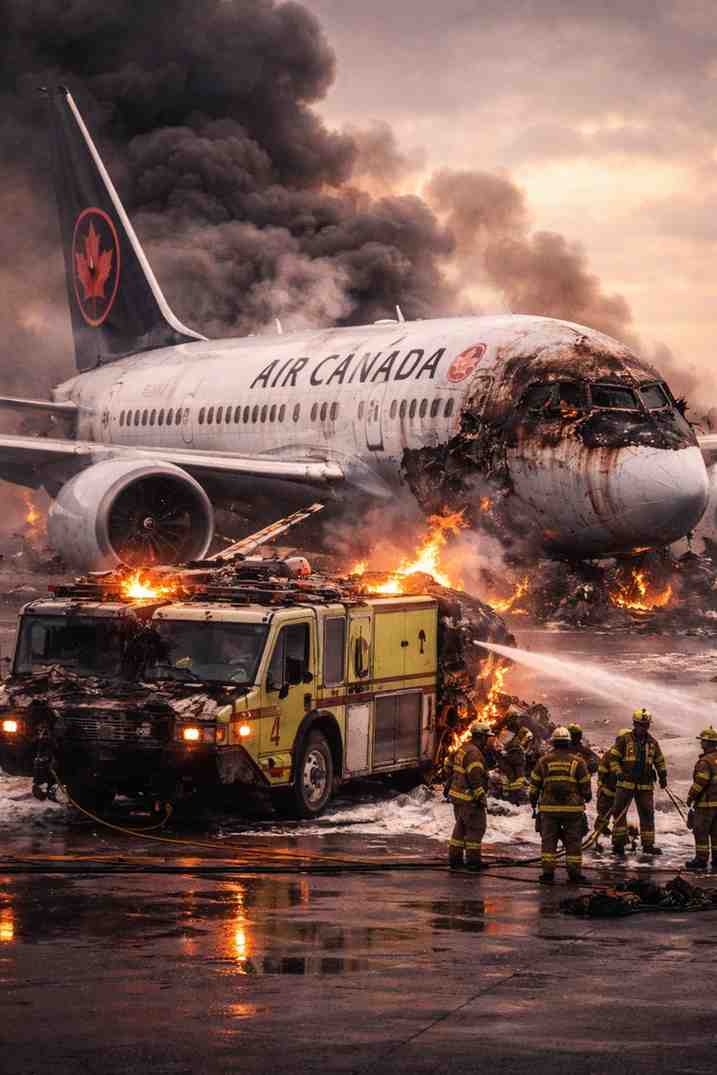
Two pilots operating an Air Canada aircraft were killed after the jet collided with a fire truck at an airport in New York, United States, authorities confirmed. The incident occurred on the ground during airport operations and is under investigation. The crash matters internationally as it raises concerns about aviation safety and airport ground coordination.
Background and Context
Airports are highly controlled environments where aircraft, service vehicles, and emergency response units operate in close proximity. Strict protocols are in place to manage aircraft movements on runways and taxiways, as well as the positioning of ground vehicles.
Air Canada is one of Canada’s largest airlines and operates numerous international routes, including flights to major U.S. cities such as New York.
Collisions between aircraft and ground vehicles are rare but can occur due to miscommunication, poor visibility, or operational errors. Aviation authorities typically investigate such incidents thoroughly to determine causes and improve safety procedures.
Both U.S. and Canadian aviation regulators are expected to be involved in examining the circumstances of the crash.
Latest Developments
Authorities confirmed that the Air Canada aircraft collided with a fire truck at a New York airport, resulting in the deaths of both pilots on board.
Emergency services responded immediately to the scene. Details about other injuries or damage to the aircraft have not been fully disclosed.
Officials said the collision occurred during ground operations, though the exact sequence of events remains unclear.
The identities of the pilots have not yet been released as authorities work to notify their families.
Investigators have begun reviewing airport communications, vehicle movements, and flight data to determine how the collision occurred.
Why This Matters
The incident raises serious concerns about safety during ground operations at busy international airports. Coordination between aircraft and emergency vehicles is critical to preventing accidents.
For Canada, the loss of two Air Canada pilots is a significant tragedy and highlights the risks faced by aviation professionals.
The crash may lead to increased scrutiny of airport procedures, including communication systems and vehicle access to active airfields.
Airlines, airport authorities, and regulators may review existing protocols to ensure that similar incidents are prevented in the future.
What Happens Next
A formal investigation will be conducted by U.S. aviation authorities, with possible involvement from Canadian agencies.
Investigators will analyze flight data, air traffic control communications, and the movement of the fire truck to identify contributing factors.
Air Canada is expected to cooperate fully with the investigation and provide support to the families of the deceased pilots.
Regulatory bodies may issue safety recommendations based on the findings of the investigation.
Conclusion
The collision between an Air Canada jet and a fire truck at a New York airport, which resulted in the deaths of two pilots, marks a serious aviation incident.
As investigations continue, authorities will focus on determining the cause and ensuring that safety measures are strengthened to prevent similar accidents in the future.