

Opening Summary
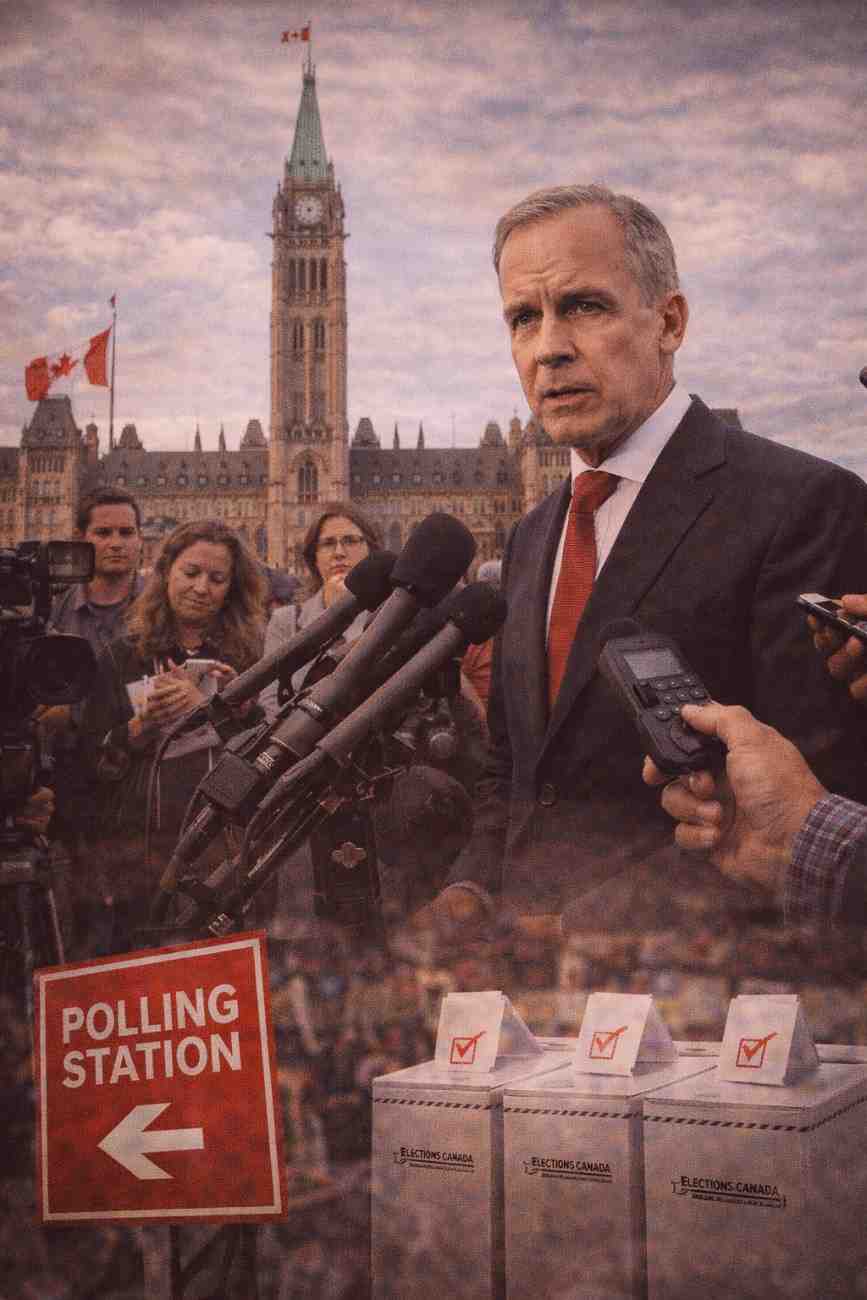
Canadian Prime Minister Mark Carney said he will “absolutely not” prorogue Parliament if upcoming April byelections result in a majority government. The statement was made during political discussions in Ottawa as parties prepare for key contests. The issue matters nationally as it addresses concerns about parliamentary procedure and democratic accountability.
Background and Context
In Canada’s parliamentary system, prorogation refers to the suspension of Parliament by the Governor General on the advice of the prime minister. It ends a parliamentary session and pauses all legislative business until a new session begins.
Prorogation has been used in the past for routine purposes, such as resetting the legislative agenda. However, it has also drawn criticism when used during politically sensitive periods, particularly when governments face opposition pressure or investigations.
Byelections are held to fill vacant seats in the House of Commons. While they typically do not change overall government control, a series of wins can shift the balance of power, especially in closely divided parliaments.
The upcoming April byelections are being closely watched as they could influence the strength of the current government and its ability to pass legislation.
Latest Developments
Prime Minister Mark Carney stated clearly that he would not prorogue Parliament even if his government secures a majority through the upcoming byelections.
He said there would be no need to suspend parliamentary proceedings and emphasized that his focus would remain on continuing legislative work without interruption.
The comments appear to address speculation that a strengthened government might use prorogation to reset its agenda or avoid political challenges.
Carney’s remarks were made as political parties intensify campaigning efforts ahead of the byelections, which are expected to be closely contested.
Why This Matters
The statement is significant because it directly addresses concerns about the use of prorogation as a political tool.
For Canadians, the functioning of Parliament is central to democratic governance. Keeping Parliament in session ensures continued debate, oversight, and decision-making.
If the government were to gain a majority, it would have greater control over legislation. Carney’s commitment not to prorogue suggests an intention to maintain continuity rather than reset parliamentary proceedings.
The issue also reflects broader discussions about transparency and accountability in government actions.
What Happens Next
The focus will now shift to the April byelections, where results could influence the political balance in Parliament.
If the government gains a majority, attention will turn to how it uses that position to advance its legislative agenda.
Parliament is expected to continue its session without interruption, in line with Carney’s statement.
Political observers will monitor whether the government follows through on its commitment and how opposition parties respond.
Conclusion
Prime Minister Mark Carney’s statement that he will “absolutely not” prorogue Parliament, even if his government secures a majority, signals a commitment to maintaining parliamentary continuity.
As the April byelections approach, the outcome will shape Canada’s political landscape, while the government’s approach to parliamentary procedure will remain under close scrutiny.