

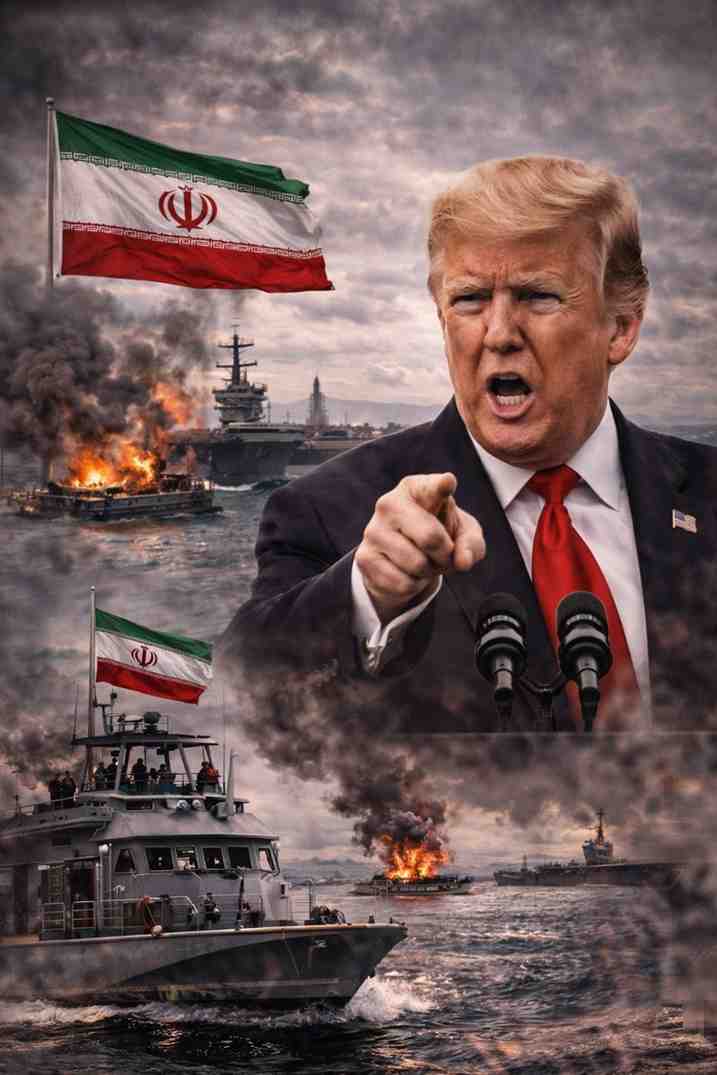
Opening Summary
U.S. President Donald Trump has criticized Iran’s handling of the Strait of Hormuz, saying its actions are “not the agreement we have” following a recently announced ceasefire. The remarks come as disruptions to oil shipments continue despite commitments to reopen the critical waterway. The development matters globally as it raises concerns over the stability of the ceasefire and global energy supply.
Background and Context
The United States and Iran recently agreed to a temporary two-week ceasefire aimed at reducing hostilities and restoring stability in the region.
A key condition of the agreement was the reopening of the Strait of Hormuz, one of the world’s most important oil transit routes. The strait handles a significant portion of global crude shipments, making it vital for international energy markets.
However, reports suggest that shipping through the strait has not fully resumed, with vessels facing delays, restrictions, and uncertainty.
The fragile ceasefire has already been under pressure due to ongoing tensions in the region, including military activity involving Israel and Iran-backed groups.
Latest Developments
President Donald Trump said Iran is not fulfilling its commitments under the ceasefire agreement, specifically regarding the flow of oil through the Strait of Hormuz.
He stated that Iran is doing a “very poor job” of allowing oil shipments to pass and suggested that current conditions do not match what was agreed upon.
Reports indicate that tanker traffic remains limited, with some ships facing delays or avoiding the route due to security concerns and uncertainty.
There are also concerns that Iran may be imposing restrictions or conditions on vessels, further complicating efforts to restore normal shipping operations.
The comments come as global leaders continue discussions on how to ensure safe and unrestricted passage through the strait.
Why This Matters
The Strait of Hormuz is critical to global energy markets. Any disruption can lead to higher oil prices and economic instability worldwide.
Trump’s criticism highlights the fragile nature of the ceasefire and the difficulty of implementing agreements in a complex conflict environment.
If the situation does not improve, it could lead to renewed tensions or even a breakdown of the ceasefire.
For countries like Canada and others dependent on stable energy supplies, continued disruptions can result in higher fuel costs and broader economic impacts.
What Happens Next
Diplomatic efforts are expected to continue as both sides attempt to address disagreements over the ceasefire terms.
The United States and its allies may increase pressure on Iran to fully reopen the Strait of Hormuz.
Iran’s response will be closely watched, particularly whether it adjusts its approach to shipping in the region.
Energy markets will remain sensitive to developments, with prices likely to fluctuate based on the situation in the strait.
Conclusion
President Donald Trump’s statement that Iran’s handling of the Strait of Hormuz is “not the agreement we have” underscores growing tensions even after a ceasefire was announced.
With global energy supply at stake, the coming days will be crucial in determining whether the agreement holds or if the situation escalates further.