

Opening Summary
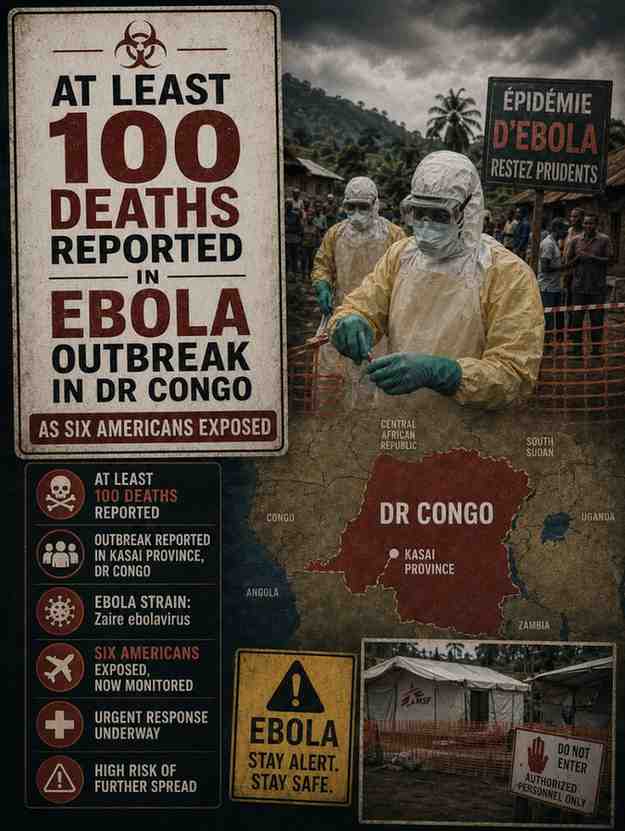
A deadly Ebola outbreak in the Democratic Republic of Congo (DR Congo) has reportedly killed more than 100 people, as health officials also investigate the possible exposure of six American nationals working in the region. The outbreak has triggered an international emergency response and growing concern over cross-border spread. The development matters globally as authorities race to contain one of the region’s most serious health crises in recent years.
Background and Context
The outbreak began in eastern DR Congo, where health officials identified the Bundibugyo strain of Ebola, a rarer variant that currently has no widely approved vaccine.
The region has faced repeated Ebola outbreaks in the past, but this latest wave has raised extra concern due to delayed detection, ongoing conflict, and challenges in reaching remote communities.
The World Health Organization (WHO) has already declared the outbreak a public health emergency, warning that regional spread remains a major risk.
Latest Developments
Health authorities say suspected deaths linked to the outbreak have now crossed 100, while hundreds of suspected cases are being investigated across affected regions.
At the same time, reports indicate that six American nationals working in DR Congo may have been exposed to the virus. Three of those exposures are believed to be high-risk, and at least one individual is reportedly showing symptoms.
U.S. health agencies are now coordinating emergency monitoring, possible evacuation plans, and medical support for those exposed.
Emergency teams in Congo and neighboring countries have intensified screening, isolation, and contact-tracing efforts as the outbreak continues to spread.
Why This Matters
Ebola remains one of the world’s deadliest viral diseases, with fatality rates that can reach up to 50 percent depending on the strain and access to treatment.
The possible exposure of international aid workers and foreign nationals increases the urgency of global containment efforts.
The outbreak also raises concerns about regional healthcare capacity, cross-border transmission, and emergency preparedness.
What Happens Next
Health agencies including WHO and the U.S. Centers for Disease Control and Prevention are expected to expand their response efforts in DR Congo and neighboring countries.
Additional testing, quarantines, and medical evacuations may follow if more cases are confirmed.
Governments worldwide will continue monitoring the situation closely to prevent wider international spread.
Conclusion
The Ebola outbreak in DR Congo has become a major international health emergency, with rising deaths and reports of foreign nationals being exposed.
As containment efforts intensify, the focus remains on stopping transmission, protecting healthcare workers, and preventing the outbreak from spreading further.