

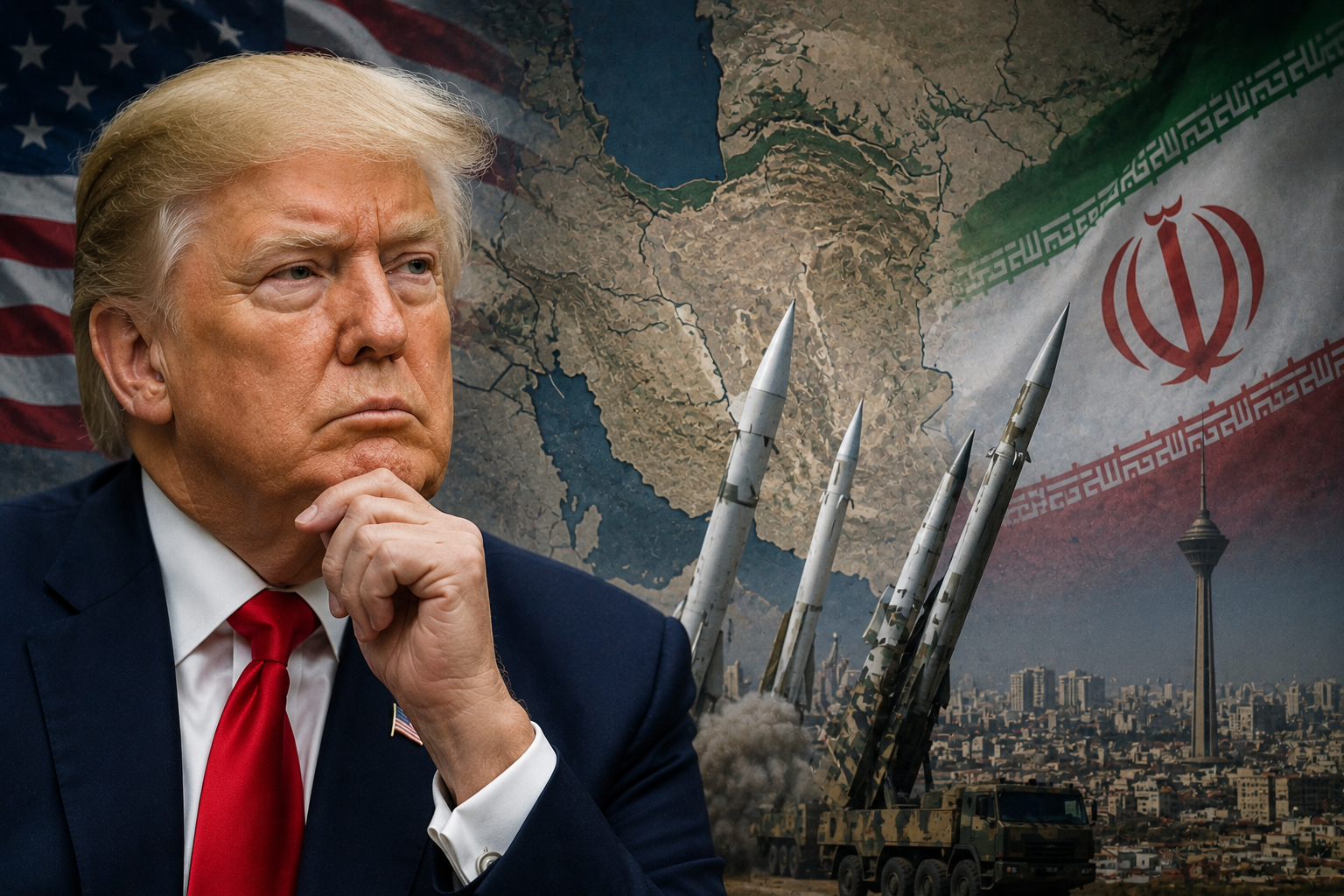
Mixed Signals From Washington Leave Tehran and the World Searching for Answers
Summary
President Donald Trump’s latest remarks on Iran have once again placed the fragile relationship between Washington and Tehran under the global spotlight. While Trump says diplomacy remains possible and has claimed talks are imminent, Iranian officials continue to deny that any direct negotiations are taking place. The contrasting messages have fuelled speculation about whether the White House is deliberately increasing pressure to force Iran back to the negotiating table or simply keeping its options open. As uncertainty grows, governments across the Middle East are watching closely, aware that even a small miscalculation could have consequences far beyond the region.
When Every Statement Becomes a Signal
The relationship between the United States and Iran has rarely followed a predictable path, but recent weeks have added another layer of uncertainty.
President Donald Trump has insisted that Washington remains committed to preventing Iran from expanding its nuclear programme and threatening regional security. At the same time, he has repeatedly suggested that diplomacy is still possible, creating a message that combines pressure with the possibility of dialogue.
That approach has left analysts divided.
Some believe the White House is attempting to build leverage before any future negotiations, while others argue that the mixed messaging risks making an already complicated situation even more difficult to manage. Either way, every public statement from Washington is now being examined just as closely in Tehran as it is in world capitals.
Iran’s response has been equally firm. Officials have rejected suggestions that direct talks with the United States are currently underway, despite Trump’s repeated claims that negotiations could begin soon. The conflicting accounts have only deepened uncertainty over where the relationship actually stands.
Pressure Has Become Part of the Strategy
Donald Trump’s negotiating style has long relied on unpredictability.
Whether dealing with trade disputes, NATO allies or geopolitical rivals, he has often combined public warnings with sudden policy shifts. Iran appears to be no exception.
In recent days, Trump indicated that planned military action against Iran had been paused to leave room for diplomacy. Yet those comments were followed by fresh warnings that Washington would not hesitate to respond if American interests or regional allies came under threat.
For diplomats, that combination creates a difficult environment.
Military pressure can strengthen a country’s negotiating position, but it can also make compromise politically harder for the opposing side. When messages appear to change quickly, governments are often left trying to determine whether they represent a negotiating tactic or a shift in policy.
That uncertainty may be intentional.
By keeping Tehran uncertain about Washington’s next move, the administration could be attempting to increase pressure without taking immediate military action. Whether that strategy succeeds, however, depends largely on how Iran interprets those signals.
Tehran Is Responding With Caution
Iran’s leadership faces a challenge that extends well beyond its relationship with the United States.
Domestically, officials must convince their own public that the country will not negotiate from a position of weakness. Internationally, they must avoid taking steps that could trigger a broader conflict with unpredictable consequences.
So far, Tehran has chosen restraint over escalation.
Although Iranian leaders have rejected Trump’s claims about imminent negotiations, they have largely avoided rhetoric suggesting that military confrontation is inevitable. Instead, they continue to insist that any diplomatic process must be based on mutual respect rather than pressure or threats.
That measured approach reflects a broader reality.
Years of sanctions have placed considerable strain on Iran’s economy, while regional tensions continue to demand political and military resources. Another prolonged confrontation with the United States would come at a significant cost, making caution a practical choice as much as a diplomatic one.
The Stakes Reach Far Beyond Washington and Tehran
The current standoff is not simply a dispute between two governments.
Every development is being watched closely by countries across the Middle East, Europe and Asia because the consequences of renewed conflict would extend well beyond the region.
The Strait of Hormuz remains one of the world’s most important energy corridors, carrying a significant share of global oil shipments. Any disruption to shipping through the waterway would almost certainly affect international energy markets and could place additional pressure on economies already dealing with inflation and supply chain challenges. Recent security concerns in the area have once again highlighted just how sensitive global markets remain to developments involving Iran.
At the same time, Gulf states continue encouraging diplomatic engagement, recognising that stability benefits every economy in the region.
Could Diplomacy Still Find a Way Forward?
Despite the sharp exchanges, diplomacy has not disappeared entirely.
Behind public statements and political messaging, regional governments continue encouraging dialogue between Washington and Tehran. Countries such as Oman have long played a quiet mediating role, while Gulf states remain concerned that any prolonged confrontation could threaten regional security and global trade. Recent reports suggest diplomatic contacts are still being explored, even as both sides publicly disagree over whether formal negotiations are taking place.
For the Trump administration, diplomacy does not necessarily mean easing pressure. The White House has repeatedly argued that negotiations are most effective when backed by economic sanctions, military readiness and a clear demonstration of American resolve. That approach reflects Trump’s long-held belief that leverage should come before compromise.
Iran, however, sees the issue differently.
Tehran has consistently maintained that meaningful negotiations cannot take place while it is facing threats or military pressure. Iranian officials have insisted that dialogue must be based on mutual respect rather than ultimatums, making it difficult for either side to publicly soften its position without appearing to give ground.
That difference in approach remains one of the biggest obstacles to any breakthrough.
A Strategy That Divides Experts
President Trump’s handling of Iran continues to divide foreign policy observers.
Supporters argue that his willingness to combine diplomatic offers with the possibility of military action keeps Iran uncertain and limits its ability to dictate the pace of negotiations. They believe that projecting strength has helped prevent Tehran from taking more aggressive regional actions while signalling that Washington is prepared to respond if necessary.
Others are less convinced.
Some analysts warn that constantly shifting between threats and diplomacy can create confusion, not only for Iran but also for America’s allies. If governments struggle to distinguish between political messaging and actual policy, the chances of misunderstanding increase. In a region where military forces operate in close proximity, even a minor incident has the potential to escalate far beyond its original scope.
The uncertainty has also affected global markets.
Oil prices have reacted to developments in the Gulf, while investors continue monitoring the Strait of Hormuz, one of the world’s busiest energy shipping routes. Any disruption there could quickly influence fuel prices, trade and inflation in economies far removed from the Middle East.
Neither Side Appears Ready for a Full-Scale Conflict
Although the rhetoric remains firm, recent developments suggest that both governments understand the risks of allowing tensions to spiral out of control.
For the United States, another prolonged military campaign in the Middle East would come with significant financial, political and strategic costs. Washington also faces multiple global challenges, making a new regional conflict an option few policymakers would welcome.
Iran faces its own constraints.
Years of sanctions have placed pressure on its economy, while domestic challenges continue to demand government attention. Entering a direct military confrontation with the United States would carry unpredictable consequences for both its economy and regional standing.
That shared awareness helps explain why, despite repeated warnings from both sides, neither Washington nor Tehran appears eager to become the first to trigger a broader conflict.
Instead, both governments continue relying on carefully calibrated messages designed to protect national interests while leaving room for future diplomacy.
Conclusion
Whether President Donald Trump is testing Iran’s patience or strengthening America’s negotiating position ultimately depends on how one interprets his broader foreign policy strategy.
His administration has continued to mix strong public warnings with signals that diplomacy remains possible. Iran, meanwhile, has responded with public defiance while rejecting claims that formal negotiations are currently underway, highlighting the gap that still exists between the two sides.
For now, the standoff is being shaped less by military action than by strategic calculation. Every statement from Washington is scrutinised in Tehran, and every response from Iran is analysed by governments, investors and regional allies.
The coming weeks are likely to reveal whether this pressure creates an opening for meaningful dialogue or simply deepens one of the world’s most enduring geopolitical rivalries. Until then, the relationship between the United States and Iran remains defined by caution, uncertainty and the constant search for leverage rather than lasting agreement.
CK SHARMA ( EDITOR IN CHIEF ) NEWSBEE MEDIA INC.