
U.S. Interior Secretary Says President Asked Apple to Adopt “Lake America” on Its Maps as Naming Dispute Deepens Canada-U.S. Tensions
Summary
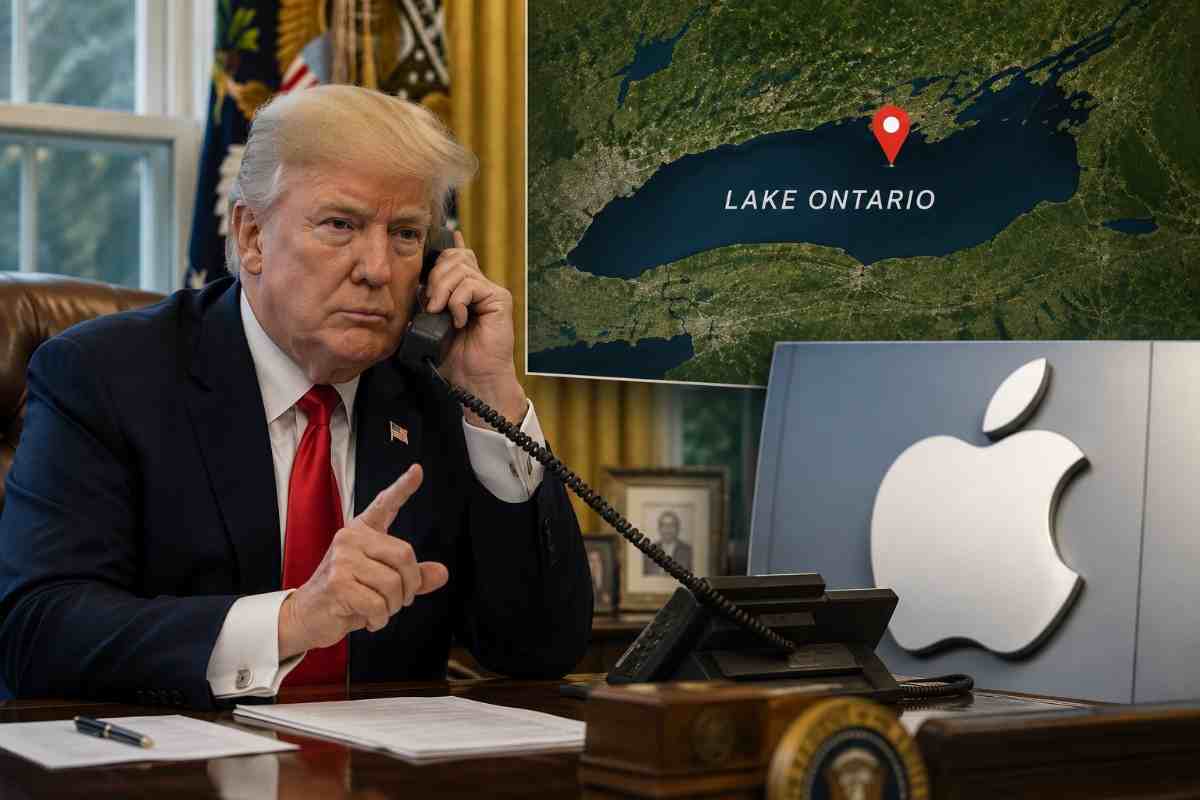
U.S. President Donald Trump personally contacted Apple about changing the name of Lake Ontario to “Lake America” on its mapping services, according to U.S. Interior Secretary Doug Burgum. The development comes after Trump signed an executive order directing U.S. federal geographic authorities to adopt the new name within the United States.
Burgum said Trump had reached out directly to Apple and suggested that the technology company could update its maps in the near future. Apple had not publicly confirmed whether it would make the change. The naming dispute has added another unusual point of tension to the already strained relationship between Canada and the United States.
Trump Pushes for “Lake America”
According to Burgum, Trump personally contacted Apple to encourage the company to reflect the new U.S. designation on its mapping platform.
The move follows Trump’s executive order renaming Lake Ontario as “Lake America” for official U.S. government purposes. The order affects the U.S. Geographic Names Information System, which is used as an official reference for geographic names by American federal agencies.
However, the executive order does not have authority over Canadian naming conventions or international usage. Canada continues to officially recognize the body of water as Lake Ontario.
Google Already Updates Its Maps
Google Maps has already changed how the lake is displayed for users located in the United States.
American users now see “Lake America”, while users in Canada continue to see “Lake Ontario.” People accessing Google Maps from other countries may see both names.
Google said the change followed its policy of updating geographic names based on official government sources. The U.S. Geographic Names Information System had formally adopted the new designation following Trump’s executive order.
Apple Maps, however, had not yet made a similar change at the time of the latest reports.
Canada Rejects the Name Change
The proposal has received a strong response in Canada, where political leaders have made clear that they do not accept the new U.S. designation.
Prime Minister Mark Carney said Canadians know the lake by its historic name and indicated that it would remain Lake Ontario in Canada.
Ontario Premier Doug Ford also publicly rejected the change and unveiled a sign declaring “Lake Ontario, now and always.” The sign was installed near the lakeshore as a symbolic response to Trump’s decision.
Lake Ontario forms part of the border between the Canadian province of Ontario and the U.S. state of New York and is one of North America’s five Great Lakes.
Naming Dispute Comes Amid Trade Tensions
The controversy has emerged during a period of worsening Canada-U.S. relations.
Trade negotiations between Ottawa and Washington recently collapsed, leading both countries toward further tariffs and retaliatory economic measures. Trump’s decision to rename Lake Ontario has therefore been widely viewed in the context of the broader political dispute between the two neighbours.
Trump has spent recent days making a number of public comments about Canada and its trade relationship with the United States. The lake’s renaming has added a symbolic and political dimension to an already serious economic disagreement.
Similar to Previous Trump Renaming Effort
This is not the first time Trump has attempted to rename a major geographic landmark.
During his presidency, Trump previously ordered the Gulf of Mexico to be referred to as the “Gulf of America” for U.S. federal purposes. That decision also created controversy internationally and led to different naming practices among governments and map providers.
The Lake Ontario decision follows a similar pattern. While U.S. federal agencies can adopt a new name domestically, the order cannot force Canada or other countries to change how they refer to the lake.
Apple’s Decision Will Be Closely Watched
Apple’s response could become the next major development in the dispute.
If Apple adopts “Lake America” for U.S. users, it would follow the approach already taken by Google Maps. If it keeps the traditional name, the major digital mapping platforms could display the lake differently.
The issue highlights the influence technology companies can have over how political and geographic decisions are presented to millions of users around the world.
Conclusion
Donald Trump’s direct contact with Apple demonstrates his determination to see “Lake America” adopted beyond official U.S. government records. With Google Maps already displaying the new name for American users, attention is now turning to whether Apple will make a similar change.
Canada has firmly rejected the new designation and continues to recognize the lake as Lake Ontario. As trade and political tensions between Ottawa and Washington remain high, what began as a geographic naming decision has developed into another symbolic dispute between two closely connected neighbours.