

Renters with Disabilities Face Increased Risk of Eviction Amid Housing Crisis.
Sidney Wood, a 41-year-old former correctional officer suffering from PTSD, was evicted from his $1,620-per-month Edmonton basement apartment last month. Unable to afford the rent on his CPP disability income of $1,403 per month, Wood had to relocate to St. Theresa Point First Nation in Northern Manitoba, leaving his two teenage children behind.
Wood now sleeps in a makeshift shed on his father’s property, a small space shared with eight other family members in a three-bedroom house. The physical discomfort pales in comparison to the emotional toll of being separated from his children, aged 15 and 16. “I just miss my kids so much. That’s what kills me.
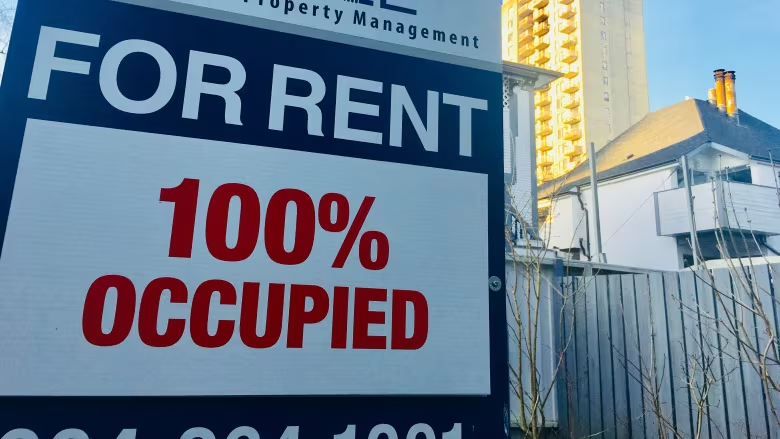
Wood’s story is part of a larger crisis. Canadians with disabilities are disproportionately affected by inadequate housing and homelessness, according to a new report. They are more likely to rent and have lower median incomes, making affordable housing scarce. Less than one percent of rentals are both vacant and affordable, with only 0.18 percent of bachelor or one-bedroom homes affordable for someone with a disability.
Disabled renters, like Wood, are at greater risk of eviction and homelessness. The Canadian Human Rights Commission (CHRC) and Office of the Federal Housing Advocate (OFHA) report highlights that disabled people are four times more likely to be homeless and nearly twice as likely to live in “core housing need.”
The rental housing crisis is compounded by rising costs and decreasing availability.
Gabrielle Peters, a disabled writer and policy analyst, emphasizes the systemic barriers faced by disabled people in securing housing. “Disabled people were deliberately designed out of society, and thus everything about our cities, including housing, was designed for non-disabled people,” she explained.
For William Rollins, a 42-year-old Toronto resident with multiple disabilities, the fear of eviction is a constant source of anxiety. Despite receiving about $3,000 per month in disability benefits, Rollins struggles to cover essentials and faces the possibility of becoming homeless. “This situation makes me feel extremely vulnerable. It’s frustrating and demoralizing to know that despite my best efforts, my circumstances are largely beyond my control.
Marie-Josée Houle, federal housing advocate with the CHRC, notes that housing affordability is a serious concern for people with disabilities. “People with disabilities continue telling us that they’re constantly afraid of becoming homeless, and this is seriously impacting their health.”
The distress of housing instability is particularly pronounced for individuals like Wood, who battle mental health issues exacerbated by their living conditions. “It’s killing me,” Wood said of his current situation, his voice choked with emotion.