
Opening Summary
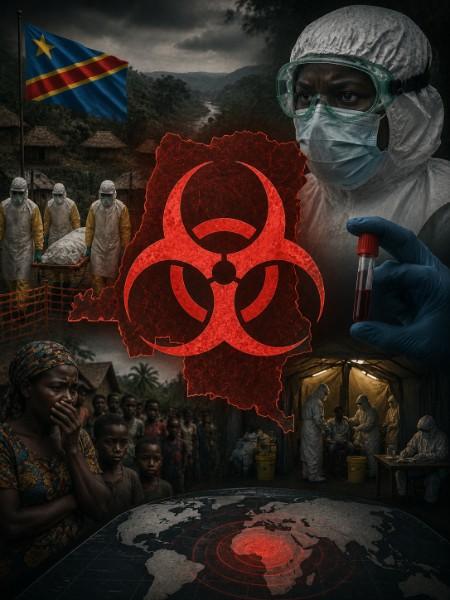
The World Health Organization (WHO) has raised the Ebola risk level in the Democratic Republic of Congo (DR Congo) to “very high” as the outbreak continues to spread rapidly across affected regions. Health officials warn that increasing infections, cross-border movement, and limited healthcare access are creating a dangerous situation. The development matters globally as international agencies intensify efforts to prevent wider regional transmission.
Background and Context
The current outbreak began in eastern DR Congo, where health authorities identified the Bundibugyo strain of Ebola, a rare and dangerous variant of the virus.
The region has experienced multiple Ebola outbreaks in the past, but ongoing conflict, weak healthcare infrastructure, and population displacement have complicated containment efforts.
Ebola is a severe viral disease that spreads through direct contact with infected bodily fluids and can cause high fatality rates without rapid medical intervention.
The outbreak has already led to significant deaths and prompted emergency responses from international health agencies.
Latest Developments
The WHO has now classified the Ebola risk in DR Congo as “very high,” citing rapid transmission and growing concern about possible spread into neighboring countries.
Health officials say treatment centers are under increasing pressure as suspected cases continue to rise.
Emergency response teams are expanding testing, contact tracing, isolation measures, and public awareness campaigns in affected communities.
Authorities are also strengthening border screening and travel monitoring to reduce the risk of international spread.
Why This Matters
Raising the risk level signals growing concern that the outbreak could become more difficult to control if transmission continues.
The situation places major pressure on healthcare systems already facing limited resources and logistical challenges.
For neighboring countries and the international community, the outbreak increases the need for coordinated public health action and emergency preparedness.
The crisis also highlights the ongoing vulnerability of regions affected by conflict and limited medical infrastructure.
What Happens Next
International health organizations are expected to increase funding, staffing, and medical support for outbreak response efforts.
Vaccination campaigns, emergency treatment programs, and border health monitoring are likely to expand further.
Governments worldwide will continue monitoring the situation closely for any signs of cross-border spread.
Conclusion
The WHO’s decision to raise the Ebola risk in DR Congo to “very high” reflects growing concern over the worsening outbreak and its potential international impact.
As emergency response efforts intensify, health authorities remain focused on containing transmission and preventing a broader regional crisis.