

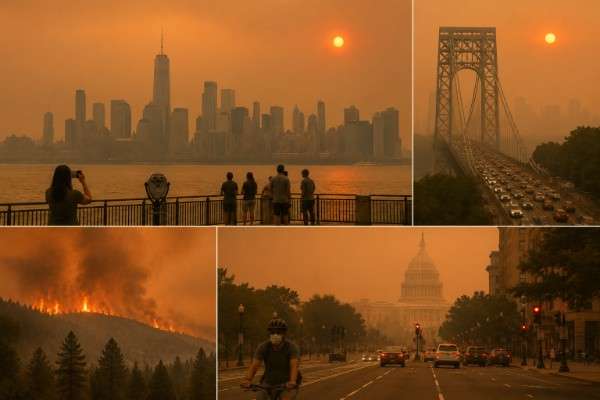
Massive Canadian Wildfires Send Thick Orange Haze Across the Midwest and Northeast as Health Warnings Intensify
Summary
Smoke from massive wildfires burning across several Canadian provinces has spread deep into the United States, blanketing parts of the Midwest and Northeast in a thick orange haze and prompting dangerous air quality warnings. Millions of residents in states including Minnesota, Wisconsin, Illinois, Michigan, New York, Pennsylvania, and Ohio have been advised to limit outdoor activities as pollution levels reached unhealthy and, in some areas, hazardous levels.
Meteorologists say strong winds carried smoke hundreds of kilometres south from ongoing wildfires in Canada, reducing visibility and significantly affecting daily life across major American cities. Health authorities on both sides of the border continue to monitor the situation as firefighters battle dozens of active blazes.
Wildfire Smoke Crosses the Border
The smoke originates from intense wildfires burning across parts of Manitoba, Saskatchewan, Ontario, and other Canadian regions, where dry weather, high temperatures, and strong winds have fueled rapid fire growth. Several communities remain under evacuation orders as emergency crews work to contain the expanding fires.
As weather systems shifted south, dense smoke spread across the international border, creating hazy skies and dramatically reducing air quality throughout large sections of the northern United States. Satellite images showed massive smoke plumes stretching across thousands of kilometres, affecting millions of people.
Air Quality Reaches Dangerous Levels
Air quality indexes in several U.S. cities climbed into unhealthy and very unhealthy categories, prompting public health officials to issue advisories. Authorities urged children, older adults, pregnant women, and individuals with asthma or heart and lung conditions to remain indoors whenever possible.
Experts warned that wildfire smoke contains tiny particles capable of penetrating deep into the lungs, increasing the risk of breathing difficulties, heart problems, eye irritation, and other health complications. Residents have been encouraged to keep windows closed, use air filtration systems where available, and wear high-quality masks if spending extended periods outdoors.
Firefighters Continue Battle Across Canada
Canadian firefighters continue working around the clock to contain dozens of active wildfires, with support arriving from other provinces and international partners. Aircraft, helicopters, and ground crews are being deployed to protect threatened communities while emergency officials monitor changing weather conditions.
Authorities say the combination of prolonged dry conditions and strong winds continues to make firefighting operations extremely challenging. Although some areas have received limited rainfall, officials caution that the wildfire season remains highly active and additional fires could develop in the coming weeks.
Climate Conditions Fuel Extreme Fire Season
Scientists say increasingly hot temperatures, prolonged drought, and changing climate patterns have contributed to longer and more intense wildfire seasons across Canada. Extreme weather has created ideal conditions for fires to spread rapidly, producing massive amounts of smoke capable of travelling long distances.
Environmental experts warn that cross-border smoke events are becoming more frequent, highlighting the need for stronger wildfire preparedness, forest management, and climate resilience strategies throughout North America.
Conclusion
The spread of thick wildfire smoke from Canada into the United States has created hazardous air quality conditions for millions of people, underscoring the far-reaching impact of one of Canada’s most active wildfire seasons. While firefighters continue battling blazes across several provinces, health officials are urging residents to take precautions against dangerous smoke exposure. As the wildfire season continues, authorities remain focused on protecting communities while monitoring weather conditions that could influence the fires’ path and the movement of smoke across North America.