

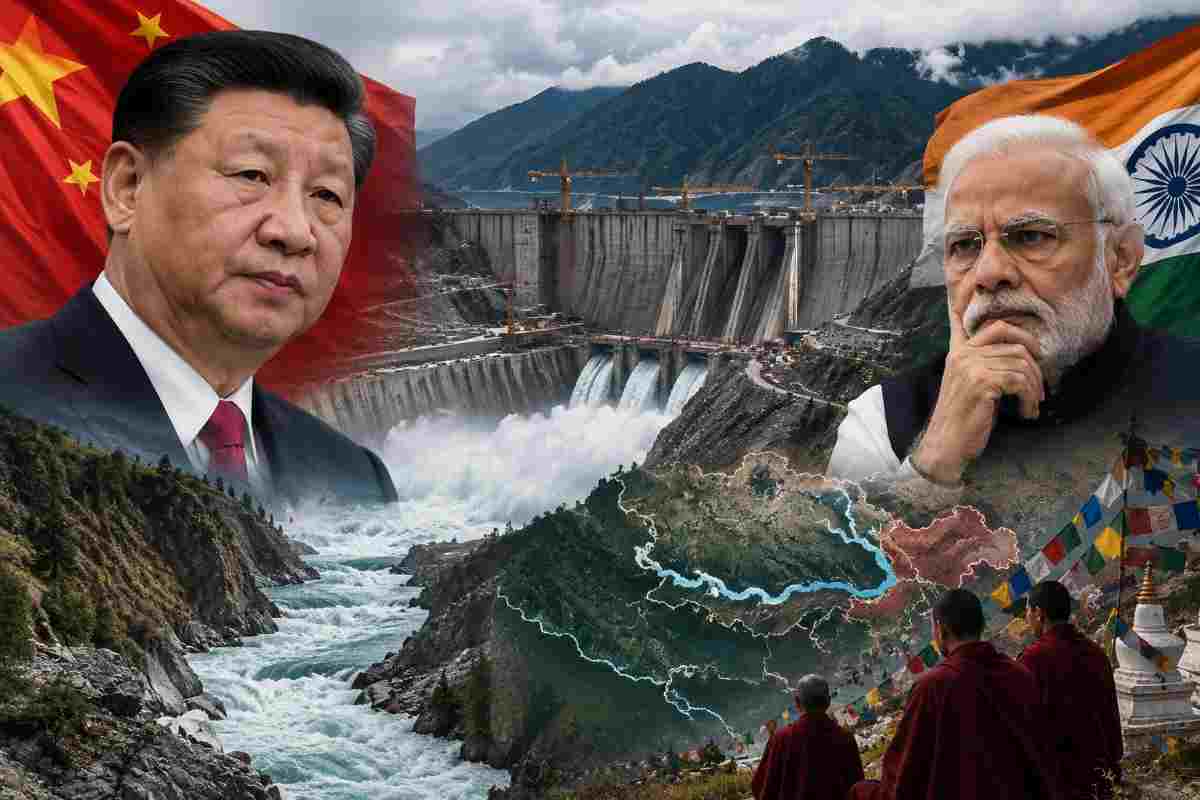
Beijing Keeps Its Mega Hydropower Project on Track as Recent Himalayan Floods and Geological Risks Raise Concerns in India
Summary
China is moving ahead with plans for a massive hydropower project on the Yarlung Zangbo River, known as the Brahmaputra after it enters India, despite renewed concerns over geological risks, environmental impacts and downstream water security.
The project, located in Tibet near India’s Arunachal Pradesh border, remains part of China’s long-term renewable-energy plans. The decision to continue with the project comes shortly after a devastating glacial disaster along the Nepal-China border raised fresh questions about the vulnerability of major infrastructure in the seismically active Himalayan region.
China Keeps Mega Project on Track
China has included the Yarlung Zangbo Lower Reaches Hydropower Project among major projects in its 15th Five-Year Plan for renewable energy.
The project is planned on the lower reaches of the Yarlung Zangbo in Tibet, where the river makes a dramatic turn through one of the world’s deepest valleys before flowing into India.
Beijing considers the project strategically important for expanding clean electricity generation and meeting its long-term energy requirements.
Fresh Concerns After Himalayan Disaster
The decision comes amid heightened concern over the risks posed by large infrastructure projects in the Himalayan region.
A devastating glacial collapse near the Nepal-China border in August triggered massive flooding and landslides, killing hundreds and leaving thousands missing across Nepal and Tibet. The disaster has renewed calls for better monitoring, early-warning systems and greater sharing of hydrological information between countries.
Although the disaster was not caused by the Brahmaputra dam project, its timing has intensified debate over the risks of building major infrastructure in a region vulnerable to earthquakes, landslides and glacial events.
Active Fault Raises Safety Questions
Additional concerns emerged after Chinese geologists identified an active fault beneath or near the planned dam area.
The project sits in a highly seismic part of Tibet, and experts have raised questions about how earthquakes, landslides and unstable terrain could affect such a huge structure.
The findings have challenged some of the assurances surrounding the project’s long-term safety and have increased scrutiny of Beijing’s plans.
India Watches the Project Closely
India has repeatedly expressed concern about China’s plans because the Yarlung Zangbo becomes the Siang in Arunachal Pradesh and later the Brahmaputra in Assam.
New Delhi is particularly concerned about the possibility that a large upstream project could affect the timing and volume of water reaching downstream areas.
Indian officials and experts have also raised concerns about the potential impact on agriculture, ecosystems and communities that depend on the river system.
At the same time, the Brahmaputra receives substantial additional water from tributaries after entering India, meaning the overall downstream impact of the Chinese project remains a complex issue.
China Says the Project Will Support Clean Energy
Beijing has presented the project primarily as an energy and development initiative.
The proposed hydropower complex is expected to generate enormous amounts of electricity and become one of the world’s largest renewable-energy projects.
China has also maintained that the project will be designed with environmental and geological safety considerations in mind.
However, the project’s extraordinary size and location have continued to attract international attention.
Water Data Remains a Major Issue
Beyond the dam itself, water-data sharing has become an important concern for India and Nepal.
Recent flooding in the Himalayan region has highlighted the importance of timely information about river levels, glacial lakes and upstream hazards.
Nepali officials have previously complained that they did not receive as much information from China as they wanted regarding glacier-related risks and water levels. Beijing has maintained that it has provided information through established channels.
Greater transparency and real-time data sharing could become increasingly important as climate change increases the frequency of extreme Himalayan events.
Strategic Importance for China and India
The Brahmaputra project is not only an energy project but also carries significant strategic implications.
China controls the upper reaches of the river, while India and Bangladesh are downstream countries. This gives the project importance beyond electricity generation and makes water security part of the wider India-China relationship.
The dam is also located relatively close to India’s northeastern frontier, adding another strategic dimension to an already sensitive border relationship.
Conclusion
China appears determined to proceed with its Brahmaputra mega dam project despite renewed concerns over seismic activity, environmental risks and the vulnerability of Himalayan infrastructure.
The recent Nepal-China border disaster has highlighted the dangers associated with extreme weather, glacial instability and limited cross-border information sharing in the region.
For India, the project remains a major concern because of its potential implications for water security and downstream communities. As construction progresses, transparency, hydrological data sharing and safeguards against geological and environmental risks are likely to remain central issues between Beijing and New Delhi.