

Trump Administration Targets Canadian Products From September 29 as Trade Dispute With Ottawa Intensifies
Summary
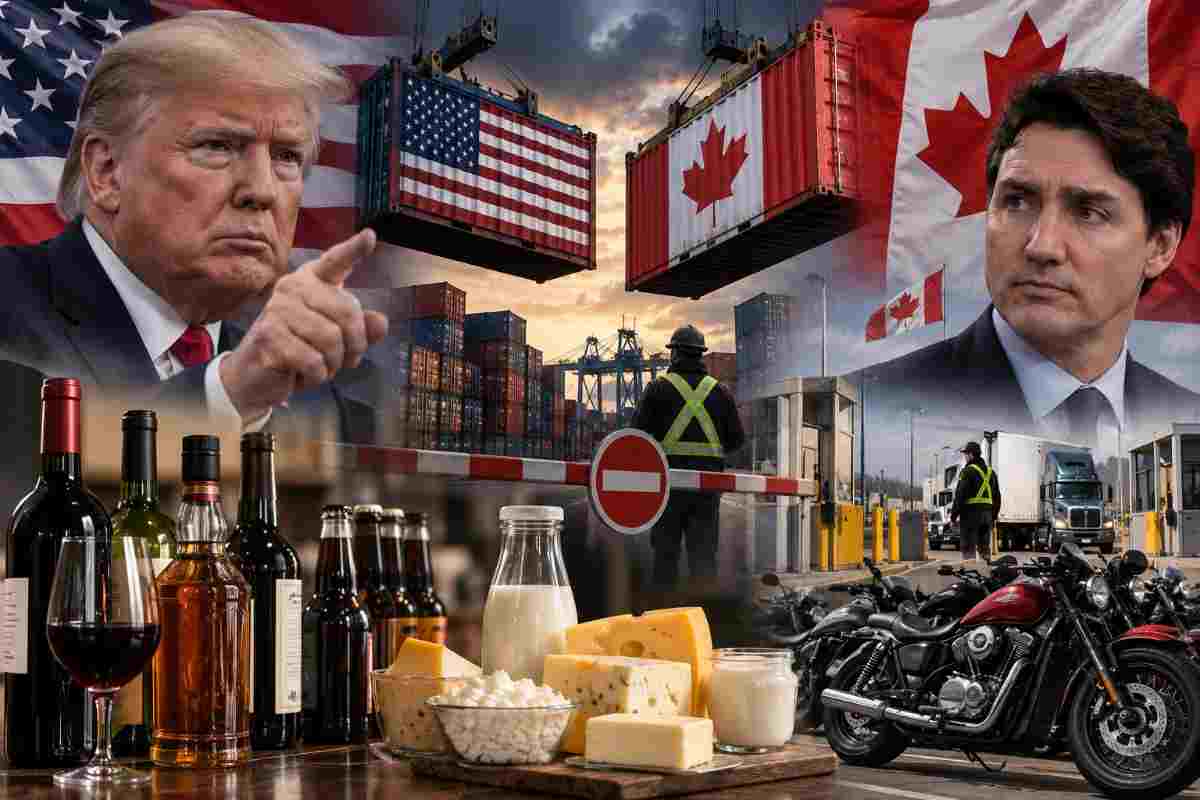
The United States is escalating its trade confrontation with Canada by banning imports of certain Canadian alcoholic beverages, dairy products and motorcycles beginning September 29, 2026.
The new restrictions were announced by the Trump administration after Canada imposed retaliatory tariffs on U.S. goods. Washington says the measures are intended to respond to what it describes as discriminatory Canadian trade practices and to pressure Ottawa back toward negotiations.
Import Bans Begin September 29
Under a presidential proclamation issued by President Donald Trump, specific Canadian products will no longer be eligible for import into the United States from 12:01 a.m. Eastern time on September 29.
The affected categories include selected alcoholic beverages, dairy products and motor vehicles, including motorcycles. Goods that entered the United States before the deadline will remain subject to the applicable tariffs rather than the new ban.
The move represents a significant escalation because Washington has shifted from imposing tariffs to blocking certain Canadian products entirely.
Washington Accuses Canada of Discrimination
The Trump administration says Canada has maintained policies that disadvantage American producers, particularly in the dairy and alcohol sectors.
U.S. Trade Representative Jamieson Greer said the latest measures were a response to Canada’s continued retaliation and what Washington considers unequal treatment of U.S. commerce.
The administration has previously imposed additional duties on selected Canadian products under Section 338 of the U.S. Tariff Act.
Canada Has Already Imposed Counter-Tariffs
The U.S. announcement came shortly after Canada’s latest retaliatory tariffs took effect.
Ottawa imposed duties on billions of dollars worth of U.S. products after Washington introduced its own tariffs on Canadian goods. Canada’s measures cover a broad range of American imports and are intended to pressure the Trump administration to reconsider its trade policy.
The latest American import bans therefore represent another round of tit-for-tat measures between the two countries.
Alcohol and Dairy Industries Face New Pressure
Canadian alcohol producers could face a major loss of access to the U.S. market if the restrictions remain in place.
Dairy producers are also facing increased uncertainty as the dispute expands beyond traditional tariffs. The U.S. government has argued that Canada’s tariff-rate quota system gives Canadian producers an unfair advantage over American dairy companies.
For businesses operating across the border, the new restrictions could force companies to redirect products toward alternative markets.
Motorcycle Imports Also Targeted
Motorcycles are another major category included in the new restrictions.
The measure adds pressure to Canada’s manufacturing sector at a time when the broader automotive industry is already facing uncertainty over tariffs and cross-border supply chains.
The U.S. has also threatened additional action involving Canadian vehicles and other manufactured goods if the trade dispute continues.
Trade War Moves Beyond Tariffs
The latest decision demonstrates how quickly the Canada-U.S. trade dispute is expanding.
What began largely as a disagreement over tariffs has now moved into import bans, government procurement restrictions and threats against individual industries.
The escalation is particularly significant because Canada and the United States have deeply integrated economies, with companies on both sides relying heavily on cross-border trade.
Businesses Prepare for More Uncertainty
Canadian exporters affected by the bans may have to find alternative customers outside the United States.
American businesses could also face consequences if Canadian retaliation affects U.S. exports. Industry groups on both sides have warned that prolonged trade restrictions can increase costs, disrupt supply chains and reduce consumer choice.
The economic impact will depend largely on how long the restrictions remain in place and whether Ottawa and Washington return to negotiations.
USMCA Future Faces New Questions
The escalating dispute is also putting additional pressure on the United States-Mexico-Canada Agreement (USMCA), which governs much of the trade relationship between the three North American economies.
With Washington and Ottawa imposing increasingly aggressive measures against each other’s products, businesses are facing greater uncertainty over the future rules governing cross-border commerce.
Conclusion
The United States’ decision to ban selected Canadian alcohol, dairy products and motorcycles from September 29 marks a new stage in the worsening trade dispute between Washington and Ottawa.
The Trump administration says the measures are necessary to counter what it considers discriminatory Canadian trade policies, while Canada’s retaliatory tariffs have further intensified the confrontation.
With both countries continuing to introduce new trade barriers, pressure is growing on their governments to return to negotiations before the dispute causes deeper damage to businesses, workers and consumers on both sides of the border.