

Opening Summary
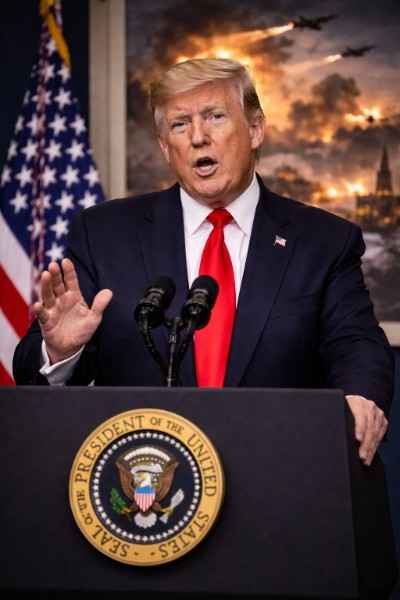
U.S. President Donald Trump said American military strikes have “knocked out just about everything” in Iran’s military capabilities as he publicly criticised the United Kingdom and its prime minister. Trump’s remarks were made at the White House amid ongoing conflict in the Middle East following U.S. and Israeli attacks on Iranian targets. The comments matter internationally as they come during a period of heightened geopolitical tension and shifting allied relations.
Background and Context
Tensions between Washington and Tehran have escalated sharply following coordinated U.S. and Israeli military operations against Iran over the past week. The strikes, which targeted strategic Iranian naval and air force positions, mark a significant expansion of hostilities in a conflict that began with long-standing disputes over Iran’s nuclear ambitions and regional influence.
In recent days, Iran has retaliated with missile and drone strikes against U.S. bases and allied positions in the region. Several countries with diplomatic ties to both sides are watching developments closely as military engagements continue to spread geographically.
The United Kingdom has been a key diplomatic partner of the United States but has chosen a more cautious approach to direct involvement in offensive operations. That position has contributed to public tension between Trump and British leadership.
Latest Developments
Speaking from the White House, Trump asserted that American military efforts have substantially degraded Iran’s defence systems, declaring that “just about everything’s been knocked out” in reference to Iranian naval, air, and detection capabilities. He provided no independent evidence to support the full scope off that claim but emphasised the U.S. objective of diminishing Iran’s capacity to threaten regional or global security.
In the same remarks, Trump criticised British Prime Minister Keir Starmer for not more fully supporting U.S. operations. He suggested that the UK’s response fell short of expectations, contrasting its stance with support from other European partners. Trump described the state of U.S.–UK relations as not “what it was,” pointing to differences over military cooperation and the use of British bases.
Trump also referenced other allied nations, urging closer alignment on shared policy goals and signalling frustration with perceived delays or limitations in cooperation.
Why This Matters
Trump’s statements underscore deepening geopolitical tensions and the shifting dynamics of allied relations amid armed conflict. Claims that Iranian military capabilities have been broadly neutralised shape perceptions of the conflict’s progression but also raise questions about independent verification and longer-term impacts.
Criticism of the UK highlights emerging strains in what has historically been a close bilateral relationship between Washington and London. Differences over military engagement, legal bases for action, and national interests have surfaced publicly, potentially complicating cooperation on defence and security issues.
For Canada and other NATO members, the developments are closely watched. Canada’s foreign policy has emphasised both support for allies and adherence to international law and diplomatic resolutions. The trajectory of U.S. policy and allied responses could influence Canada’s own diplomatic and defence strategy.
The ongoing conflict also influences global energy markets, regional stability in the Middle East, and international efforts to address proliferation risks. Any escalation could have ripple effects far beyond the immediate theatre of operations.
What Happens Next
Diplomatic and military developments are likely to unfold rapidly. U.S. officials and allies will continue evaluating military strategy and international positions. Countries that have taken cautious stances may reassess their diplomatic messaging in light of evolving conflict dynamics.
International bodies, including the United Nations, may convene discussions about de-escalation and civilian protection. Governments around the world will monitor impacts on security, trade, and travel advisories for their citizens.
Within the United States, Trump’s comments may fuel domestic political debate regarding the conduct of military operations, the extent of allied support, and legal authority for sustained conflict.
Conclusion
President Trump’s assertion that U.S. strikes have “knocked out” much of Iran’s military capability, coupled with his sharp criticism of the United Kingdom’s stance, reflects growing tensions in an international crisis. As alliances and strategic priorities are publicly negotiated, the conflict’s global implications continue to unfold.
The coming days and weeks will likely see continued diplomatic engagement, debate over military roles, and efforts by governments to balance alliance commitments with peace and stability objectives.