

Opening Summary
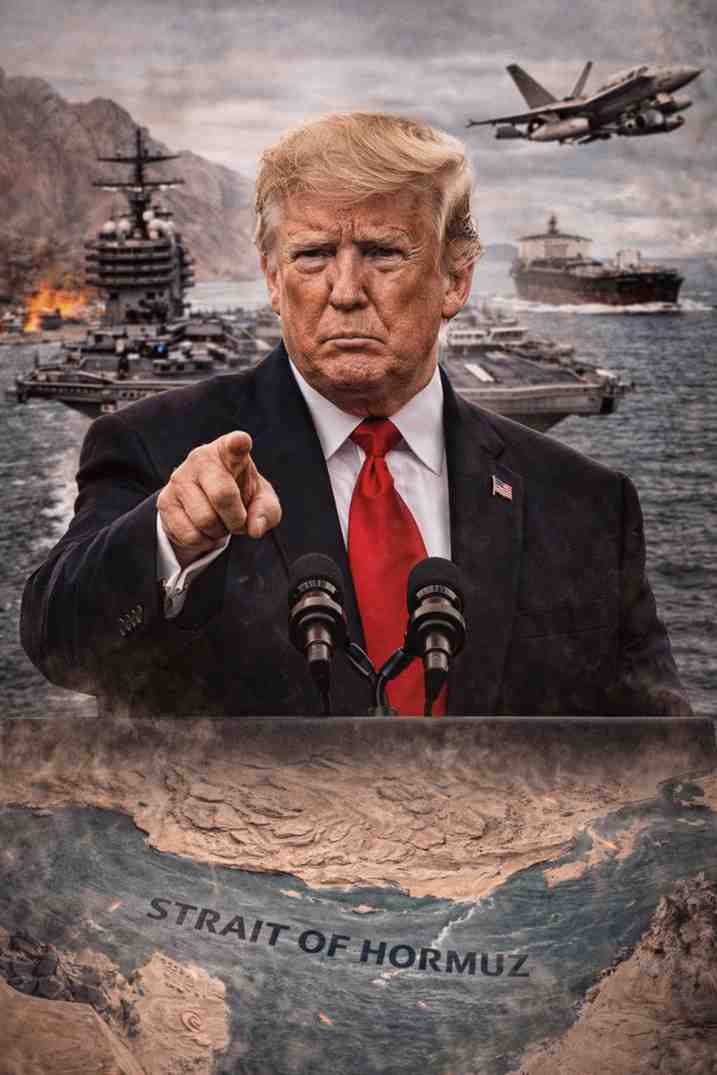
U.S. President Donald Trump has issued an expletive-laden threat to Iran, demanding the immediate reopening of the Strait of Hormuz amid ongoing conflict in the Middle East. The warning, delivered through social media, included a deadline and threats of military action. The development matters globally as the strait is a critical route for oil shipments and any escalation could impact global energy markets.
Background and Context
The Strait of Hormuz is one of the world’s most important energy corridors, with roughly one-fifth of global oil passing through it. Since the escalation of conflict involving Iran, the United States, and Israel in 2026, the waterway has faced severe disruptions.
Iran has taken steps to restrict shipping through the strait in response to military strikes on its territory. This has led to reduced tanker traffic, increased insurance costs, and rising global oil prices.
The United States has been pressuring Iran to reopen the route while also increasing military operations in the region. Diplomatic efforts have been discussed, but tensions remain high with ongoing military exchanges.
Latest Developments
President Donald Trump issued a strongly worded message demanding that Iran reopen the Strait of Hormuz immediately.
In the statement, he warned that failure to comply within a set timeframe could result in U.S. strikes targeting Iran’s infrastructure, including power plants and bridges. Reports indicate the message included explicit language and a direct ultimatum to Iranian authorities.
Trump also suggested that military action could be imminent if no agreement is reached, while simultaneously indicating that a deal might still be possible.
Iranian officials have rejected the threat, warning that further escalation could destabilize the entire region.
Why This Matters
The escalation in rhetoric significantly raises the risk of further conflict in the Middle East.
Targeting infrastructure such as power plants and transport systems could have serious humanitarian consequences and disrupt essential services for civilians.
The Strait of Hormuz remains central to global energy supply. Any continued disruption or military escalation could lead to higher oil prices and economic uncertainty worldwide.
For countries like Canada, rising global oil prices can translate into higher fuel costs and broader economic impacts.
What Happens Next
The situation is expected to remain volatile as the deadline set by Trump approaches.
Military operations could intensify if Iran does not reopen the strait, while diplomatic channels may continue through intermediaries.
International actors are likely to increase efforts to prevent escalation and stabilize the region.
Energy markets will continue to react to developments, with prices expected to remain sensitive to any changes in the conflict.
Conclusion
President Donald Trump’s expletive-laden threat to Iran demanding the reopening of the Strait of Hormuz marks a sharp escalation in tensions. While the possibility of negotiations remains uncertain, the combination of military pressure and diplomatic signals underscores the fragile state of the situation.
The coming days will be critical in determining whether the crisis moves toward resolution or further escalation, with global energy security and regional stability at stake.