

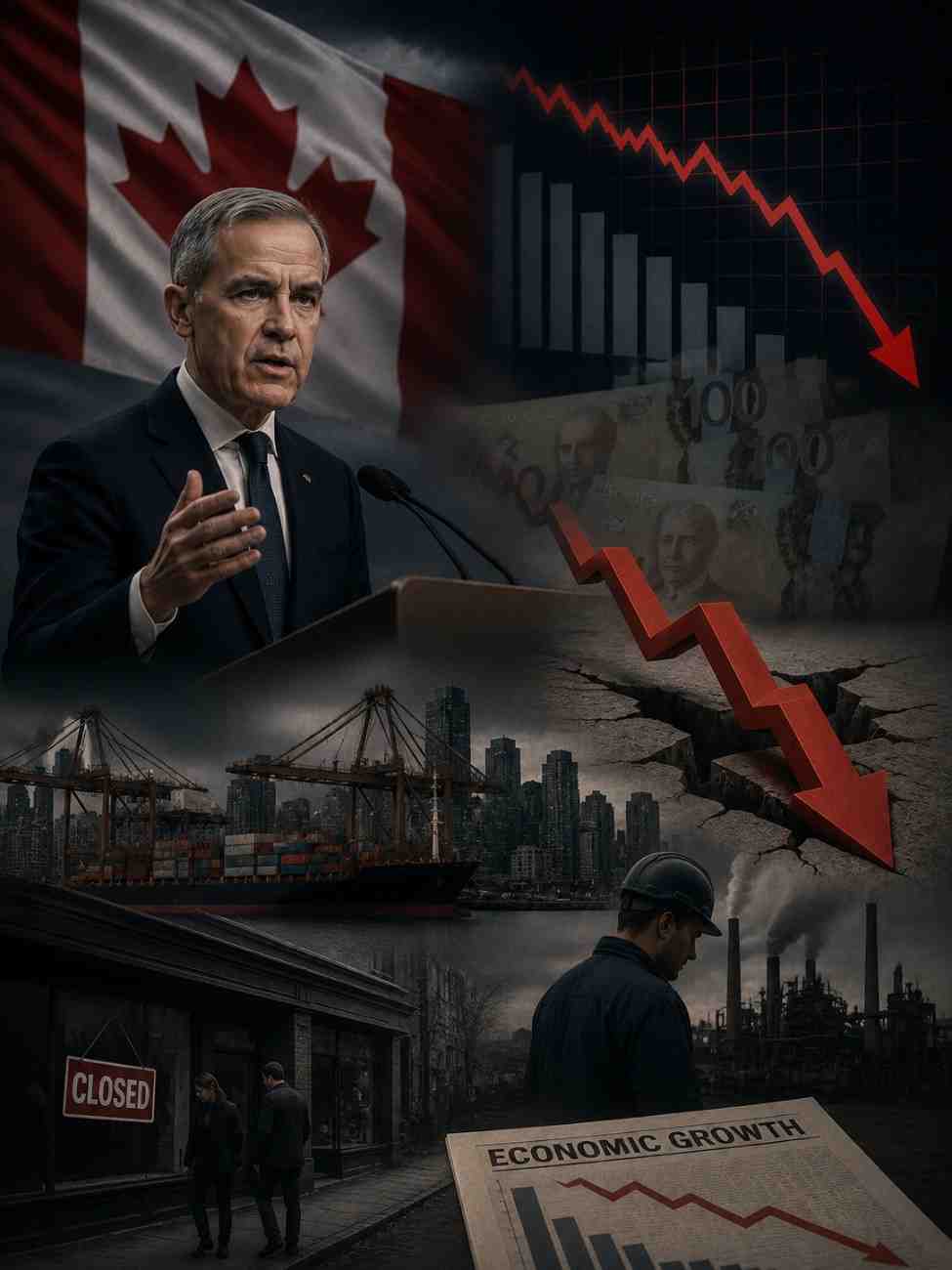
Canada has slipped into a technical recession on an annualized basis as economic growth weakened amid high borrowing costs, slowing consumer spending, and uncertainty in global markets. The development has raised concerns about the country’s economic outlook and the challenges facing businesses and households. It matters nationally as economic performance affects jobs, investment, and government finances.
Background and Context
A technical recession is generally defined as two consecutive quarters of negative economic growth.
Canada’s economy has been under pressure from elevated interest rates, weaker consumer demand, slowing business investment, and global economic uncertainty.
In recent years, policymakers have tried to balance inflation control with maintaining economic growth, but higher borrowing costs have weighed on households and businesses.
Trade tensions, volatile energy prices, and slowing international demand have also contributed to economic challenges.
Latest Developments
New economic data indicates that Canada has entered a technical recession on an annualized basis after growth slowed more than expected.
Consumer spending, housing activity, and business investment have all shown signs of weakness in recent months.
Economists say higher interest rates continue to affect household budgets, while businesses remain cautious about expanding operations.
The slowdown has increased pressure on policymakers to support economic activity while keeping inflation under control.
Why This Matters
A recession can affect employment, wages, consumer confidence, and investment across the economy.
For households, slower economic growth may lead to concerns about job security and rising financial pressure.
Businesses may delay hiring or expansion plans if economic conditions remain uncertain.
The situation also presents challenges for the federal government as it seeks to maintain growth while managing public finances.
What Happens Next
Economists and financial markets will closely watch upcoming economic data for signs of recovery or further weakness.
Policymakers may consider measures aimed at supporting growth if economic conditions continue to deteriorate.
Businesses and consumers are expected to remain cautious until there is greater clarity about the economic outlook.
Conclusion
Canada’s move into a technical recession highlights the growing impact of slower growth, high borrowing costs, and global economic uncertainty.
As policymakers and businesses respond to the slowdown, the focus will remain on restoring growth and maintaining economic stability in the months ahead.