

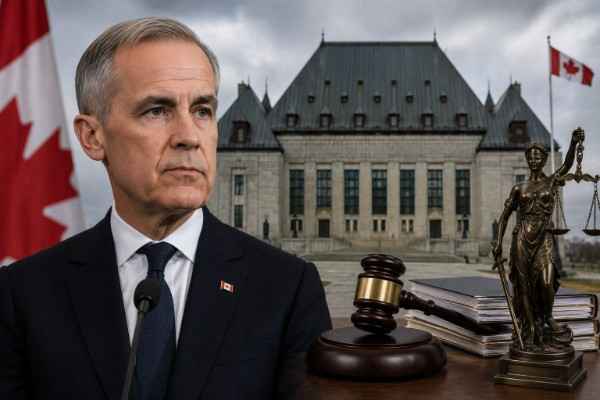
Canada’s Top Court Says Democracy Watch Can Challenge Ethics Commissioner’s Decision Clearing Former Prime Minister Justin Trudeau
Summary
The Supreme Court of Canada has ruled that a judicial review of an ethics commissioner’s decision clearing former Prime Minister Justin Trudeau in a conflict of interest investigation can proceed. The unanimous decision allows advocacy group Democracy Watch to challenge the ethics ruling in Federal Court, marking an important development in the oversight of decisions made by the federal Conflict of Interest and Ethics Commissioner.
The ruling does not determine whether Trudeau acted improperly. Instead, it confirms that courts have the authority to review certain ethics commission decisions, potentially strengthening accountability and judicial oversight of public office holders.
Supreme Court Opens the Door to Judicial Review
In its decision, the Supreme Court concluded that the Federal Court has jurisdiction to hear Democracy Watch’s application seeking judicial review of the ethics commissioner’s finding that Trudeau did not violate the Conflict of Interest Act in relation to decisions involving the WE Charity affair.
The case will now return to the Federal Court, where judges will examine whether the ethics commissioner’s decision was legally reasonable and made in accordance with administrative law principles. The Supreme Court did not express any opinion on the merits of the ethics ruling itself.
Case Stems from WE Charity Investigation
The legal challenge relates to a 2021 decision by then-Ethics Commissioner Mario Dion, who concluded that Trudeau had not breached the Conflict of Interest Act while participating in cabinet decisions involving WE Charity’s proposed administration of the Canada Student Service Grant program.
Democracy Watch argued that the commissioner’s interpretation of the law was flawed and sought judicial review, saying ethics decisions involving senior public officials should be subject to court oversight.
Accountability Groups Welcome the Decision
Democracy Watch welcomed the Supreme Court’s ruling, describing it as an important victory for government accountability and transparency. The organization argued that allowing judicial review helps ensure that ethics commissioners remain accountable and that their decisions can be examined when legal questions arise.
Legal observers say the judgment could influence how future ethics rulings involving federal politicians are challenged, reinforcing the role of courts in reviewing decisions made by independent officers of Parliament.
Trudeau Not Found Liable by Supreme Court
The Supreme Court’s decision does not overturn the ethics commissioner’s findings or declare that Trudeau violated the law. Instead, it simply permits the legal challenge to move forward in the Federal Court.
Any determination on whether the original ethics ruling was reasonable will be made during future court proceedings, where both sides will have an opportunity to present their arguments.
Broader Implications for Ethics Oversight
Constitutional and administrative law experts say the ruling could have lasting implications for Canada’s ethics framework by confirming that decisions of the federal ethics commissioner are not automatically beyond judicial scrutiny.
The judgment may encourage greater transparency and establish clearer legal standards for reviewing future ethics investigations involving ministers, members of Parliament, and other federal public office holders.
Conclusion
The Supreme Court of Canada’s decision allowing judicial review of the ethics ruling involving former Prime Minister Justin Trudeau represents a significant development in Canadian administrative law. While the court has not ruled on Trudeau’s conduct, it has affirmed that ethics commission decisions may be reviewed by the judiciary when appropriate. As the case moves back to Federal Court, it is expected to shape future standards for accountability, transparency, and oversight in Canada’s public institutions.