

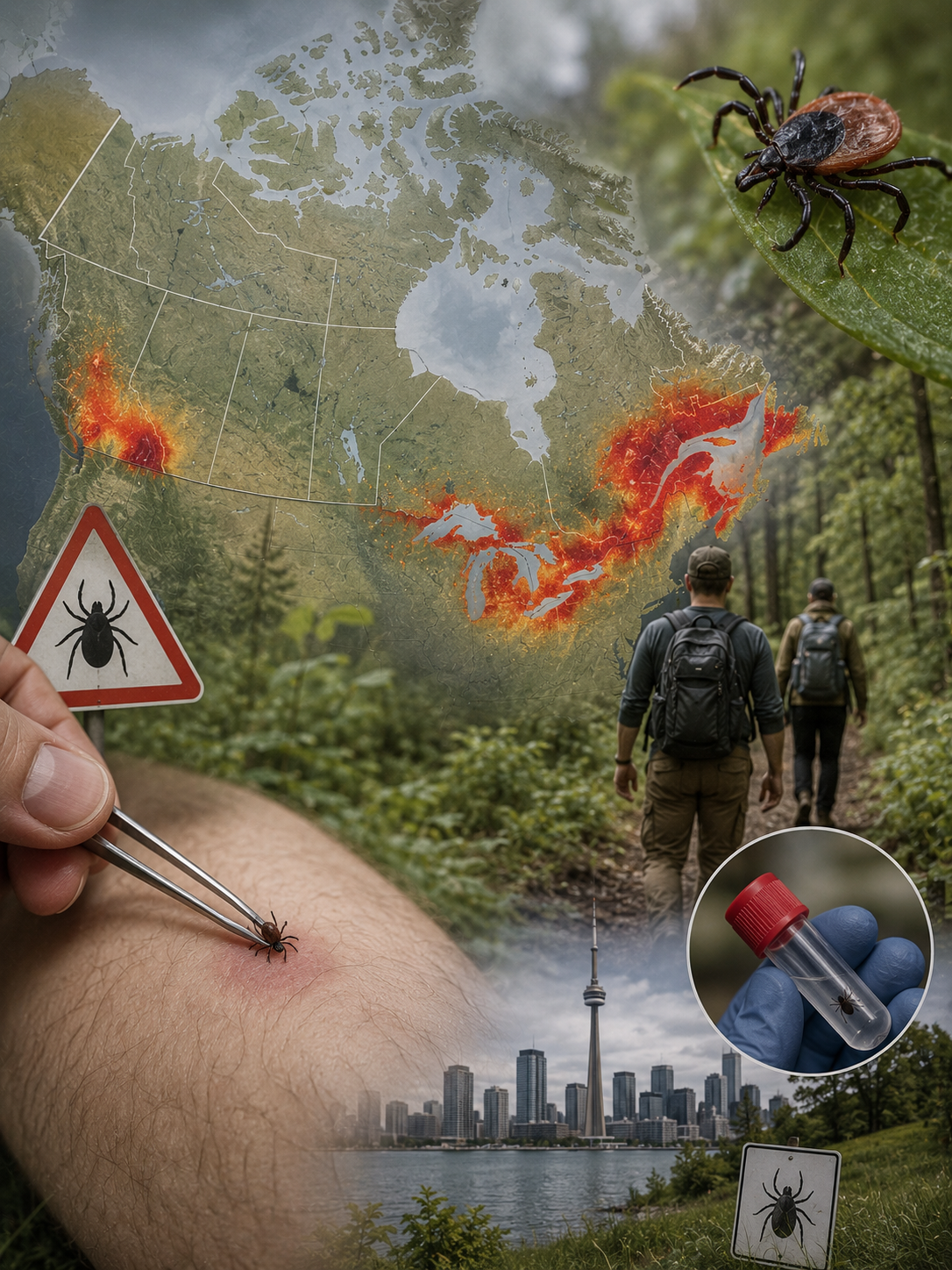
Health officials across Canada are reporting a significant increase in tick sightings and tick-related reports, with several regions experiencing higher-than-normal activity this season. Experts say warmer temperatures, changing environmental conditions, and expanding tick habitats are contributing to the rise, increasing concerns about tick-borne illnesses such as Lyme disease.
Background and Context
Ticks are small parasitic insects that can transmit diseases to humans and animals through bites.
Over the past decade, public health agencies have observed a steady expansion of tick populations across Canada, particularly in areas that previously recorded limited activity.
The spread has been linked to milder winters, longer warm seasons, and environmental changes that create favorable conditions for tick survival and reproduction.
Health authorities have repeatedly warned Canadians to take precautions when spending time outdoors in wooded, grassy, and rural areas.
Latest Developments
Recent surveillance data shows a sharp increase in tick reports across several provinces, with the highest concentrations being recorded in parts of Ontario, Quebec, Nova Scotia, New Brunswick, and southern Manitoba.
Public health officials say more people are reporting tick encounters while hiking, camping, gardening, and engaging in other outdoor activities.
Experts note that black-legged ticks, which can carry Lyme disease, continue to expand into new areas as environmental conditions become more suitable for their survival.
Veterinarians have also reported an increase in tick exposure among pets, prompting renewed calls for preventive measures.
Health agencies are encouraging residents to perform regular tick checks after spending time outdoors and to seek medical advice if symptoms develop following a tick bite.
Why This Matters
The increase in tick activity raises the risk of tick-borne illnesses, including Lyme disease, which can cause serious health complications if left untreated.
Early detection and treatment are considered critical in preventing long-term health effects.
The growing presence of ticks in new regions means that more Canadians may be exposed, even in areas that were previously considered low risk.
The trend also highlights the broader impact of environmental and climate-related changes on public health.
What Happens Next
Public health agencies are expected to continue monitoring tick populations and updating risk maps throughout the season.
Educational campaigns aimed at increasing awareness of tick prevention and disease symptoms are likely to expand.
Researchers will continue studying the factors contributing to the spread of ticks and the effectiveness of mitigation efforts.
Conclusion
The surge in tick reports across Canada serves as a reminder that tick-borne diseases remain an increasing public health concern.
As tick populations continue to expand into new areas, officials are urging Canadians to remain vigilant, take preventive measures, and seek prompt medical attention if they suspect exposure.