
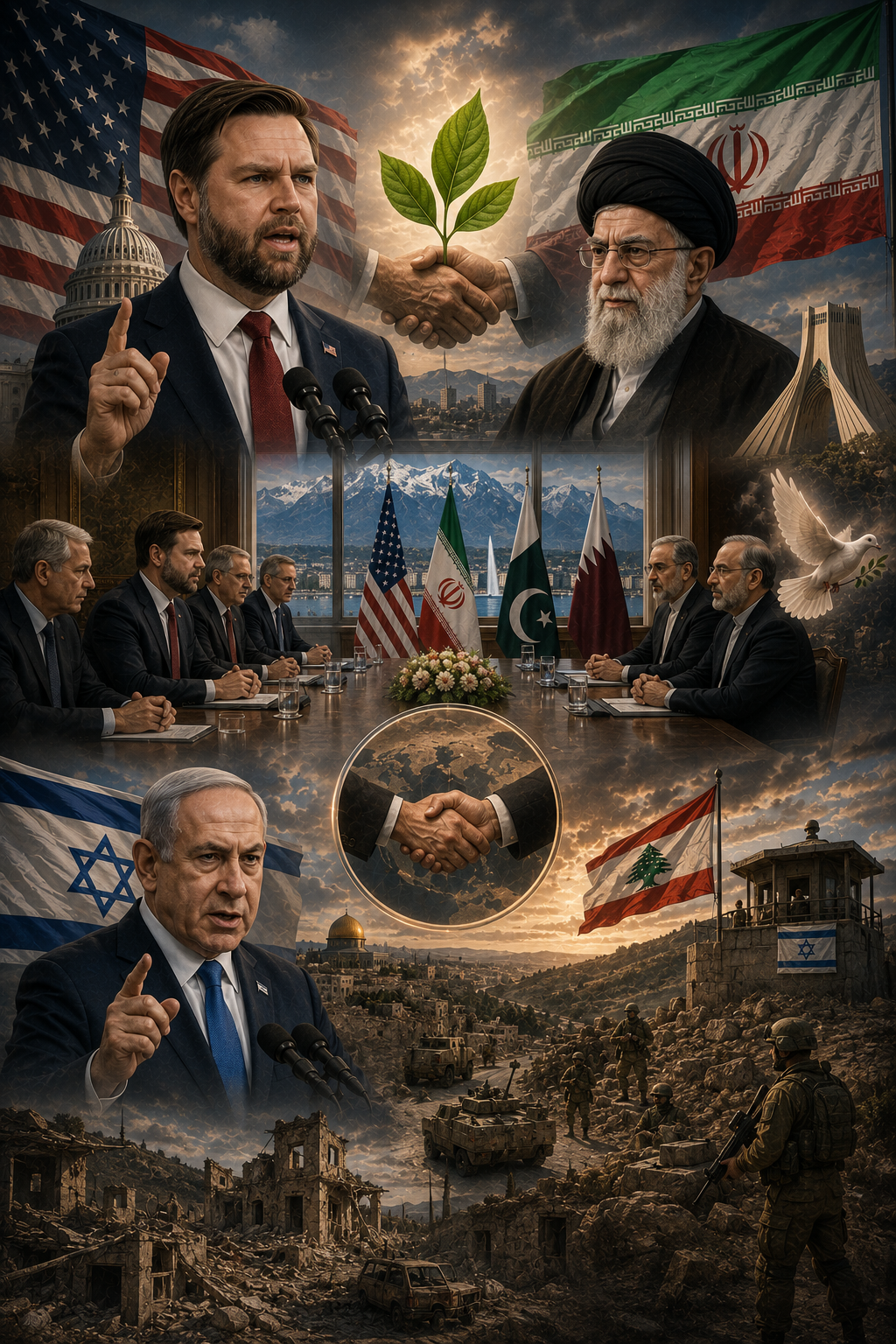
U.S. Vice President J.D. Vance has expressed optimism that the United States and Iran can turn a “new leaf” in their relationship as diplomatic talks continue in Switzerland. The discussions, involving American and Iranian representatives alongside Pakistani and Qatari mediators, are aimed at building on a recent ceasefire and moving toward a lasting peace agreement. However, regional tensions remain high as Israeli Prime Minister Benjamin Netanyahu reiterated that Israeli troops would remain in southern Lebanon for as long as necessary.
Background and Context
Months of conflict between the United States and Iran created instability across the Middle East, disrupted regional security, and raised concerns about global energy markets.
Recent diplomatic efforts resulted in a ceasefire framework designed to reduce tensions and create a pathway toward a comprehensive peace agreement.
Pakistan and Qatar have played important roles as mediators, helping facilitate communication between the two sides and encouraging continued negotiations.
At the same time, security concerns in Lebanon and along Israel’s northern border continue to complicate broader regional peace efforts.
Latest Developments
Delegations from the United States and Iran met in Switzerland for another round of negotiations focused on resolving outstanding issues and strengthening the ceasefire agreement.
Vice President J.D. Vance said he hopes both countries can move beyond years of confrontation and establish a more stable relationship through diplomacy.
The talks are expected to address security guarantees, sanctions, regional stability, and mechanisms to prevent future military escalation.
Meanwhile, Israeli Prime Minister Benjamin Netanyahu reaffirmed that Israeli forces would remain deployed in southern Lebanon, arguing that the presence is necessary to address ongoing security threats.
His comments highlight the challenges facing diplomats as they attempt to reduce tensions across multiple fronts in the region.
Why This Matters
The negotiations represent one of the most significant diplomatic efforts between Washington and Tehran in recent years.
A successful agreement could help stabilize the Middle East, reduce the risk of future military conflict, and improve global economic confidence.
However, ongoing security concerns involving Lebanon and Israel demonstrate that broader regional tensions remain unresolved.
The outcome of the talks could influence regional alliances, energy markets, and international security for years to come.
What Happens Next
Negotiators are expected to continue discussions in Switzerland as mediators work to bridge remaining differences.
Further meetings may be held in the coming weeks as both sides seek to finalize a long-term agreement.
Regional leaders and international observers will closely monitor developments, particularly regarding security conditions in Lebanon and the implementation of existing ceasefire commitments.
Conclusion
Vice President Vance’s call for a “new leaf” reflects growing optimism surrounding the ongoing U.S.-Iran negotiations.
While progress appears to be underway, continued tensions involving Israel and Lebanon underscore the challenges that remain before a lasting peace can be achieved across the region.