

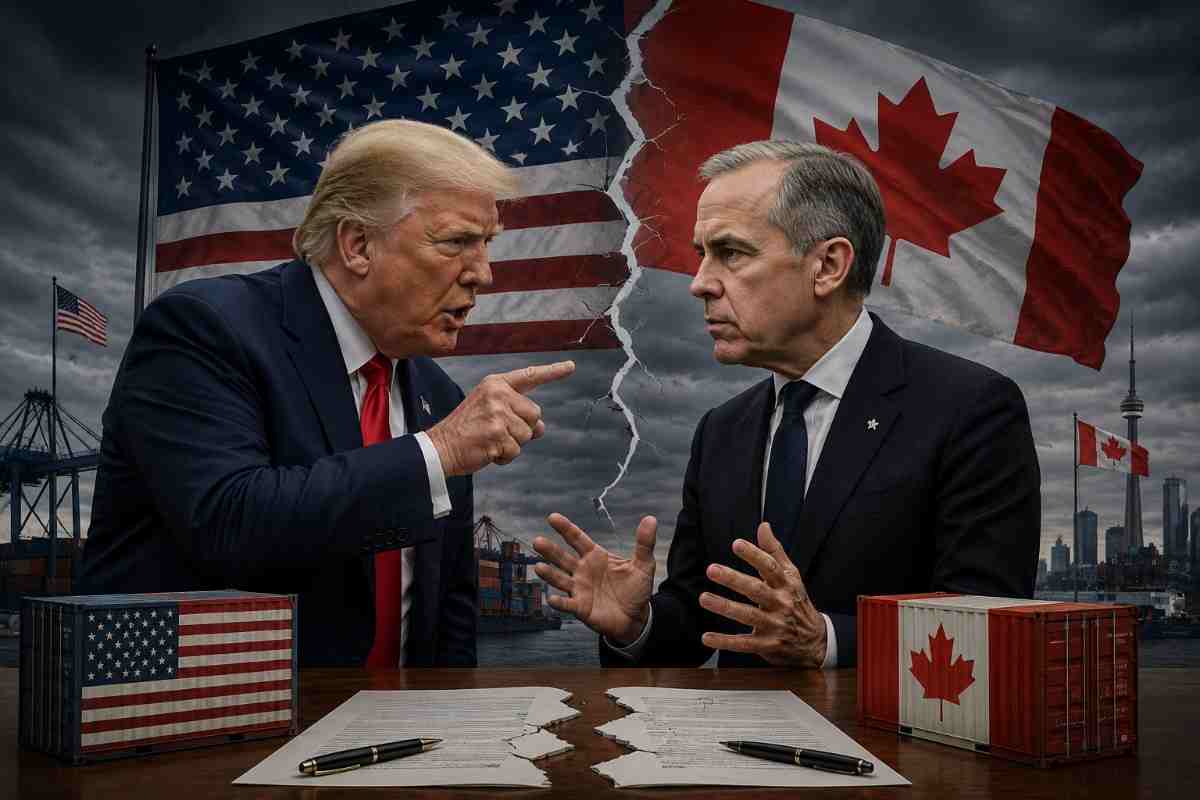
U.S. President Revives “51st State” Remark as Canada Suspends Negotiations and Announces Retaliatory Tariffs
Summary
U.S. President Donald Trump has sharply criticized Canada following the collapse of trade negotiations between the two countries, accusing Ottawa of wanting the economic benefits associated with being a U.S. state without actually becoming one. Trump’s comments came shortly after Prime Minister Mark Carney ordered Canadian trade negotiators to return home after rejecting what he described as unacceptable last-minute demands from Washington.
The dispute has now escalated into a new phase of the Canada-U.S. trade war, with Washington imposing 50% tariffs on about $20 billion worth of Canadian goods and Ottawa preparing dollar-for-dollar retaliatory measures.
Trump Revives “51st State” Rhetoric
Trump made the comments in a social media post on Sunday, writing that Canada wanted the “benefits of being a State” without becoming one. He also accused Canada of imposing high tariffs on American farmers and warned that his administration would no longer tolerate what he described as unfair treatment.
The remarks revived Trump’s long-running suggestion that Canada could become the 51st U.S. state, a proposal that has repeatedly been rejected by Canadian political leaders and the public.
Trade Negotiations Break Down
The latest confrontation follows weeks of intense negotiations aimed at reaching a broader trade agreement.
Canadian officials said Washington introduced new demands late in the process that Ottawa considered unacceptable. Carney said the proposals would have reduced tariff relief for Canadian-made vehicles, restricted Canada’s ability to negotiate trade agreements with other countries and affected protections related to Canadian language and culture.
As a result, Canada suspended the ongoing trade discussions and recalled its negotiating team from Washington.
U.S. Imposes 50% Tariffs
Following the collapse of negotiations, the United States moved ahead with 50% tariffs on approximately $20 billion of Canadian imports.
The affected products include a range of goods such as food products, furniture, clothing, hockey equipment and other manufactured items. The new duties add to existing U.S. tariffs on sectors including steel, aluminum, automobiles and lumber.
The measures represent a significant escalation between two countries whose economies have been deeply integrated for decades.
Canada Announces Retaliation
Prime Minister Mark Carney has responded by announcing that Canada will impose retaliatory tariffs on U.S. products beginning September 8.
The measures are expected to target sectors including American steel, dairy, electronics, appliances, agricultural equipment and other goods. Carney said Canada would respond “dollar for dollar” while introducing support measures for Canadian industries affected by the U.S. tariffs.
Carney has also emphasized that Canada will not compromise its sovereignty or accept what he considers an unfair trade agreement.
Economic Impact Raises Concerns
The escalating dispute threatens to disrupt supply chains and increase costs for businesses on both sides of the border.
Canada sends a large share of its exports to the United States, while American companies also rely heavily on Canadian raw materials, components and consumers. Economists and business groups have warned that prolonged tariffs could raise prices, reduce investment and place additional pressure on industries already dealing with economic uncertainty.
The dispute also raises questions about the future of the United States-Mexico-Canada Agreement, which governs a huge volume of North American trade.
Political Tensions Intensify
The trade dispute has moved beyond economics and increasingly become a question of national sovereignty and political identity.
Carney has rejected Trump’s statehood rhetoric and said Canada has the right to determine its own trade relationships, cultural policies and international partnerships. Canadian political leaders across the country have also largely backed Ottawa’s decision to resist what they view as excessive U.S. demands.
Conclusion
Donald Trump’s latest comments mark another sharp escalation in the increasingly strained relationship between Washington and Ottawa. His accusation that Canada wants the benefits of being a U.S. state without becoming one comes after trade negotiations collapsed and both countries moved toward additional tariffs.
With the United States imposing 50% tariffs on billions of dollars in Canadian goods and Canada preparing matching measures, the dispute now threatens to develop into a prolonged trade war. The coming weeks will be crucial as both governments weigh the economic costs of confrontation against the possibility of eventually returning to negotiations.