

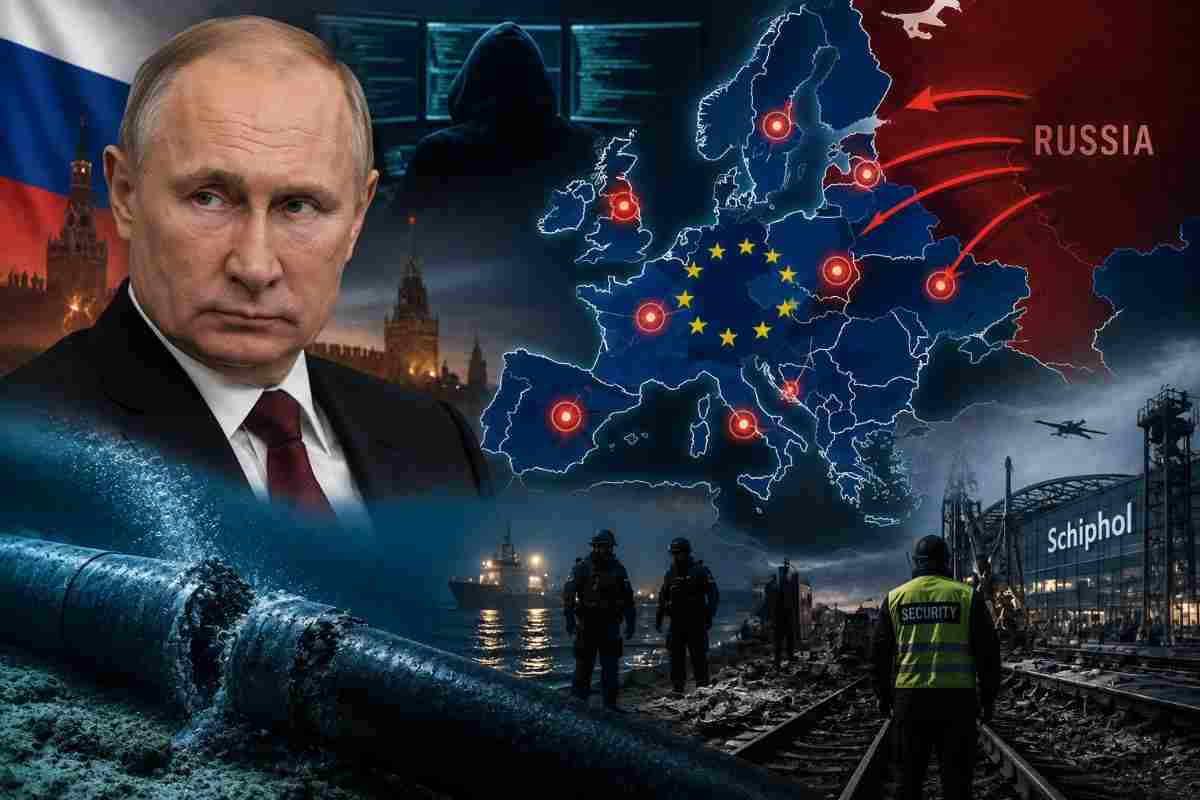
Governments Across the Continent Raise Security Alerts as Arson, Cyberattacks, Espionage and Infrastructure Incidents Fuel Fears of a Wider Hybrid Campaign
Summary
European countries are facing a growing series of suspected sabotage operations, with Russia increasingly identified by European governments and intelligence agencies as the main suspect. The incidents range from attempted attacks on critical infrastructure and defence facilities to cyber operations, espionage and the recruitment of local people to carry out disruptive activities.
The latest developments have increased concerns that Moscow is conducting a broader hybrid warfare campaign designed to undermine European security and weaken support for Ukraine. Russia has repeatedly denied involvement in such operations.
Germany Investigates Fresh Power Grid Incidents
Germany is investigating a series of suspected sabotage attempts targeting its electricity infrastructure.
Authorities recently discovered suspected launch equipment near high-voltage power lines and a transformer station close to Düsseldorf. The incident followed two earlier attacks on German power infrastructure, including one that temporarily disrupted around 4,200 megawatts of power generation.
German officials believe the timing of the incidents could be connected to efforts to influence public opinion ahead of a state election, although investigations are still underway.
Leipzig Airport Attack Raises Alarm
Germany has also accused Russia of being behind an attempted drone attack at Leipzig/Halle Airport.
A drone carrying explosives was discovered near a Ukrainian aircraft on August 4. The device was safely neutralized before it could cause casualties or major damage.
German authorities said the drone’s configuration and components appeared consistent with previous Russian hybrid operations. Moscow has rejected the accusations as politically motivated.
The airport is considered strategically important because of its role in logistics and support connected to Ukraine.
Denmark Warns of Russian Recruitment
Denmark’s intelligence service has issued another warning about Russian efforts to recruit people inside the country for sabotage and espionage.
The Danish Security and Intelligence Service, known as PET, said Russian intelligence services were attempting to recruit Danish citizens through social media and gaming platforms. Some recruits were allegedly asked to photograph sensitive infrastructure or assist with other intelligence activities.
Danish officials say the country’s defence industry is a particular target because of Denmark’s support for Ukraine.
Europe Sees Wider Pattern
The recent incidents are not isolated to Germany and Denmark.
European authorities have previously investigated suspected Russian-linked arson, cyberattacks, railway disruptions, espionage and attempts to interfere with critical infrastructure.
The incidents have increasingly been described as hybrid attacks, a term covering activities that fall below the threshold of conventional warfare but are intended to cause disruption, create fear or weaken an opponent.
European officials believe the strategy is aimed partly at making continued support for Ukraine more politically difficult.
Russia Rejects the Accusations
Moscow has repeatedly denied responsibility for sabotage operations across Europe.
Russian officials have argued that European governments are using allegations of Russian interference to justify stronger sanctions and increased military spending.
However, European intelligence agencies and governments have increasingly made public accusations against Russia, reflecting growing confidence that at least some of the incidents are connected to Russian intelligence operations.
Critical Infrastructure Becomes a Major Concern
Europe’s power grids, transport networks, airports, telecommunications systems and defence industries are receiving increased attention from security agencies.
Energy infrastructure is considered particularly vulnerable because modern electricity systems depend heavily on digital technology and interconnected networks. European countries are therefore increasing spending on physical security, surveillance and cyber defence.
The concern extends beyond individual attacks. Officials fear that a coordinated campaign could cause significant economic disruption without requiring a conventional military attack.
Europe Considers a Stronger Response
European governments are under increasing pressure to respond more forcefully.
Some countries have called for additional sanctions against Russian individuals and organizations suspected of involvement in sabotage. Others are strengthening counter-intelligence operations and restricting the activities of Russian diplomatic personnel.
The challenge is finding an effective response without allowing individual incidents to trigger a direct military confrontation between Russia and NATO.
Ukraine Remains Central to the Tensions
Much of the suspected sabotage is believed to be connected to Europe’s support for Ukraine.
European countries have provided Ukraine with weapons, military equipment, financial assistance and logistical support since Russia’s full-scale invasion.
Security officials believe Moscow’s hybrid operations are intended to increase the cost of that support and create divisions among European governments and populations.
Conclusion
A growing number of suspected sabotage incidents across Europe is raising fears that the continent is facing a sustained Russian hybrid warfare campaign.
From power-grid incidents in Germany and an attempted explosive drone attack near Leipzig to alleged recruitment efforts in Denmark, European governments are increasingly treating sabotage as a serious national-security threat.
Russia continues to deny involvement, but European officials are becoming increasingly vocal in attributing the incidents to Moscow. As the war in Ukraine continues, Europe now faces the difficult task of protecting critical infrastructure and deterring further attacks while avoiding an escalation into direct conflict with Russia.