

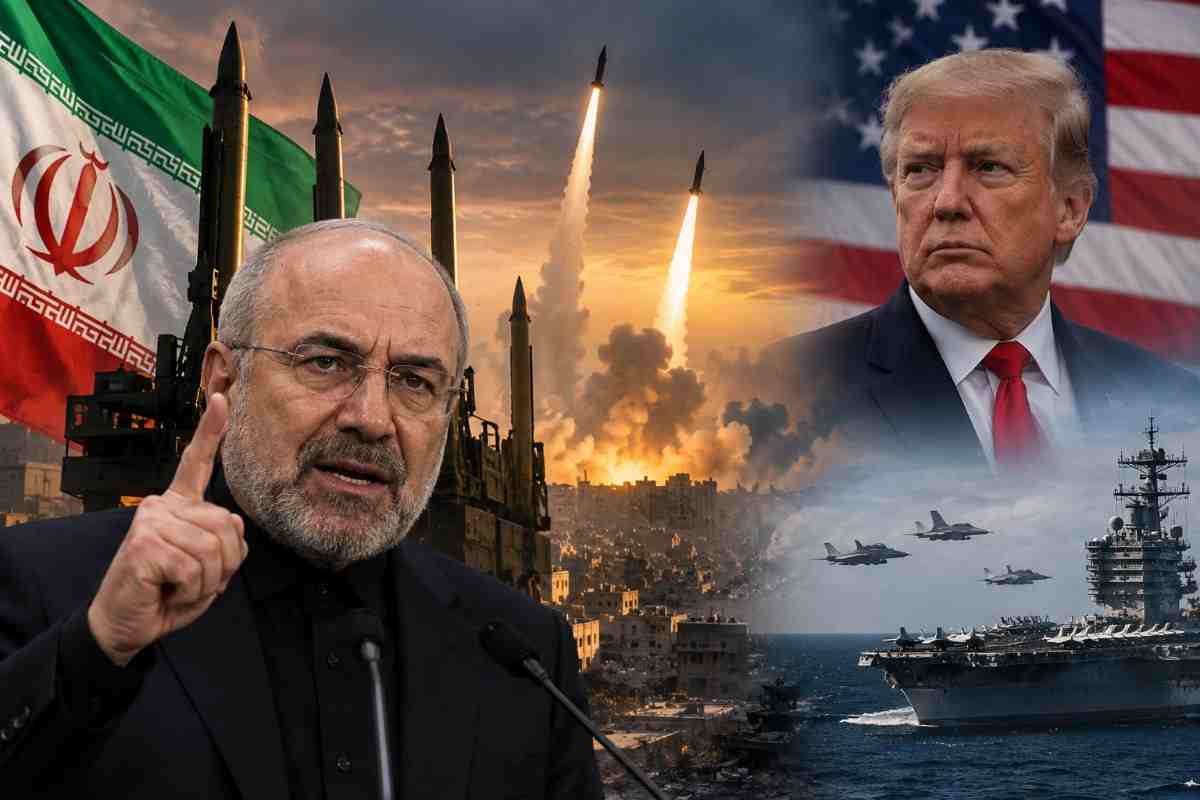
Parliament Speaker Mohammad Bagher Ghalibaf Says Tehran Will Abandon Proportionate Retaliation as Tensions Escalate in the Gulf
Summary
Iran’s Parliament Speaker Mohammad Bagher Ghalibaf has warned that any further U.S. attacks against Iran will trigger a response that is “faster, heavier and more painful.” His comments came a day after U.S. forces struck several Iranian oil tankers in the Gulf, further escalating the confrontation between Washington and Tehran.
Ghalibaf said the United States should understand that the “rules of the game” had changed and warned Washington against carrying out additional attacks on Iranian interests and security.
Iran Warns Against Further Attacks
In a speech published through his Telegram channel, Ghalibaf said Iran would no longer limit its military response to actions that mirror the scale of an attack.
He warned that future attacks on Iranian interests would receive a quicker and more severe response, signaling a possible shift in Tehran’s approach to retaliation.
The statement comes as both countries remain locked in a dangerous cycle of military action and retaliation.
U.S. Strikes Iranian Tankers
The latest Iranian warning followed U.S. military strikes against several Iranian oil tankers in the Gulf.
Washington has said its recent military operations were intended to respond to threats against American forces and shipping in the region. Iran has condemned the attacks and portrayed them as an escalation of the conflict.
The confrontation is particularly sensitive because the attacks are taking place around the Strait of Hormuz, one of the world’s most important routes for global energy shipments.
Tehran Claims It Has Already Retaliated
Iranian officials say Tehran has already carried out attacks against U.S. military interests in the region.
Iran has claimed strikes against American-linked targets and has continued to threaten U.S. forces and shipping if Washington carries out additional operations.
The U.S. military, however, has disputed some Iranian claims, including an Iranian assertion that it struck an unmanned American vessel in the Strait of Hormuz. U.S. officials described that claim as false.
Hormuz Remains a Major Flashpoint
The Strait of Hormuz remains at the centre of the confrontation.
The waterway is critical to international energy markets, with millions of barrels of oil normally passing through it every day. Any prolonged disruption could push energy prices higher and create wider economic consequences around the world.
Both Washington and Tehran therefore face pressure to avoid actions that could trigger a broader regional conflict.
Economic Pressure Adds to Iran’s Challenges
The military confrontation is occurring alongside severe economic pressure on Iran.
U.S. sanctions and restrictions on Iranian oil exports have reduced Tehran’s access to foreign currency and disrupted its ability to sell crude internationally. Iranian officials have acknowledged the economic difficulties but have insisted that sanctions will not force the country to abandon its strategic position.
Iranian authorities have also said they will increase efforts to address domestic economic problems while maintaining their resistance to U.S. pressure.
Risk of Wider Escalation
Ghalibaf’s warning comes at a particularly sensitive moment, with diplomatic efforts struggling to contain the conflict.
Any additional attacks on American or Iranian military assets could trigger another round of retaliation, potentially drawing other countries in the region deeper into the confrontation.
The situation is also being closely watched by global energy markets because of the potential impact on oil supplies and shipping through the Gulf.
Conclusion
Iran’s latest warning marks another sharp escalation in the confrontation with the United States. Parliament Speaker Mohammad Bagher Ghalibaf has made clear that Tehran intends to respond more aggressively if Washington launches further attacks.
With U.S. strikes on Iranian tankers, Iranian threats of stronger retaliation and continuing tensions around the Strait of Hormuz, the risk of a wider regional conflict remains high. The coming days could determine whether the two sides move toward de-escalation or enter another cycle of military escalation.