

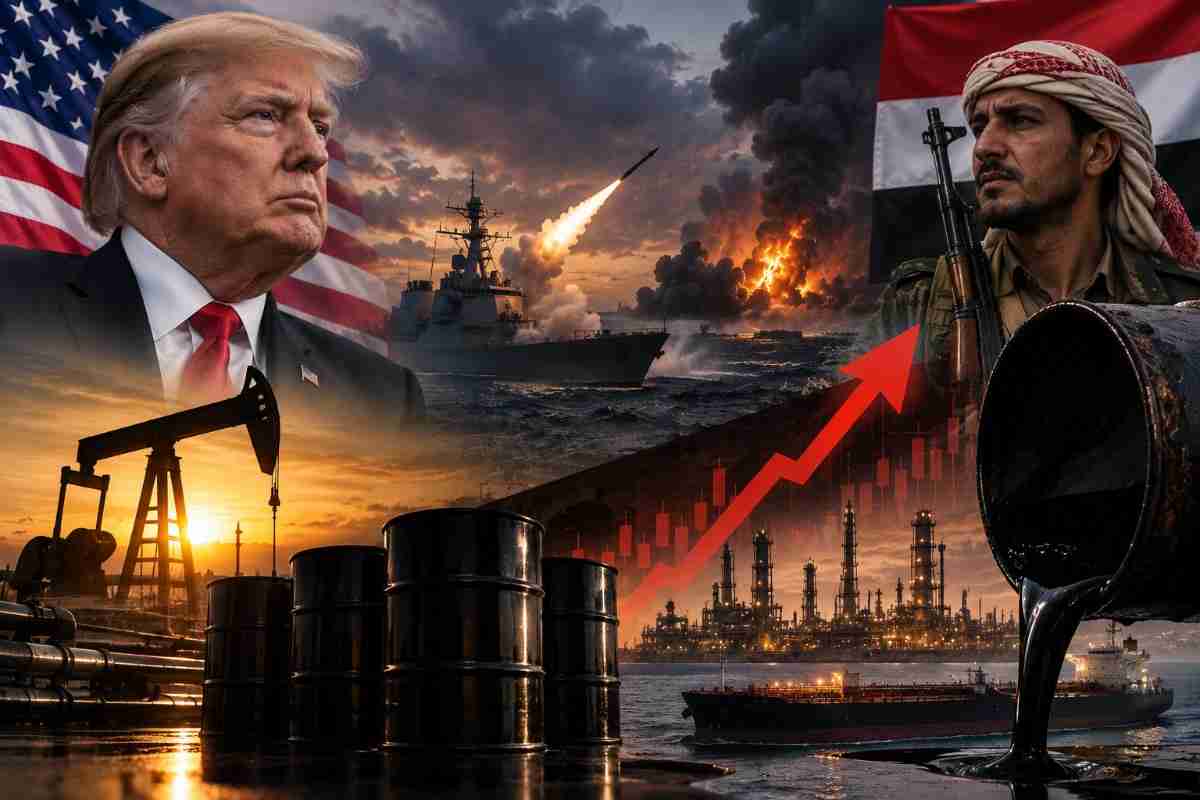
Brent Crude Climbs Above $100 for the First Time Since July as Attacks on Tankers and Saudi Energy Facilities Raise Fresh Supply Fears
Summary
Global oil prices have climbed above $100 a barrel for the first time since July, as escalating military attacks across the Middle East threaten an already weakened global oil supply chain.
Brent crude rose nearly 3% to around $100.72 a barrel, while U.S. West Texas Intermediate crude climbed to approximately $95.25. The latest jump follows U.S. strikes on Iranian tankers and attacks by Iran-backed Houthi forces on Saudi energy infrastructure.
Middle East Conflict Drives Oil Higher
The latest surge in crude prices reflects growing fears that the conflict could cause further disruptions to oil production and transportation.
The U.S. military recently struck five Iranian tankers after Iranian attacks involving American naval assets. At the same time, Houthi forces launched attacks against Saudi cities and energy facilities, including infrastructure linked to the country’s oil industry.
The combination of attacks has increased concerns about the availability of crude supplies in international markets.
Brent Crosses the $100 Mark
Brent crude, the global benchmark, climbed above the psychologically important $100-per-barrel level, reaching about $100.72 in early trading.
The move marks the first time Brent has traded above $100 since July 24, highlighting the speed at which geopolitical risks have returned to energy markets.
U.S. crude also moved sharply higher, with WTI trading around $95 a barrel.
Houthi Attacks Add to Supply Concerns
The latest Houthi attacks have added another layer of risk to global oil markets.
The Iran-backed group targeted Saudi cities and energy facilities, with Saudi officials reporting damage and fires at several locations. The attacks included facilities connected to Saudi Aramco, the kingdom’s state-controlled energy company.
Saudi Arabia has vowed to respond, raising fears that further military action could threaten additional energy infrastructure.
Strait of Hormuz Remains a Major Risk
One of the biggest concerns for oil traders remains the Strait of Hormuz, a vital route for global energy shipments.
The conflict has severely reduced the amount of oil moving through the waterway. Before the current crisis, around one-fifth of the world’s oil supply passed through the strait. Shipping disruptions have left international markets increasingly dependent on alternative routes and existing inventories.
Any further disruption could send crude prices significantly higher.
Saudi Energy Infrastructure Under Pressure
Saudi Arabia’s energy facilities have increasingly become targets as the regional conflict expands.
Recent Houthi attacks caused fires and operational disruptions at several energy sites, while Saudi authorities reported dozens of injuries. The country’s Jazan refinery was among the facilities affected.
Because Saudi Arabia is one of the world’s largest oil producers, prolonged damage to its infrastructure could have consequences for global supply.
Consumers Face Higher Fuel Costs
The rise in crude prices is already feeding into fuel markets.
In the United States, the average price of regular gasoline rose to approximately $4.22 per gallon, while diesel reached around $5.94 per gallon, according to AAA figures reported by The Associated Press.
Higher diesel prices can have a particularly broad impact because diesel is heavily used in freight transportation, agriculture and industrial production.
Airlines and Businesses Feel the Pressure
Rising energy prices are also affecting airlines and other fuel-intensive industries.
Higher jet-fuel costs can increase operating expenses for airlines, potentially resulting in higher ticket prices and changes to flight schedules. Shipping companies, manufacturers and logistics operators could also face higher costs if the oil price surge continues.
The effects could eventually reach consumers through higher transportation and production costs.
Markets Watch for Further Escalation
Financial markets are increasingly focused on whether the conflict will expand further.
Oil traders are watching developments involving Iran, the United States, Saudi Arabia and the Houthis, particularly any attacks on major oil facilities or shipping routes.
Analysts have warned that a prolonged disruption could push prices substantially higher. Bank of America analysts have suggested that continued instability could create the possibility of another major oil-price spike.
Global Economy Faces New Inflation Risk
A sustained oil rally could create renewed inflationary pressure around the world.
Higher crude prices raise transportation and manufacturing costs and can eventually increase prices for food, consumer goods and services. Central banks could also face a more difficult policy environment if energy-driven inflation remains elevated.
The situation is particularly sensitive because economies are still dealing with high borrowing costs and slowing growth.
Conclusion
Oil has crossed the $100-per-barrel mark for the first time since July, as U.S. strikes on Iranian tankers and Houthi attacks on Saudi energy facilities deepen concerns about global supply.
With the Strait of Hormuz facing severe shipping disruptions and additional attacks threatening Middle Eastern energy infrastructure, oil markets are entering a period of heightened uncertainty.
If the conflict continues to spread or major production facilities are damaged, crude prices could rise further, increasing fuel costs and adding fresh inflationary pressure to economies around the world.