

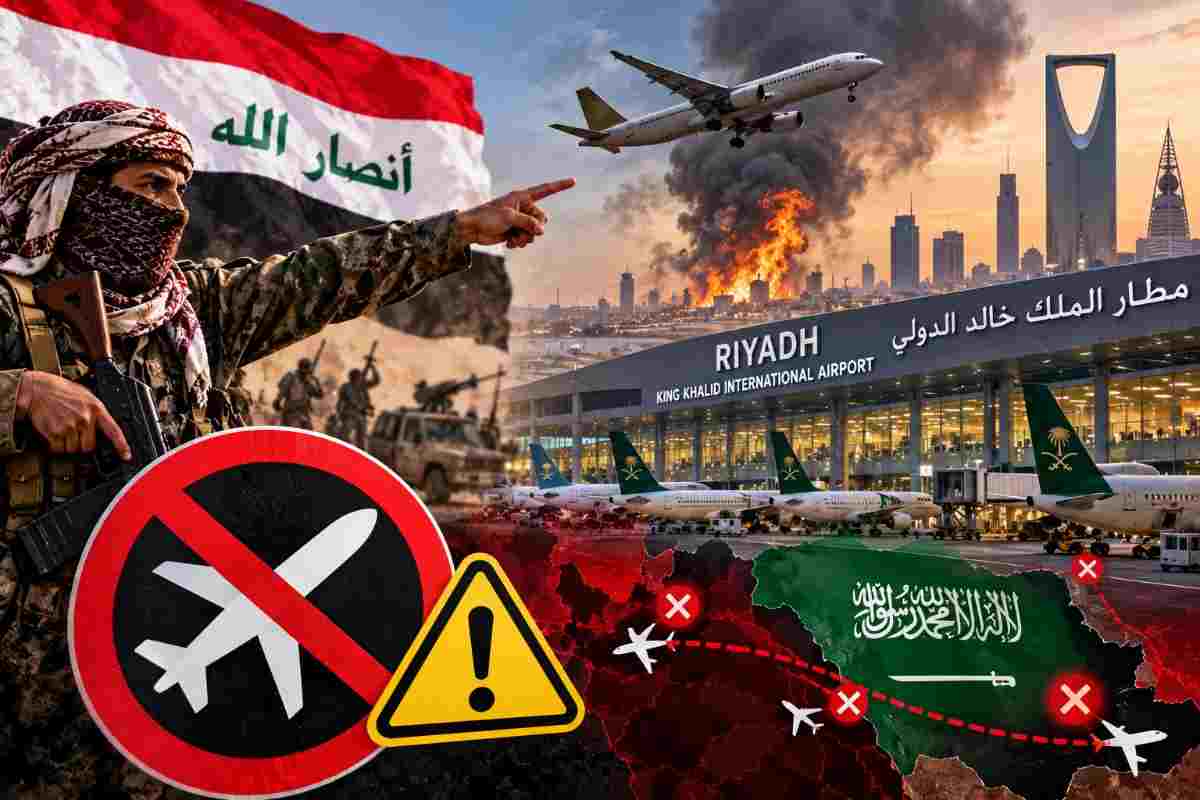
Yemen’s Houthi movement has renewed warnings to airlines, airport workers and travellers after an attack on Riyadh’s international airport killed 12 people and injured more than 300, escalating tensions across the region.
Yemen’s Houthi movement has warned airlines, passengers and airport personnel to avoid Saudi Arabian airports and airspace following a deadly attack on King Khalid International Airport in Riyadh. The warning, issued on Sunday, October 11, came a day after Saudi authorities reported that 12 people had been killed and more than 300 injured in the attack. <Cite refs={[“turn768699news21″,”turn768699news22″,”turn768699search4”]}/>
The announcement raises fresh concerns about civilian aviation and regional security as fighting intensifies between the Iran-backed Houthis and forces supported by Saudi Arabia. The latest violence has disrupted flights and increased uncertainty for international travellers, airlines and businesses operating across the Gulf. <Cite refs={[“turn768699search6″,”turn768699search10”]}/>
Houthis Issue Warning to Airlines and Travellers
Houthi military spokesperson Yahya Saree said the group was renewing its warning to aviation companies, employees, airport workers and travellers against using Saudi airports and airspace.
In a statement published on social media, the group said Saudi airports were vulnerable to further attacks and described the surrounding airspace as an operational zone. The warning specifically excluded airports in Mecca and Medina, the two holiest cities in Islam. <Cite refs={[“turn768699search3″,”turn768699search9”]}/>
The spokesperson also said Saudi Arabia would bear responsibility for failed interceptions of incoming attacks. The statement included a threat of continued retaliation, signalling that the group may continue targeting Saudi infrastructure as the conflict escalates.
The warning is not itself confirmation that another attack is imminent. However, it adds to the security risks facing airlines and passengers while the situation remains volatile.
Riyadh Airport Attack Leaves 12 Dead and Hundreds Injured
The warning followed Saturday’s attack on King Khalid International Airport, one of Saudi Arabia’s principal international aviation hubs.
Saudi authorities reported that at least 12 people were killed and more than 300 injured. The casualties included Saudi citizens and foreign nationals from several countries, including Bangladesh, the United States, Egypt, Jordan, Syria, Palestine and Sudan. <Cite refs={[“turn768699news22″,”turn768699search5”]}/>
The attack forced the suspension of airport operations, with flights cancelled or diverted as emergency and security measures were implemented.
Saudi authorities and the Saudi-led coalition blamed the Houthi movement for the assault, describing the attack as a serious violation involving civilian infrastructure. The incident has been reported as one of the deadliest attacks on Saudi territory in more than a decade. <Cite refs={[“turn768699news21″,”turn768699news22”]}/>
The scale of the casualties has intensified concerns about the vulnerability of airports and other civilian facilities as missile and drone attacks become more frequent.
Airlines Face Disruptions Across Saudi Arabia
The latest warning creates additional uncertainty for international airlines operating routes to Riyadh and other Saudi cities.
Several carriers have already suspended or adjusted services during the recent escalation. Air India, FlyDubai, Lufthansa Group and Pakistan International Airlines were among airlines reported to have temporarily paused routes to Riyadh and other Saudi destinations during the preceding weeks. <Cite refs={[“turn768699news28″,”turn768699search1”]}/>
Airlines must consider security advisories, airspace restrictions and operational risks when deciding whether to continue flights. Any prolonged disruption could affect connecting passengers, cargo services, tourism and business travel.
Saudi Arabia has been working to expand its international tourism and business profile, while Riyadh is scheduled to host major international gatherings. Continued airport closures or repeated attacks could complicate travel arrangements and affect confidence among visitors and investors.
Passengers planning journeys through Saudi Arabia should check directly with their airlines and relevant aviation authorities for the latest flight status and travel guidance.
Saudi-Yemen Conflict Intensifies
The airport attack comes amid renewed fighting between the Houthis, who control Yemen’s capital Sanaa and other areas, and the internationally recognised Yemeni government, which is backed by Saudi Arabia.
Saudi-led military operations against Houthi positions have intensified, while the Houthis have threatened retaliation against Saudi targets. The latest developments follow a breakdown in the relative calm that had reduced large-scale fighting in recent years. <Cite refs={[“turn768699news21″,”turn768699search8”]}/>
The conflict has repeatedly extended beyond Yemen’s borders, with attacks and counterattacks threatening transport infrastructure, energy facilities and important shipping routes in the wider region.
The involvement of regional powers also raises concerns that the confrontation could become part of a broader Middle Eastern conflict. However, the full extent of any further military escalation remains uncertain.
United States Weighs Possible Response
The attack has also drawn attention in Washington. US President Donald Trump has indicated that his administration is considering whether the United States could join or support Saudi military action against the Houthis. US officials have condemned the attack, while the potential scale and timing of any response remain unclear. <Cite refs={[“turn768699news22″,”turn768699news29”]}/>
Saudi Arabia has sought additional air-defence assistance from Western allies as attacks continue. The availability of missile interceptors and the ability to protect civilian infrastructure have become increasingly important issues for the kingdom.
Any direct expansion of US military involvement could further intensify the conflict, although no specific future operation should be treated as certain based on the statements reported so far.
Civil Aviation Security Becomes a Growing Concern
The Houthi warning highlights the risks faced by commercial aviation when airports become part of an active conflict zone.
Airlines, airport operators and national aviation authorities must assess the possibility of missile or drone attacks, restrictions on airspace and sudden changes to airport operations. Even when flights are not directly targeted, nearby attacks can force closures, diversions and cancellations.
For travellers, the situation underscores the importance of monitoring official advisories rather than relying solely on previously issued tickets or published flight schedules.
The exclusion of Mecca and Medina from the Houthi statement does not remove the broader risks affecting travel elsewhere in Saudi Arabia. Security conditions can change quickly, and the group’s announcement does not guarantee the safety of any particular airport.
Conclusion
The Houthis’ renewed warning against using Saudi airports marks another escalation in the growing confrontation between the group and Saudi-backed forces. It follows an attack on Riyadh’s King Khalid International Airport that killed 12 people and injured more than 300, according to Saudi authorities.
With flight disruptions continuing and the United States considering its response, the situation presents serious challenges for regional security and international aviation. The immediate priority for airlines and passengers will be to follow updated safety guidance as governments assess the threat and the risk of further attacks remains unresolved.