

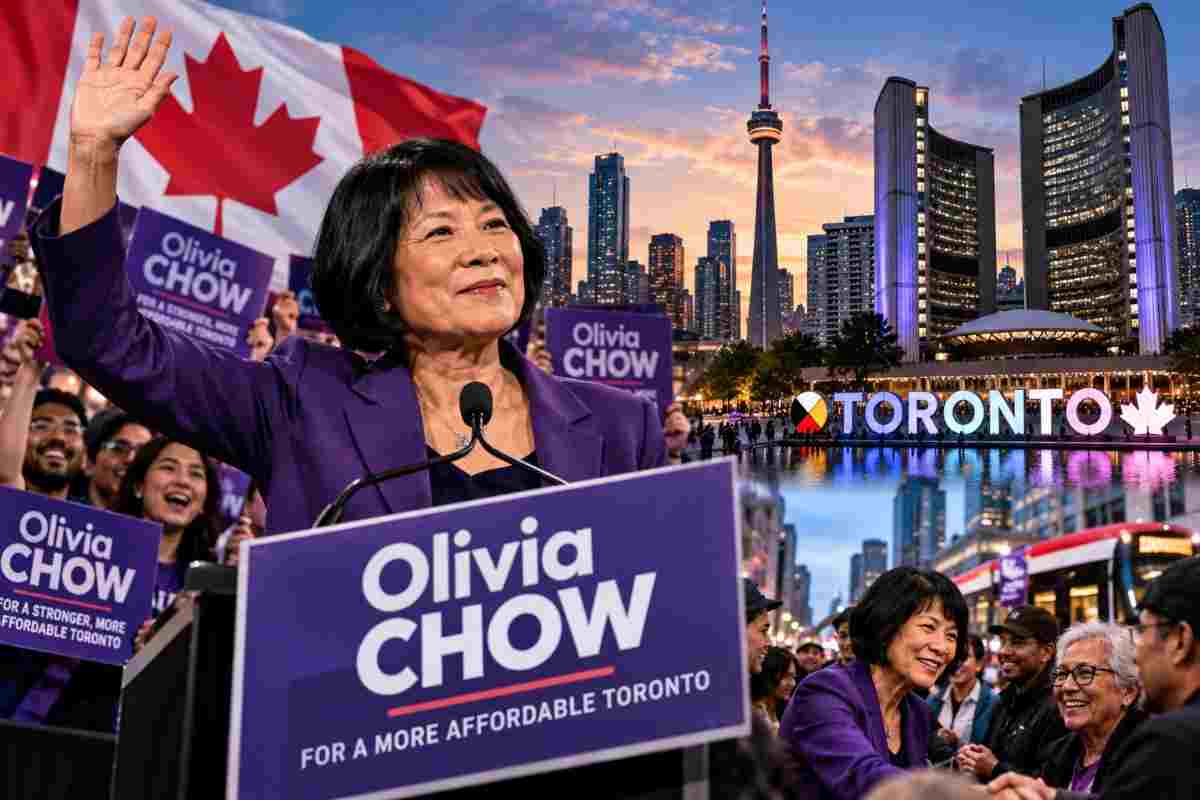
Toronto Mayor Olivia Chow has won a second term after defeating challenger Brad Bradford in the October 26 municipal election, with housing costs, public transport, property taxes and the affordability of everyday life emerging as central issues in the campaign.
Olivia Chow has secured re-election as mayor of Toronto, Canada’s largest city, following a closely watched contest against city councillor Brad Bradford. Her victory gives her a full four-year mandate after she first took office in a 2023 mayoral by-election triggered by the resignation of former mayor John Tory.
The campaign focused heavily on the cost of living, the availability of affordable housing, public safety and the quality of municipal services. Chow defended her record at City Hall and argued that continued investment in housing and public infrastructure was necessary to address Toronto’s challenges.
Bradford campaigned on an alternative approach, promising measures including a property tax freeze and changes intended to make city government more financially accountable. Despite a late surge in his campaign, he was unable to defeat the incumbent.
Chow Defeats Brad Bradford in Toronto Mayoral Election
The October 26 election concluded a competitive campaign in which Bradford attempted to turn concerns about affordability and municipal spending into support for a change in leadership.
Preliminary results reported by local media showed Chow winning by a substantial margin, although final official figures may differ as the counting process is completed. Her victory ensures continuity in the mayor’s office as Toronto prepares to address major challenges involving housing, transport and public services.
Bradford, a former city councillor who represented Beaches–East York, had sought to present himself as an alternative to Chow’s approach to municipal government. His campaign highlighted property taxes, spending and public safety, while proposing measures aimed at easing financial pressure on residents.
The race became more competitive in the final weeks after former federal politician Chris Alexander withdrew from the mayoral contest earlier in October. Bradford subsequently gained attention as a leading challenger, making the final result a closely watched development in Toronto politics.
Affordability Remains a Major Concern for Toronto Residents
The rising cost of living was one of the defining issues of the mayoral campaign.
Toronto residents continue to face pressure from housing expenses, rent, transportation costs and other everyday bills. For many households, the ability to find suitable accommodation within their budgets has become a central concern.
Chow’s campaign emphasised continued action on affordable housing, improved public transport and municipal programmes intended to support residents. She argued that investment in city services was necessary to make Toronto more accessible to people across different income groups.
Bradford, meanwhile, proposed freezing property taxes for a year and reducing the land transfer tax for homes priced below C$1.1 million. He argued that his proposals would provide financial relief to residents and encourage greater accountability in municipal spending.
The competing proposals reflected a broader debate over how Toronto should balance affordability measures with the revenue needed to maintain public services.
A property tax freeze could limit increases in municipal tax bills, but its practical effects would depend on the city’s budget, available revenue and spending priorities. Chow’s approach placed greater emphasis on maintaining investment in public services and infrastructure.
Housing and Public Transport Remain Key Priorities
Housing is expected to remain one of the most significant challenges facing Chow during her next term.
Toronto has faced sustained pressure to increase the supply of homes, improve access to affordable rentals and address the needs of residents experiencing homelessness. Municipal policies can influence housing development through planning decisions, incentives and partnerships, although the issue also depends on provincial and federal policies, private investment and wider economic conditions.
Chow has pledged to continue efforts to expand housing opportunities and improve conditions for renters. Her campaign also highlighted public services intended to make the city more liveable for families and lower-income residents.
Public transport was another major issue. Toronto’s transit network plays an important role in connecting residents to employment, education and essential services, particularly for people who cannot afford to rely on private vehicles.
Chow’s proposals include a fare cap after a set number of weekly TTC rides, building on measures introduced during her first period in office. The initiative is intended to reduce costs for frequent transit users, although its eventual impact will depend on the details of implementation and the city’s financial resources.
Chow’s First Term Shaped the Election Debate
Chow became mayor in June 2023 after winning the by-election held following John Tory’s resignation. Her initial period in office included decisions on municipal taxation, transit funding, housing and public services.
Supporters pointed to initiatives such as freezing Toronto Transit Commission fares for three consecutive years, opening the Scarborough Busway and expanding the Toronto School Food Program. Her administration also worked on housing-related policies and changes to municipal services.
Critics, however, raised concerns about higher property taxes and the cost of the city’s spending commitments. Those disagreements helped shape Bradford’s campaign, which called for tighter financial management and a different approach to municipal priorities.
The election result means Chow will have more time than she had after the 2023 by-election to pursue her agenda. However, implementing her commitments will require cooperation with Toronto City Council and careful management of the city’s finances.
Toronto City Council Faces New Challenges
The mayoral election was part of a wider municipal vote that also determined the composition of Toronto City Council.
Voters elected several new councillors, while a number of incumbents retained their seats. The incoming council will have an important role in reviewing the mayor’s proposals, approving budgets and deciding how municipal resources are allocated.
Chow’s ability to deliver on her campaign commitments will therefore depend not only on the mayor’s office but also on the positions taken by councillors representing Toronto’s diverse neighbourhoods.
Major decisions on housing, transit, taxation and public safety are likely to feature prominently when the new council begins its work.
Conclusion
Olivia Chow’s re-election gives Toronto’s mayor a renewed mandate to pursue her priorities on affordability, housing, public transport and public services.
Her victory over Brad Bradford follows a campaign that exposed competing views on how the city should respond to rising costs while maintaining essential services. Chow favoured continued investment in municipal programmes, while Bradford advocated measures including a property tax freeze and greater financial restraint.
The challenge now will be turning campaign promises into practical results. As Toronto faces continued pressure on housing and household budgets, Chow’s next term will be judged in part by whether residents see meaningful improvements in affordability, transportation and the delivery of city services.