

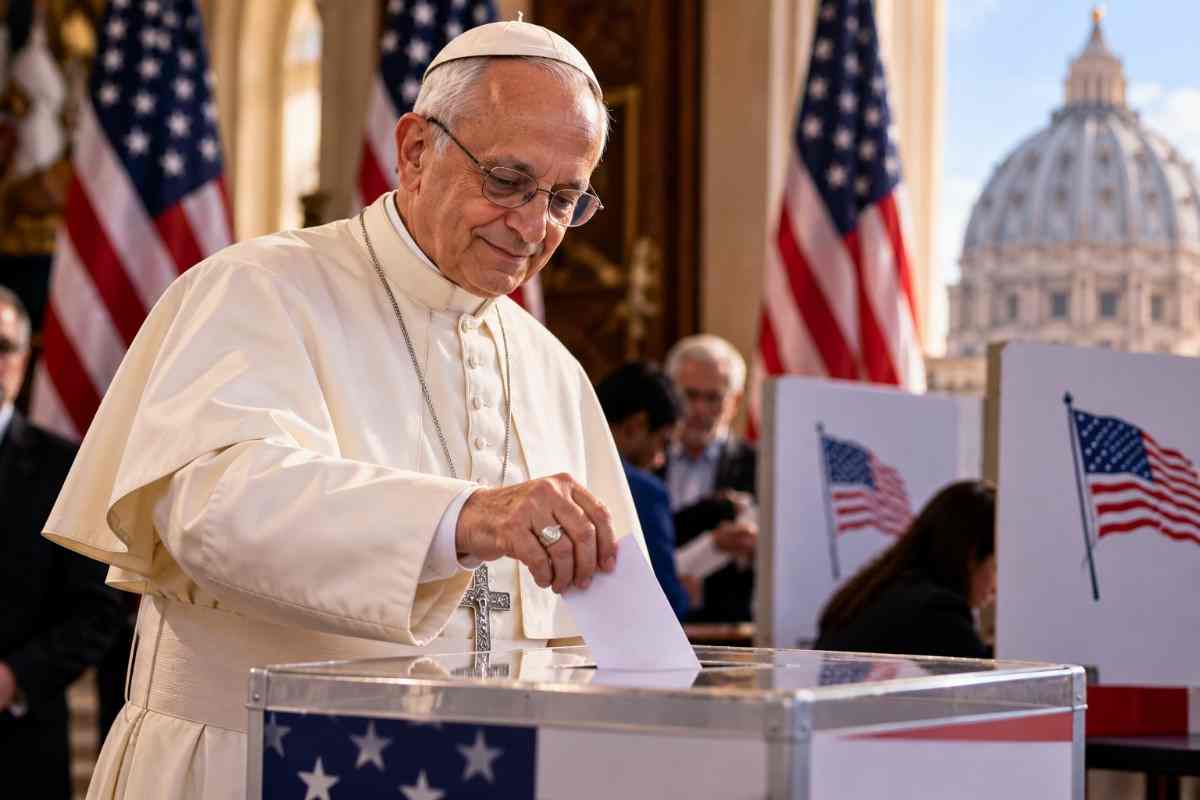
Pope Leo XIV has become the first pope in history to vote in a US general election after submitting a mail-in ballot in Chicago ahead of the November 3 midterm elections, with the Vatican confirming his participation as an expression of his belief in democratic responsibility.
Pope Leo XIV, the first American-born leader of the Roman Catholic Church, has made an unusual entry into US electoral history by exercising his voting rights as an American citizen. The Vatican confirmed on October 30 that the pontiff had submitted his mail-in ballot in Chicago, Illinois, ahead of the upcoming congressional elections.
The announcement has attracted international attention because no previous sitting pope is known to have voted in a national political election. The Vatican said Leo believes citizens have both the right and the responsibility to participate in democratic processes.
The development is particularly notable given the pope’s position as head of the Catholic Church, which has more than a billion followers worldwide. However, the Vatican has not disclosed which candidates or political positions he supported on his ballot.
Vatican Confirms Pope’s Participation in US Elections
The Holy See Press Office confirmed that Pope Leo XIV had exercised his right to vote as a US citizen whenever he was eligible.
According to the Vatican statement, the pontiff submitted his mail-in ballot in Chicago as part of his longstanding practice of civic participation. The statement also confirmed that he had voted during his years living in Peru whenever he was eligible to do so.
Pope Leo XIV was born Robert Francis Prevost in Chicago, Illinois, in 1955. Before becoming pope in May 2025, he spent several decades working as a priest, missionary and bishop, including an extended period in Peru.
Although he now resides in the Vatican, he retains his US citizenship and remains eligible to participate in American elections.
His ballot was first reported by the Chicago Sun-Times, which cited information from the Will County Clerk’s Office. According to the report, Leo requested a mail-in ballot on October 3 and is registered at an address in New Lenox, Illinois.
First Pope Known to Vote in a US General Election
The significance of Leo’s participation extends beyond his American background.
While popes have traditionally avoided involvement in partisan electoral politics, historians and religious commentators have described his vote as an unprecedented development in the history of the modern papacy.
British historian Michael Walsh, who has written extensively about the papacy, told CNN that Leo could be the first pope to participate in a secular democratic election.
The Vatican’s announcement has also highlighted the distinction between participating in an election as a citizen and publicly supporting a political candidate.
Leo has not endorsed any candidate in the upcoming midterm elections, and there is no official information about the choices marked on his ballot.
His participation is being presented by the Vatican as an exercise of citizenship rather than a political intervention.
Voting Records Reveal Pope’s Earlier Electoral Participation
Records from the Illinois State Board of Elections provide additional information about Leo’s voting history before becoming pope.
According to reporting by the Associated Press, Robert Prevost requested ballots in five US primary elections since 2000. He requested Democratic primary ballots in 2008 and 2010, followed by Republican primary ballots in 2012, 2014 and 2016.
Illinois operates a primary system in which voters must select a party’s ballot when participating in a primary election. However, this does not establish their overall political affiliation or indicate how they vote in general elections.
The records also show that Prevost participated in every US general election since 2000 except those held in 2020 and 2022. They do not reveal which candidates he supported.
These details have attracted attention because the pope’s electoral history spans different political environments and periods of his life.
US Midterm Elections Scheduled for November 3
Pope Leo’s participation comes just days before the United States holds its 2026 midterm elections on November 3.
All 435 seats in the House of Representatives and several Senate seats are being contested. The elections will determine the balance of power in Congress and could significantly influence the legislative agenda during the remaining years of President Donald Trump’s current term.
In Illinois, voters will also decide the state’s gubernatorial contest and choose a successor to retiring Democratic Senator Dick Durbin. Governor JB Pritzker is seeking another term.
The elections are taking place amid national debates over the economy, immigration, healthcare, foreign policy and the cost of living.
The Vatican has not connected the pope’s decision to vote with any particular political issue or candidate.
Pope’s Position on Democracy and Civic Responsibility
The Vatican’s statement placed particular emphasis on the importance of democratic participation.
By exercising his voting rights, Leo has highlighted the idea that citizenship carries responsibilities alongside individual freedoms.
The pope’s position also reflects a distinction often made by religious leaders between encouraging participation in public life and directing followers towards a particular political party.
As head of the Catholic Church, Leo regularly addresses international issues, including poverty, migration, conflict and human dignity. His public comments have attracted attention in the United States, particularly during disagreements with the Trump administration over immigration and international conflicts.
Nevertheless, his decision to vote does not indicate support for any political side.
Conclusion
Pope Leo XIV’s decision to cast a mail-in ballot in the 2026 US midterm elections has created a historic moment for both American electoral history and the modern papacy.
The Vatican’s confirmation establishes him as the first known sitting pope to vote in a US general election. His participation also highlights his continued connection to the United States despite serving as leader of the Catholic Church from the Vatican.
With the November 3 elections approaching, the pope’s vote has attracted global attention. However, the Vatican has maintained that his participation reflects a belief in democratic responsibility, while his individual electoral choices remain private.